Counterculture spectacle and historic wins define Oscars night
Los Angeles — The Academy Awards delivered a night of firsts, political commentary and cinematic spectacle on Sunday as One Battle After Another, the sprawling counterculture comedy thriller from director Paul Thomas Anderson, swept the ceremony with six wins, including best picture.
The film, loosely inspired by Vineland, dominated the evening’s most competitive categories, earning awards for best director, adapted screenplay, film editing, supporting actor and the first-ever Academy Award for casting.
The victory marked Anderson’s long-awaited breakthrough at Hollywood’s biggest night after decades of critical acclaim and multiple nominations.
“I wrote this movie for my kids to say sorry for the housekeeping mess we left in this world we’re handing off to them,” Anderson said while accepting the award for best director. “I hope the next generation brings back some common sense and decency.”For Anderson, known for films like Boogie Nights, There Will Be Blood, and Phantom Thread, the victories were his first Oscar wins after years of nominations that had previously eluded him.
Heading into the ceremony, the awards season narrative had largely centered on a two-film race between One Battle After Another and Sinners, a gothic period vampire drama directed by Ryan Coogler.
While Anderson’s film secured the night’s top honor, Sinners still delivered a strong showing with four major wins, including best actor for Michael B. Jordan, original screenplay, cinematography and original score.
Jordan’s performance in the film earned him his first Academy Award, defeating high-profile contenders Timothée Chalamet and Leonardo DiCaprio.“I stand here because of the people who came before me,” Jordan said during his speech, paying tribute to earlier Black Oscar winners and the artists who helped pave the way.
His win marked a milestone moment in Academy history, making him one of only a handful of Black actors to win the best actor category.
Coogler also made history with his original screenplay win, becoming only the second Black filmmaker to receive the award after Jordan Peele, who won for Get Out in 2018.
The night also saw another historic breakthrough when Irish actor Jessie Buckley became the first performer from Ireland to win the best actress Oscar.
Buckley was honored for her role in Hamnet, an adaptation of the acclaimed novel exploring the grief of William Shakespeare and his family after the death of their son.“The beautiful chaos of a mother’s heart,” Buckley said, describing the emotional center of the film. “This is the greatest honour.”
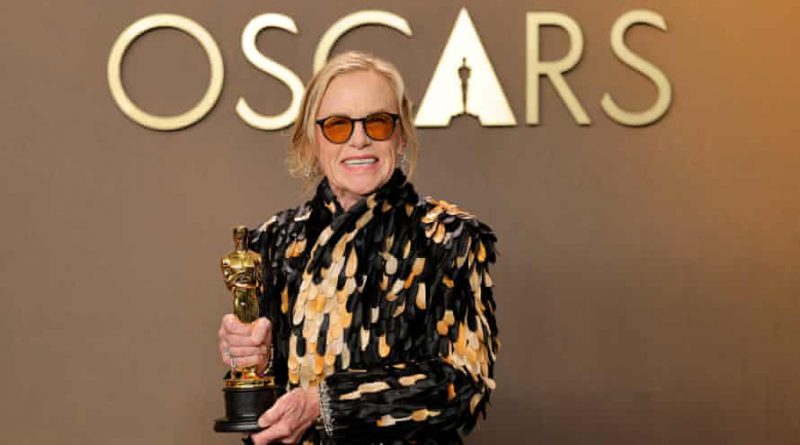
Meanwhile, veteran actor Amy Madigan won best supporting actress for her chilling villainous performance in Weapons. The victory capped a remarkable career moment for the 75-year-old performer, who had last been nominated nearly four decades earlier.
Her win set a record for the longest gap between nomination and victory in acting categories.
International cinema also received recognition during the ceremony as Norwegian director Joachim Trier won best international feature film for Sentimental Value, marking Norway’s first victory in the category.
“I’m just a film nerd from Norway,” Trier said while accepting the award.Quoting writer James Baldwin, he added: “All adults are responsible for all children and we shouldn’t vote for politicians who forget that.”The award was presented by Spanish actor Javier Bardem, who used the stage to call for peace, saying “no to war and free Palestine,” reflecting a broader pattern of political messages woven throughout the night’s ceremony.
In the documentary category, Mr Nobody Against Putin won best documentary feature. The film tells the story of a Russian teacher resisting new authoritarian policies introduced in his school.Co-director David Borenstein described the project as a story about moral courage.
“When a government murders people on the streets of our major cities and we say nothing, we all face a moral choice,” he said. “But even a nobody can be more powerful than you think.”
The animated categories were dominated by the global streaming hit KPop Demon Hunters, which won both best animated feature and best original song for the track “Golden.”
The win marked the first time a K-pop song has earned an Academy Award.Co-director Maggie Kang dedicated the victory to Korea and to audiences who had long waited to see themselves represented in Hollywood animation.“For those who look like me, I’m sorry it took so long,” she said.
Several blockbuster productions also secured wins in technical categories. Guillermo del Toro’s Netflix adaptation Frankenstein collected three awards for production design, costume design and makeup and hairstyling.
Science fiction sequel Avatar: Fire and Ash won the visual effects prize, while racing drama F1 took home the award for sound.Another rare moment came when the Academy declared a tie in the live-action short category, marking only the seventh time in Oscar history that two winners shared the prize.
A big night for Warner BrosThe ceremony ultimately proved to be a triumphant night for Warner Bros., which walked away with 11 awards across multiple films its most successful Oscars showing in more than a decade.The studio’s last best picture win came in 2013 with Argo, directed by Ben Affleck.
The success arrives as major shifts reshape Hollywood’s corporate landscape, including an impending merger involving Paramount Global after a contentious ownership battle.Comedy, politics and Hollywood nostalgia,Returning host Conan O’Brien opened the ceremony with a comedic monologue that mixed satire with commentary about global tensions and the film industry’s changing landscape.
O’Brien joked that he might be “the last human host” of the Oscars, referencing the growing role of artificial intelligence in entertainment. Actor Will Arnett later echoed those concerns during the presentation of the animated short award, receiving applause from the audience.
The ceremony also included several tributes to film legends who died in the past year. Actor Billy Crystal led a memorial for filmmaker Rob Reiner, describing his films as works that would “last for lifetimes.”Other stars including Meg Ryan, Carol Kane, Demi Moore, and Annette Bening joined the tribute.Later in the evening, music legend Barbra Streisand honored actor Robert Redford, calling him an “intellectual cowboy” who had shown courage both on and off screen.
She closed the tribute by singing a portion of “The Way We Were,” the theme from their beloved romantic drama.Hollywood reflects turbulent timesBeyond the awards themselves, many speeches reflected the wider anxieties shaping the world today.
O’Brien acknowledged what he described as “very chaotic, frightening times,” noting that the Oscars remain a global platform for storytelling and cultural exchange.“Let’s celebrate not because everything is fine,” he told the audience, “but because we work and hope for better days ahead.”
The evening’s winners and presenters repeatedly echoed that sentiment, blending celebration with political commentary in a ceremony that reflected the intersection of art, activism and global uncertainty.
By the end of the night, One Battle After Another had firmly secured its place in Academy Awards history not only as the year’s biggest winner but also as the film that finally delivered long-awaited recognition to one of American cinema’s most respected directors.
As Hollywood’s biggest stars exited the Dolby Theatre and awards season drew to a close, the ceremony left behind a clear message: even amid industry upheaval and political division, the Oscars remain a stage where art, identity and global voices continue to collide.