War-driven airspace threats heighten risks and strain for airline pilots
London/Copenhagen/Beirut, March 9 – Airline pilots navigating skies increasingly crowded by drones, missiles and restricted air corridors are facing heightened operational risks and mounting psychological pressure as the expanding conflict between the United States, Israel and Iran injects new hazards into some of the world’s busiest aviation routes.
The outbreak of war in the Middle East has placed hundreds of ballistic missiles and attack drones into airspace near major regional hubs, raising safety concerns for commercial aviation as retaliatory strikes and military activity disrupt normal flight operations.
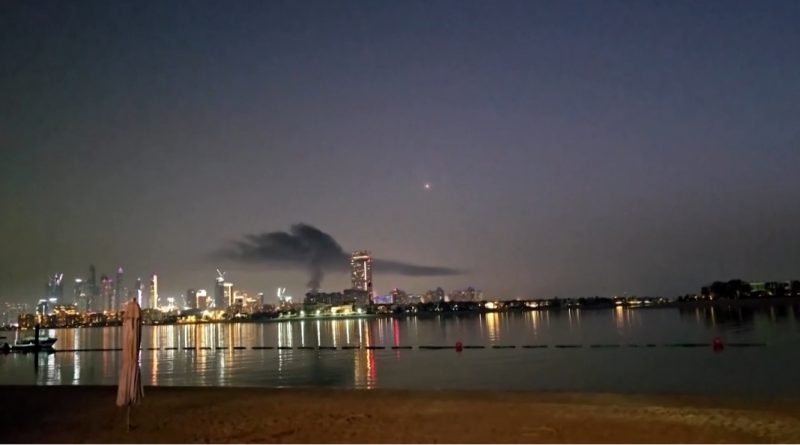
Iran’s response to U.S. and Israeli attacks has included strikes that hit airports and forced the grounding of numerous flights across the Gulf, from Dubai to Abu Dhabi, leaving thousands of passengers stranded and prompting emergency rescue flights to evacuate some travelers.
Industry experts and pilots say the risks confronting civilian aviation have steadily increased as armed conflicts across multiple regions have restricted available flight corridors and introduced new military threats into commercial airspace.
Reuters interviewed eight airline pilots and more than half a dozen aviation and security specialists who said the accumulation of wars in regions including Ukraine, Afghanistan and Israel has tightened airspace and forced pilots to operate in increasingly complex conditions.
These constraints require pilots to navigate around restricted zones, rapidly changing security advisories and new hazards posed by unmanned aerial systems and missile activity far beyond traditional combat areas.
The pressure is compounded by the need to make quick operational decisions to ensure passenger safety while maintaining adherence to strict aviation protocols.
The aviation sector has also seen a surge in disruptive technologies affecting air navigation, including drones and GPS spoofing, a form of electronic interference that can mislead aircraft navigation systems about their location.I
ndustry specialists say these factors have worsened airspace safety over the past two and a half years as conflicts expand and new technologies are increasingly deployed in military and hybrid warfare.
Drone incursions have not been limited to conflict zones. European airports have also experienced disruptions linked to unauthorized drones, adding to safety concerns for commercial aircraft operating in busy flight corridors.
Pilots say the growing overlap between military operations and civilian aviation is creating a challenging environment for crews trained primarily for commercial transport.
“We are not military pilots. We are not trained to deal with these kinds of threats in the air,” Tanja Harter, president of the European Cockpit Association and a pilot with experience in the Middle East, told Reuters.
Harter said the succession of global crises affecting aviation in recent years could create fear and anxiety among pilots responsible for passenger safety.Airlines have increasingly introduced peer support programs to help pilots cope with stress related to security threats and operational uncertainty, she added.
The intensifying conflict has already caused disruptions to international flight operations.An Air France flight dispatched to repatriate stranded French nationals from the United Arab Emirates turned back on Thursday due to missile activity in the region.A pilot for Lufthansa diverted a flight from Riyadh to Cairo on Friday after assessing potential security risks linked to the regional escalation.
Aviation analysts say such diversions reflect the broader challenge facing airlines attempting to maintain operations amid rapidly evolving security conditions.With missile launches, drone activity and shifting conflict lines affecting large sections of Middle Eastern airspace, pilots and airlines are increasingly reliant on real-time intelligence and international coordination to avoid potential threats.
The growing overlap between military operations and civilian flight paths is forcing aviation authorities and airlines to continually reassess risk calculations as the conflict reshapes the security landscape for global air travel.