Mohammed Bin Issa: Iraq and the Man Who Wouldn’t Let It Fail Quietly
Two decades on, Al Jaber’s assessment of Iraq is notably unsentimental. He acknowledges failure, but rejects futility.
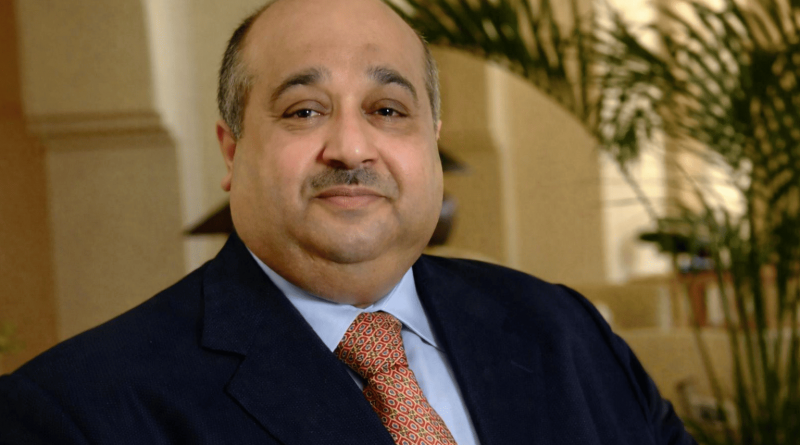
In a region where political rhetoric often masks commercial calculation, Sheikh Mohammed bin Issa Al Jaber represents an uncomfortable anomaly. His engagement with Iraq, stretching across more than two decades, defies the familiar arc of Middle Eastern power politics: invest, influence, extract, exit.
Instead, his involvement followed a far less forgiving path—one shaped by conviction, sustained by personal capital, and concluded without tangible reward. It was not an error of judgment, but a conscious wager on the idea that Iraq’s survival as a sovereign state mattered more than profit or prestige.
That wager began in the late 1990s, when Iraq existed in a state of imposed paralysis. Saddam Hussein’s regime remained entrenched, while the population endured the cumulative effects of comprehensive international sanctions. The UN Oil-for-Food Programme, often described as a humanitarian compromise, in practice locked Iraq into a system of managed dependency.
Infrastructure repairs required external approval, food and medicine were distributed at subsistence levels, and public health indicators deteriorated sharply. UN agencies and humanitarian organizations documented rising malnutrition and preventable disease, particularly among children (UNICEF, 1999; FAO, 2000).
What set Al Jaber apart was not merely his criticism of this system, but the moment at which he voiced it. In 1998, when most Arab political and business leaders chose caution or silence, he publicly argued that Iraq was undergoing the slow liquidation of a nation.
Contemporary reporting noted that he was among the few Arab figures to state openly that Iraq required liberation from both dictatorship and siege (Washington Times, 1998).
The position carried real risks. Publicly endorsing external intervention—even on humanitarian grounds—invited social ostracism and commercial retaliation across the region. Al Jaber accepted those costs, framing his stance not as allegiance to Western power, but as a moral response to collective punishment.
Liberation as Sovereignty, Not Spectacle
Al Jaber’s understanding of liberation differed sharply from the dominant Western narrative that preceded 2003. While Washington concentrated on weapons inspections and regime removal, he argued that Iraq was trapped by a threefold constraint: authoritarian rule, international trusteeship, and an unsustainable debt burden.
Iraqi financial data from the late 1990s placed sovereign and war-related debt near $860 billion, a figure acknowledged in IMF briefings at the time (IMF, 1999). Without structural political change, he warned, compound interest and lost production would turn that liability into a generational deadlock.
This perspective explains his support for the 2003 intervention without embracing the triumphalism that followed. War, in his view, was not a solution in itself but the only available mechanism to dismantle a system that had stripped Iraq of agency.
In later interviews, he argued that sovereignty without economic viability was an illusion, and that lifting sanctions without political change would merely prolong decay. The position was uncomfortable for both anti-war activists and interventionist strategists, leaving him isolated but consistent.
The Reconstruction That Never Was
The real cost of Al Jaber’s convictions became apparent after the fall of Baghdad. Rather than disengage, he advanced an ambitious postwar reconstruction framework often referred to as the MBI Plan.
Valued at more than $300 billion, it proposed rebuilding Iraq’s economic backbone: ports, airports, power generation, transport corridors, and industrial zones capable of reintegrating the country into regional and global trade. The design echoed postwar recovery models studied in Western development institutions, inviting comparisons with the Marshall Plan.
The seriousness of the proposal was reflected in the range of figures who reviewed or discussed it, including General David Petraeus, former Prime Minister Adel Abdul Mahdi, and President Barham Salih. At the time, officials in the administration of George W. Bush publicly emphasized the role of private capital in Iraqi recovery, a message echoed by Dick Cheney.
By 2007, however, the plan had collapsed. Insurgent violence, regional instability, and the strategic interests of neighboring states hostile to a revived Iraq combined to drain momentum.
Analysts pointed to the destabilizing role of the Syrian government under Bashar al-Assad, which feared the precedent of a functioning, pluralistic Iraq (International Crisis Group, 2007). The accelerated drawdown of US forces further eroded the security guarantees required for large-scale investment. Al Jaber absorbed billions in unrecoverable costs. No compensatory concessions followed—an outcome virtually unheard of in international deal-making.
Failure Without Futility
Two decades on, Al Jaber’s assessment of Iraq is notably unsentimental. He acknowledges failure, but rejects futility. Iraq has held six national elections since 2003, formed successive governments, and avoided permanent territorial fragmentation despite years of violence.
Comparative political science research suggests that transitions of this scale often take half a century to stabilize; Iraq has compressed that process into roughly twenty years (Carothers, 2018).
Economic indicators reinforce his cautious optimism. Oil production has risen from under two million barrels per day in 2003 to more than six million today, with the International Energy Agency projecting potential capacity of eight million by 2030 (IEA, 2023).
Debt restructuring agreements in the mid-2000s prevented default and preserved fiscal space for future growth (Paris Club, 2004). For Al Jaber, these outcomes validate an early conviction: Iraq’s collapse was reversible once sovereignty was restored.
Mohammed bin Issa Al Jaber did not emerge from Iraq wealthier. He emerged with his thesis intact. In a region where conviction is routinely traded for convenience, that may be the most expensive position of all—and the rarest.