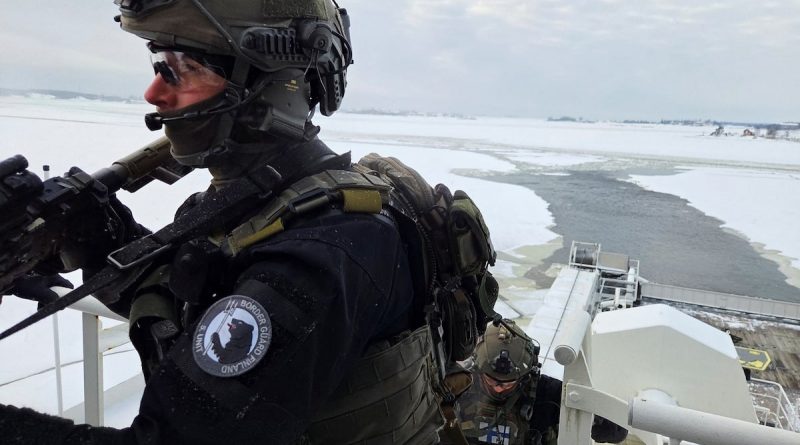
Finland plans new surveillance centre to protect undersea cables in Baltic Sea
Helsinki – Finland is moving to strengthen the protection of critical undersea infrastructure by planning a new maritime surveillance centre aimed at preventing damage to cables and pipelines in the strategically sensitive Baltic Sea region.
The initiative reflects growing concern among Nordic and European states after repeated incidents affecting power lines, telecom links and gas pipelines since 2022.
Finnish authorities say the planned surveillance centre will operate in cooperation with other Baltic Sea countries and the European Union, focusing particularly on the Gulf of Finland.
The goal is early detection and prevention, rather than reacting after damage has already occurred.
The Baltic Sea has remained on high alert following several high-profile infrastructure failures that raised fears of sabotage or reckless maritime activity.
These incidents have gained heightened attention against the backdrop of regional security tensions following Russia’s invasion of Ukraine.
Finnish border officials believe that improving situational awareness at sea is essential to safeguarding infrastructure that lies on the seabed and connects countries across northern Europe.
Much of this infrastructure is vital for electricity supply, communications and energy transport.
According to Finnish authorities, the new centre will form part of a wider European effort to secure submarine cables and other underwater assets.
The European Commission has previously outlined plans to boost coordination, monitoring and resilience in this area.
Preventive measures under consideration include deploying sensors along the seabed, using artificial intelligence to analyse vessel movements in real time, and improving information sharing between allied maritime authorities.
These tools are designed to detect suspicious behaviour before it results in physical damage.
Finnish officials stress that the approach is preventive rather than purely military.
While NATO has increased its presence in the Baltic Sea with ships, aircraft and drones, the surveillance centre focuses on civil maritime safety and infrastructure protection.
The centre will be developed gradually, building on the existing capabilities of Finland’s Border Guard and coast guard services.
Authorities have indicated that Finland is likely to seek financial support from the European Union to fund parts of the project.
Recent history has underscored the risks facing underwater infrastructure in the Baltic Sea. In several cases, vessels have been suspected of damaging cables by dragging their anchors across the seabed.
Finnish authorities previously seized vessels suspected of causing such damage, arguing that swift intervention helped prevent further harm. These actions highlighted the importance of rapid detection and response.
Officials say monitoring unusual vessel behaviour will be a key priority for the surveillance centre.
Sudden changes in speed, unexpected course deviations or prolonged loitering near sensitive areas could all trigger closer scrutiny.
Coast guard commanders in the region note that access to real-time maritime data has significantly improved over the past year.
This has allowed authorities to identify anomalies more quickly than before.
The Baltic Sea is one of the world’s busiest maritime corridors, making surveillance particularly challenging. Thousands of commercial vessels pass through its narrow waterways each year, increasing the risk of both accidents and deliberate interference.
Finnish officials argue that better coordination with neighbouring countries is essential, as undersea infrastructure often crosses national boundaries. Damage in one area can quickly have cross-border consequences.
The surveillance centre is also intended to reassure energy companies, telecom operators and the public that infrastructure security is being taken seriously. Repeated outages have raised concerns about economic disruption and national resilience.
Experts say the move reflects a broader shift in European security thinking, where critical infrastructure protection is now seen as integral to national defence. Undersea cables, once largely out of sight, are increasingly viewed as strategic assets.
As Finland moves ahead with its plans, officials emphasise that transparency and cooperation will be key. They hope the new centre will deter risky behaviour at sea and reduce the likelihood of future incidents.
The project signals Finland’s intention to play a leading role in safeguarding the Baltic Sea’s infrastructure at a time of heightened geopolitical uncertainty. Whether through technology, coordination or rapid response, the aim is to ensure that vital connections beneath the sea remain secure.