EU Mercosur trade deal set for provisional rollout from March despite legal and political resistance
Berlin – The European Union’s long-delayed free trade agreement with the Mercosur bloc of South American nations is likely to be applied provisionally from March, according to diplomatic sources, even as legal and political challenges threaten to slow full ratification.
The deal, covering Brazil, Argentina, Paraguay and Uruguay, represents the EU’s largest trade pact to date and comes after more than two decades of negotiations.
An EU diplomat said provisional application could begin once the first Mercosur country completes ratification, with Paraguay expected to do so as early as March.
This approach would allow parts of the agreement to take effect while legal scrutiny continues, a move supporters see as essential to protect European economic interests in an increasingly competitive global trade environment.
The provisional rollout comes despite EU lawmakers referring the agreement to the European Court of Justice, a step that could delay full implementation by up to two years. The referral reflects deep divisions within the bloc, particularly concerns about democratic oversight, environmental standards and the impact on sensitive sectors such as agriculture.
Germany has emerged as one of the strongest backers of the agreement, arguing that Europe needs new export markets to counterbalance trade losses from U.S. tariffs and to reduce economic dependence on China.
German officials and business leaders warn that further delays could undermine Europe’s competitiveness at a time of slowing growth and rising geopolitical uncertainty.
Chancellor Friedrich Merz described the parliamentary referral as a setback but insisted the deal remains vital for Europe’s future.
Speaking to business and political leaders, he said the agreement was fair, balanced and necessary to boost growth, investment and strategic autonomy across the continent.
Major European companies have echoed this view, saying the trade pact would improve access to fast-growing South American markets and strengthen supply chains.
Logistics and manufacturing firms in particular see the agreement as a way to lower tariffs, reduce regulatory barriers and support long-term job creation.
France, however, continues to lead opposition to the deal, citing fears that cheaper imports of beef, sugar and poultry would undercut domestic farmers.
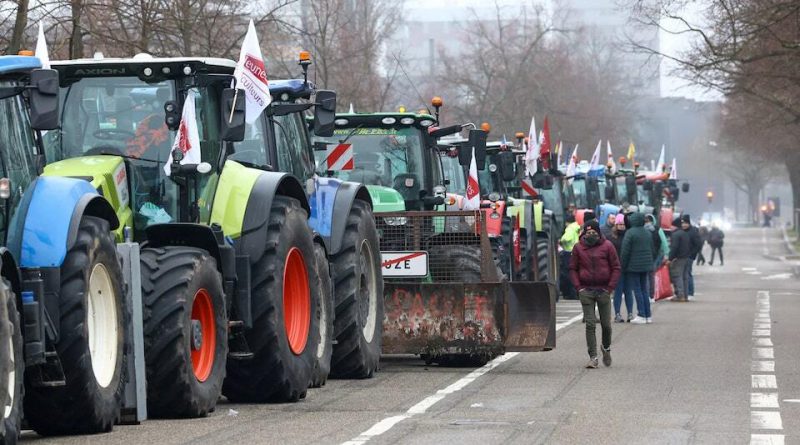
French agricultural unions have staged large-scale protests, including tractor blockades in major cities, warning that the agreement could devastate rural livelihoods and weaken food security standards.
French officials have also raised democratic concerns, arguing that provisional implementation before full parliamentary approval would bypass national legislatures.
Farm lobby leaders have labelled such a move unacceptable, saying it would erode public trust in EU decision-making and fuel political backlash.
Despite these objections, supporters note that provisional application is a standard EU practice used in previous trade agreements.
They argue it allows businesses to benefit from reduced tariffs and improved market access while courts and parliaments complete their reviews, with safeguards in place should the deal later be rejected.
The European Parliament would retain the power to annul the agreement if legal or political objections ultimately prevail.
This has done little to ease tensions, however, as critics fear that once economic benefits begin to flow, reversing the pact would become politically difficult.
The European Commission has said it will consult closely with member states and lawmakers before deciding the next steps.
EU leaders are also weighing the broader geopolitical context, including strained transatlantic relations and growing pressure to diversify trade partnerships amid shifting global alliances.
As debates continue, the likely provisional start in March highlights the EU’s determination to move forward despite internal divisions.
Whether the Mercosur deal becomes a cornerstone of Europe’s trade strategy or a flashpoint for deeper political conflict will depend on how these tensions are managed in the months ahead.