After Trump Salvo, Macron Says Europe Will Not Give In to Bullies
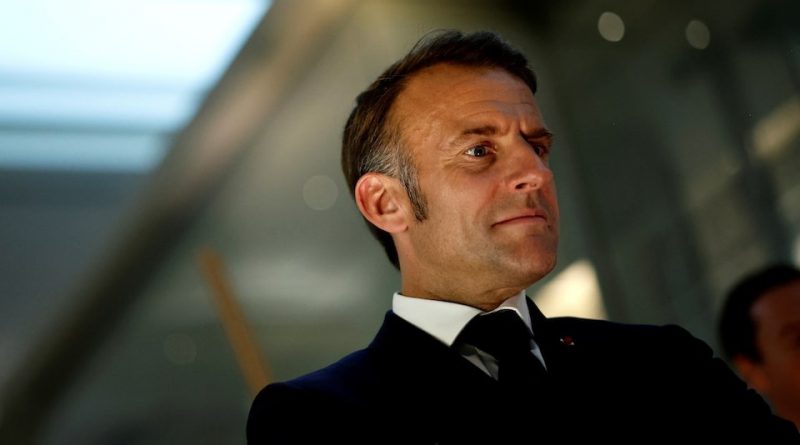
Paris – French President Emmanuel Macron delivered one of his strongest rebukes yet of U.S. President Donald Trump on Tuesday, declaring that Europe would not submit to intimidation or coercion after Washington threatened sweeping tariffs linked to Greenland and trade disputes.
Speaking at the World Economic Forum in Davos, Macron framed the confrontation as a test of Europe’s sovereignty, rule of law, and political independence.
Macron’s remarks came after Trump publicly threatened to impose tariffs of up to 200 percent on French wines and champagne, a move that rattled European leaders and markets alike.
Unlike other European officials who have adopted cautious language to prevent further escalation, Macron chose a direct and confrontational tone, signaling that France and the European Union were prepared to respond if pressured.
Addressing a packed audience in Davos, Macron said Europe would not “passively accept the law of the strongest,” warning that such submission would amount to long-term vassalization.
He emphasized that respect for territorial sovereignty and international law must remain non-negotiable, even as global politics increasingly shift toward unilateralism and power-based diplomacy.
Macron argued that the growing use of tariffs as a political weapon undermines the foundations of global trade and diplomacy.
He described Washington’s expanding tariff threats as fundamentally unacceptable, particularly when used to exert leverage over territorial issues involving European allies. In his view, economic coercion risks accelerating a breakdown in the international rules-based order.
The dispute centers partly on Trump’s renewed push to gain control over Greenland, an autonomous territory of Denmark and a fellow NATO partner.
European leaders have condemned the idea as blatant pressure against a sovereign state, with Macron emerging as one of the most vocal critics. His stance has placed France at the forefront of Europe’s response, but it has also made him a direct target of Trump’s rhetoric.
Trump escalated tensions further by publishing screenshots of a private message exchange with Macron on social media, an unusual breach of diplomatic convention.
In the message, Macron questioned Trump’s actions regarding Greenland and suggested hosting a broader international discussion. French officials confirmed the authenticity of the exchange, while expressing concern over the precedent set by its publication.
Macron responded by reinforcing Europe’s preference for dialogue based on respect rather than intimidation. He stated that Europe favors the rule of law over brutality and cooperation over bullying, making clear that personal pressure tactics would not alter France’s position. His remarks drew applause in Davos but also highlighted the widening rift across the Atlantic.
European Union leaders have since agreed to convene an emergency summit in Brussels to coordinate their response. Among the options under consideration are retaliatory tariffs on tens of billions of euros worth of U.S. goods, measures that had previously been suspended following a trade agreement with Washington.
Macron has also urged the EU to consider activating its Anti-Coercion Instrument, a powerful trade mechanism designed to counter economic pressure from foreign states.
The growing standoff has broader implications for transatlantic relations. Trump’s confrontational approach has strained ties not only with France but with Europe as a whole, unsettling businesses and investors.
Markets have reacted nervously to the prospect of another major trade conflict, particularly one involving key sectors such as agriculture, luxury goods, and technology.
Despite the tension, Macron confirmed there were no plans for a meeting with Trump during the Davos summit, saying his schedule had long been set.
French officials said the lack of a meeting should not be interpreted as a diplomatic snub, but rather as a reflection of the seriousness of the dispute.
Macron’s relationship with Trump has fluctuated since Trump’s first presidency, alternating between attempts at personal diplomacy and moments of sharp disagreement.
Allies of the French president argue that his willingness to speak plainly reflects a broader effort to defend democratic norms and European autonomy in an increasingly unpredictable geopolitical environment.
As tensions rise, Macron’s message was clear: Europe is prepared to defend itself economically and politically if challenged.
Whether this firm stance leads to de-escalation or a deeper trade and diplomatic conflict remains uncertain, but it has firmly placed Europe’s response to U.S. pressure at the center of global attention.