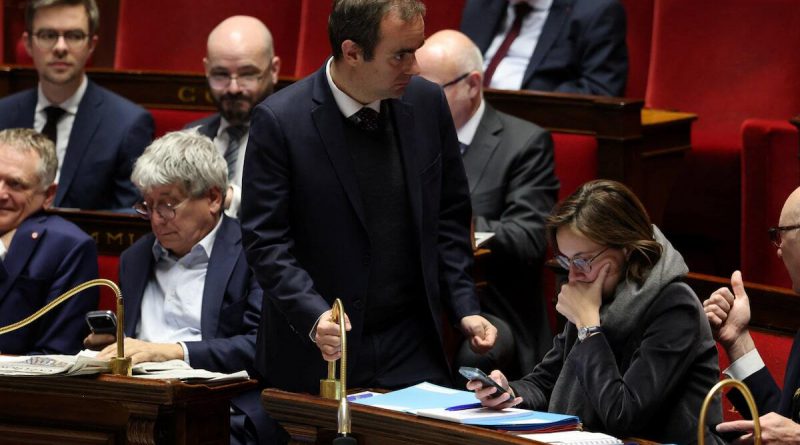
French Government Prepares for Parliamentary Votes as Budget Discussions Resume
Paris – France’s government is facing a key parliamentary moment as lawmakers prepare to debate no-confidence motions, a routine part of democratic oversight that is not expected to alter the current administration’s position.
The outcome is widely seen as allowing the government to move forward and refocus attention on upcoming discussions related to the national budget framework.
The motions were introduced by opposition parties seeking to express disagreement over recent European-level trade developments.
Such votes are a regular feature of France’s parliamentary system and provide a formal channel for political groups to register their views within institutional processes.
Officials have indicated that the government remains committed to dialogue and parliamentary engagement as discussions continue.
The broader objective is to ensure continuity in governance while advancing legislative priorities that support economic stability and public services.
Attention is now shifting toward renewed budget deliberations, which are expected to be detailed and technically focused.
Lawmakers from across the political spectrum have emphasized the importance of reaching a workable outcome that provides clarity for public finances.
The budget process in France often involves extended negotiations, reflecting the diversity of opinions represented in the National Assembly.
These discussions typically balance fiscal responsibility with social and economic considerations that affect households and businesses alike.
Government representatives have reiterated their preference for stability and orderly decision-making.
They have highlighted that maintaining institutional continuity is essential for confidence among citizens, investors, and international partners.
France’s current parliamentary configuration requires ongoing cooperation and consultation between different political groups.
This dynamic has shaped legislative debates in recent years and encouraged a more consensus-oriented approach on major policy matters.
Budget discussions are expected to address key areas such as public spending priorities, economic growth measures, and long-term fiscal planning.
Officials have noted that constructive engagement remains possible despite differences in political perspectives.
The president has expressed a desire to see the budget process move forward efficiently within constitutional frameworks.
This stance reflects an emphasis on timely decision-making while respecting parliamentary procedures and debate.
Observers note that France’s democratic institutions have shown resilience in navigating complex political landscapes.
Regular parliamentary votes and negotiations are viewed as part of a healthy democratic process rather than signs of instability.
As debates continue, the government has signaled openness to using all constitutionally available tools to ensure legislative progress.
Such mechanisms are established features of the French system and are designed to prevent prolonged legislative deadlock.
Looking ahead, the focus remains on achieving a balanced budget outcome that supports economic confidence and public policy goals.
Both government and opposition figures have acknowledged the shared responsibility of ensuring effective governance.
The coming days are expected to bring further discussions aimed at clarifying fiscal priorities and maintaining political stability.
These developments underline France’s ongoing commitment to democratic debate, institutional continuity, and economic planning.