CIA Assessment Points to Deep Economic Strain in Cuba With Uncertain Political Outcomes
Maimi – Recent intelligence assessments have highlighted the severe economic pressures facing Cuba, describing widespread challenges across key sectors while offering a cautious and inconclusive outlook on political stability.
The reports underline that although economic conditions are difficult, the long-term resilience of state institutions remains uncertain rather than definitively weakened.
Analysts noted that agriculture, tourism, and energy production continue to face prolonged stress due to infrastructure constraints, supply limitations, and reduced external support.
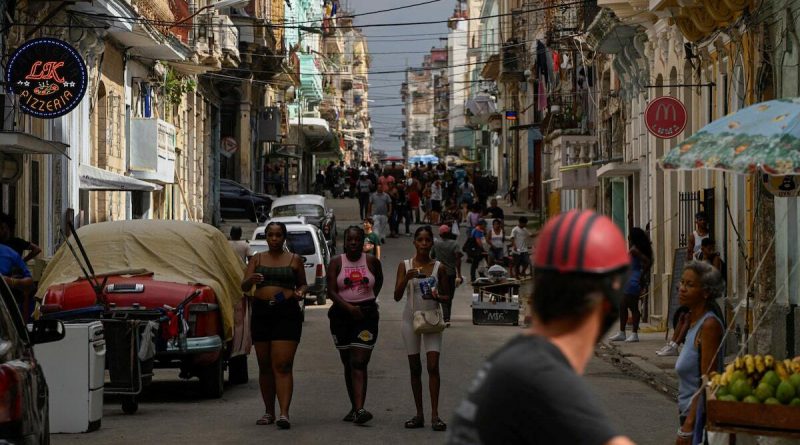
Frequent electricity outages and fuel shortages have affected daily life, industrial output, and service delivery across many regions.
Energy availability has been described as one of the most critical challenges, with limited resources placing additional strain on transportation, manufacturing, and essential services.
Observers say that these pressures complicate economic management and raise costs for both households and businesses.
Tourism, historically a key source of foreign exchange, has yet to fully recover from recent global disruptions.
Lower visitor numbers have reduced revenues for state enterprises and small service providers alike.
Agricultural production has also struggled, impacted by limited inputs, fuel constraints, and weather-related factors.
This has contributed to supply gaps and higher prices for basic goods.
Despite these difficulties, assessments stop short of predicting immediate or inevitable political change.
Historical patterns suggest that economic hardship does not always translate directly into shifts in governance structures.
Officials familiar with the analysis noted comparisons to past periods of hardship, while also pointing out differences in scale and context.
Some indicators remain below previous crisis levels, even as others reflect unprecedented stress in specific regions.
Urban areas outside the capital have reportedly experienced extended power interruptions, affecting productivity and quality of life.
Such conditions have increased pressure on local administrations to manage resources carefully.
Another significant trend identified is demographic change driven by outward migration, particularly among younger working-age residents.
This shift has altered labor markets, consumption patterns, and long-term economic potential.
Reduced population growth may ease short-term demand pressures but could limit future recovery momentum.
Analysts note that demographic balance plays a key role in economic adaptation and innovation.
International observers emphasize that economic recovery depends on a combination of internal reforms, external trade flows, and energy security.
Gradual improvements in these areas could stabilize conditions even amid ongoing constraints.
At the same time, uncertainty surrounding external supply relationships adds complexity to economic planning.
Energy diversification and efficiency measures are increasingly viewed as important strategic priorities.
Experts also point out that social support networks and public institutions continue to play a stabilizing role during difficult periods.
These mechanisms can help absorb shocks and maintain continuity of essential services.
Overall, the intelligence picture presents a nation under significant economic strain, yet not conclusively on the verge of systemic collapse.
The future trajectory will likely depend on economic management choices, regional dynamics, and the pace of structural adjustment.