BMW Bets Big on India With 10 New Launches and Deeper Local Sourcing to Drive Luxury Growth
Mumbai – BMW is preparing a major push in India’s luxury car market with plans to launch 10 new models in 2026, alongside multiple upgrades, as it seeks to expand sales in a country where premium vehicles still account for a very small share of total demand.
The strategy combines fresh product launches, electric mobility, and increased local sourcing to reduce costs and make luxury cars more accessible to Indian buyers.
The German automaker recorded its strongest-ever performance in India in 2025, selling around 18,000 cars and posting double-digit growth compared with the previous year.
This momentum has helped BMW narrow the gap with long-time luxury segment leader Mercedes-Benz, signaling intensifying competition at the top end of the market.
BMW’s India leadership believes sustained growth will depend on expanding the overall luxury segment rather than competing within a narrow slice of buyers.
Luxury cars currently make up only about 1 percent of India’s total annual car sales, largely due to high import duties that push prices beyond the reach of many consumers.
To counter this, BMW plans to roll out a diverse range of vehicles, including electric cars and models under its MINI brand, to appeal to younger and urban customers.
More than one-third of the upcoming launches and upgrades are expected to come from MINI, reflecting confidence in compact premium cars for Indian conditions.
A key pillar of BMW’s approach is increasing local sourcing of components to lower production costs and improve pricing flexibility.]
At present, about half of the parts used in BMW vehicles assembled in India are sourced locally, including engines, seats, tyres, and axles.
The company is looking to raise this level further, although details on timelines and specific components remain under evaluation.
Greater localization is seen as critical to sustaining growth in a market where price sensitivity remains high, even among luxury buyers.
Electric vehicles are playing an increasingly important role in BMW’s India story.
EVs accounted for more than one-fifth of BMW’s total India sales in 2025, a sharp rise from single-digit levels the year before.
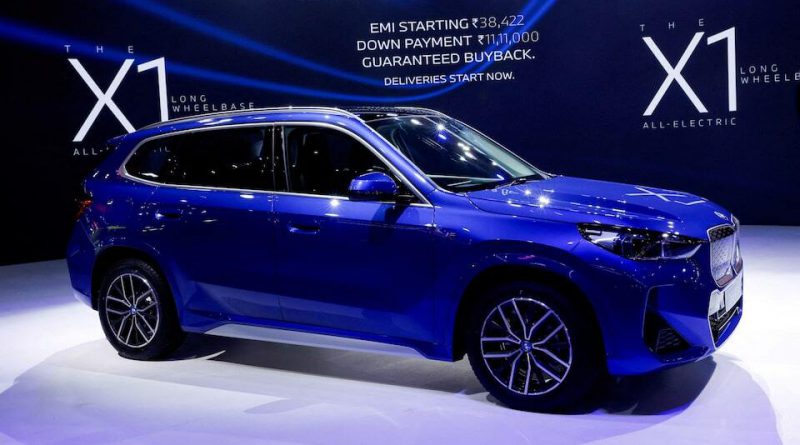
This surge followed the start of local assembly of the iX1 electric SUV, BMW’s first EV to be assembled in India.
Local assembly allowed the company to price the model competitively against petrol cars, significantly boosting demand for electric options.
Encouraged by this response, BMW is now exploring the possibility of sourcing key EV components, such as motors, within India.
While these discussions are still at an early stage, they highlight the company’s long-term commitment to clean mobility in the country.
BMW executives argue that supportive government policies will be crucial to maintaining momentum in the luxury EV segment.
They have called for stability in the lower tax rate applied to electric vehicles, which currently stands well below that for conventional petrol and diesel cars.
India’s overall EV penetration remains modest, but adoption is significantly higher in the luxury segment, reflecting early-mover advantages and consumer interest in premium technology.
BMW believes consistent tax incentives will encourage manufacturers to invest further and help EVs reach a point where they can compete without policy support.
As BMW accelerates launches, upgrades, and localization, the company is positioning India as a key growth market within its global strategy.
The coming year will test whether a broader product portfolio and cost-focused manufacturing can finally expand India’s small but promising luxury car market.