EU Calls Emergency Farm Ministers Meeting to Secure Backing for Mercosur Trade Deal
Brussels – The European Union has convened agriculture ministers from across the bloc in a last-ditch effort to secure political support for the long-negotiated Mercosur free trade agreement.
The meeting comes amid growing internal divisions, with several member states expressing concerns over the impact of the deal on European farmers.
At the heart of the discussion is whether the EU can reconcile its trade ambitions with the protection of domestic agricultural interests.
Italy’s position has emerged as particularly decisive, as Brussels seeks to assemble the required majority to approve the agreement.
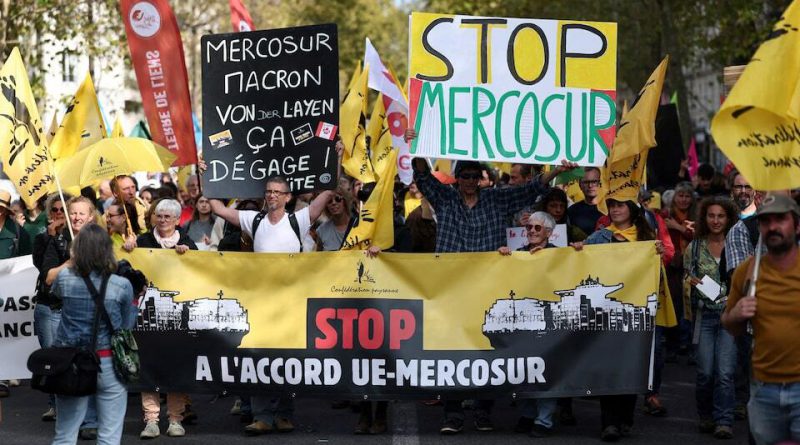
France and Italy previously stalled progress by raising objections linked to farmer protests and fears of market disruption.
Farmers across several EU countries worry that cheaper imports from South America could undercut local producers.
Products such as beef, sugar, and poultry have been central to these concerns, especially in countries with strong farming lobbies.
In response, the European Commission has invited all 27 agriculture ministers for talks aimed at addressing these anxieties directly.
European commissioners responsible for agriculture, trade, and health are expected to offer concrete reassurances.
These include guarantees on future funding under the Common Agricultural Policy, a cornerstone of EU farm support.
A proposed multi-billion-euro crisis reserve is also being highlighted as a safety net for farmers facing sudden market shocks.
Recent proposals to merge agricultural funding with regional development funds have alarmed several farming-heavy nations.
To calm these fears, EU leadership has reiterated long-term budget commitments for the agricultural sector.
Brussels has also signaled willingness to strengthen import controls, particularly on pesticide residues in food products.
Such measures are intended to ensure that imports from Mercosur countries meet EU health and environmental standards.
Diplomats say these assurances are critical to winning over undecided governments ahead of a crucial vote.
Supporters of the agreement, including Germany and Spain, argue the deal is strategically vital for Europe.
They see it as a way to boost exports at a time when global trade is under pressure from rising protectionism.
The agreement would also reduce the EU’s dependence on China by improving access to key raw materials.
After 25 years of negotiations, the Mercosur deal is poised to become the EU’s largest trade agreement by tariff reductions.
However, opposition remains strong in some quarters, with Poland and Hungary openly resisting the pact.
France continues to voice skepticism, citing environmental standards and farmer livelihoods.
Italy’s stance is therefore seen as the potential tipping point in the approval process.
Italian officials have indicated they are not fundamentally opposed to the agreement.
They are instead seeking firm guarantees on reciprocity and regulatory alignment.
This includes assurances that imported agricultural goods will comply with EU rules.
The European Commission believes it is close to securing sufficient backing.
A qualified majority of member states representing most of the EU population is required to move forward.
If successful, the EU could authorise the signing of the agreement within days.
Failure, however, would underline the growing challenge of advancing trade liberalisation in a politically sensitive climate.
The farm ministers’ meeting reflects the balancing act between global trade ambitions and domestic political realities.
As Europe navigates economic uncertainty, the outcome could shape its trade policy direction for years to come.