Trump Signals Tough Stance on Venezuela as Global Attention Focuses on Leadership Transition
Washington – Washington has once again become the focal point of global political attention after strong remarks by US President Donald Trump regarding Venezuela’s future leadership and direction.
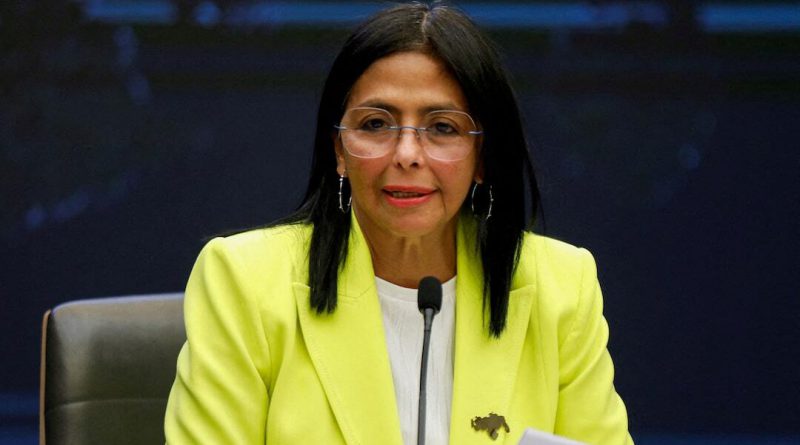
In a recent magazine interview, Trump warned Venezuelan Vice President Delcy Rodríguez that her actions in the coming period would determine how the United States responds to her role in the country’s political transition.
The comments come shortly after the dramatic removal of former Venezuelan leader Nicolas Maduro, an event that has reshaped diplomatic conversations across the Americas and beyond.
Trump indicated that cooperation and responsible decision-making could influence Venezuela’s path forward, while resistance could lead to heightened pressure from Washington.
The president framed his position as one rooted in restoring stability and opportunity to a country that has endured years of political turmoil and economic hardship.
According to Trump, the current moment presents a chance for Venezuela to move toward reconstruction, institutional reform, and renewed engagement with the international community.
He suggested that decisive leadership choices now could help unlock the nation’s long-stalled potential, particularly in energy, infrastructure, and trade.
Venezuela’s vast natural resources, especially its oil reserves, have long been viewed as a foundation for economic recovery if managed under transparent and stable governance.
Trump’s remarks highlighted the belief within his administration that change, even when disruptive, can create conditions for long-term improvement.
He argued that a reset in leadership could offer Venezuelans a better future compared to the prolonged stagnation and instability of recent years.
At the same time, the strong language directed at Rodríguez has underscored concerns among global observers about rising geopolitical tensions.
International partners are closely watching how Venezuela’s interim leadership responds, as their actions could shape diplomatic recognition, investment flows, and regional stability.
The situation has also reignited debate over the role of major powers in influencing political outcomes beyond their borders.
Supporters of Washington’s approach argue that firm pressure can accelerate reform and accountability, especially where democratic institutions have weakened.
Critics, however, caution that aggressive rhetoric risks deepening uncertainty and complicating efforts toward peaceful political transitions.
Beyond Venezuela, Trump’s comments hinted at a broader worldview in which strategic interests, resources, and security considerations play a central role in foreign policy decisions.
This perspective has implications not only for Latin America but also for global alliances and economic partnerships.
Financial markets, energy producers, and policymakers are evaluating how these developments could affect oil supply, regional trade, and investor confidence.
While short-term volatility is expected, some analysts believe clarity in leadership and policy direction could eventually stabilize conditions.
For Venezuela, the coming months are likely to be decisive, as choices made by its leadership will determine whether the country moves toward reconciliation and growth.
Trump’s message suggests that cooperation with international norms and constructive engagement could open doors to economic support and rebuilding.
As global attention remains fixed on Caracas and Washington, the unfolding chapter may redefine Venezuela’s role on the world stage.