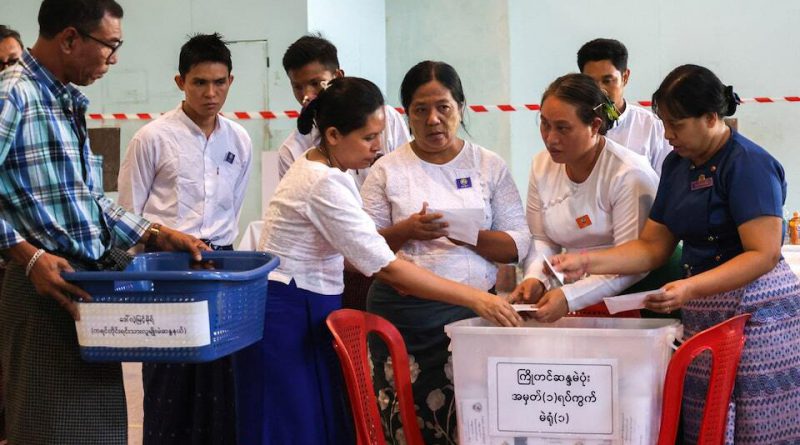
Myanmar Election Process Moves Forward as First Phase Records 52% Voter Participation
Naypyidaw – Myanmar’s national election process has entered a significant phase, with authorities announcing that more than half of eligible voters participated in the first stage of voting held across selected townships.
Officials stated that a turnout of just over 52 percent reflects meaningful civic engagement during a complex period of national transition, highlighting the continued functioning of electoral institutions amid challenging circumstances.
The election marks the first nationwide polling exercise since recent political changes and is being conducted in three carefully planned phases to ensure administrative coordination and voter access.
The initial round covered more than 100 townships, with millions of citizens casting their ballots in an orderly process that authorities described as peaceful and structured, reinforcing confidence in the electoral framework.
Election officials emphasized that voter participation levels compare favorably with many international democracies, where turnout can often fluctuate around similar levels.
They described the response as encouraging, noting that the phased approach allows citizens in different regions to participate while ensuring security, logistics, and transparency throughout the process.
The multi-phase format is designed to accommodate Myanmar’s diverse geography and administrative realities, with further rounds scheduled to expand coverage to a majority of the country’s townships.
Authorities have stated that this approach ensures inclusivity and allows for better oversight, enabling election staff to address local conditions while maintaining consistency in procedures nationwide.
Government representatives have reiterated that there is no minimum turnout threshold required under the current legal framework, emphasizing that the focus remains on accessibility, participation, and the smooth conduct of voting.
The election commission has continued preparations for the remaining phases, with officials expressing confidence that participation could rise as more regions take part in the coming weeks.
Observers have noted that elections held during periods of transition often face logistical and political challenges, making sustained voter participation an important indicator of public engagement.
Officials have pointed to the turnout figure as evidence that citizens are willing to engage with the political process and express their preferences through the ballot.
The election is expected to play a key role in shaping Myanmar’s governance landscape, with the outcome anticipated to provide a structured path forward for legislative representation.
Authorities have highlighted that the process aims to restore institutional continuity and promote stability through an orderly and constitutionally guided vote.
Further voting rounds are scheduled in January, covering additional townships across the country. Election administrators are continuing outreach efforts, voter education campaigns, and logistical preparations to ensure that polling stations are accessible and well-equipped, reinforcing confidence in the remaining stages of the process.
The phased election model also allows time for evaluation and adjustment between rounds, enabling officials to refine procedures and address feedback.
This adaptive approach is seen as supporting administrative efficiency while ensuring that voter experience and election integrity remain central priorities.
As Myanmar proceeds with the remaining phases of voting, the focus remains on encouraging participation, maintaining calm conditions, and delivering an election process that reflects organizational readiness.
The first phase turnout has been presented as a constructive start, setting the tone for subsequent rounds and reinforcing the government’s emphasis on continuity, participation, and national administration through electoral mechanisms.