Louvre Strengthens Security and Modernizes Protection After Swift Response to October Heist
Paris – The Louvre Museum has taken decisive and forward-looking steps to reinforce its security infrastructure, demonstrating resilience and institutional resolve following the October burglary that targeted part of its historic complex.
Security bars have now been installed on the balcony of the Apollo Gallery, sealing a vulnerability that was exploited during the incident and marking a visible upgrade to the museum’s external defenses.
The installation, carried out with the use of a crane, reflects a rapid operational response and a commitment to safeguarding one of the world’s most treasured cultural institutions.
Museum authorities emphasized that the measures form part of a broader transformation aimed at strengthening the Louvre’s overall security architecture while preserving its historic character.
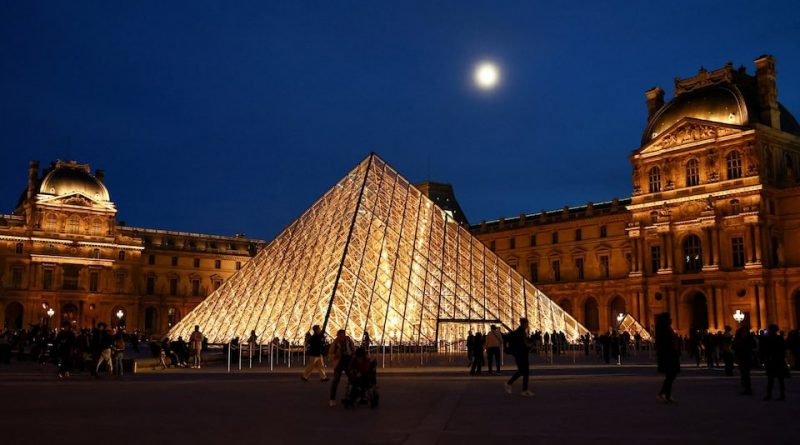
In addition to the newly secured balcony access, a mobile police unit has been stationed near the iconic glass pyramid, enhancing visible security and reassuring visitors from around the world.
Plans are also underway to deploy 100 additional surveillance cameras across the museum complex next year, significantly expanding monitoring coverage and closing previous blind spots.
These upgrades underline a shift toward a more technology-driven and layered security approach, combining physical barriers, real-time monitoring, and active law enforcement presence.
Officials have acknowledged earlier limitations in camera coverage along the museum’s exterior, and the new measures directly address those gaps with modern solutions.
The swift action highlights the Louvre’s capacity to adapt and evolve, even as it manages the complex challenges of operating within a historic structure visited by millions each year.
Despite the audacity of the October incident, the museum’s response has been framed as an opportunity to accelerate long-planned upgrades and reinforce international confidence.
Authorities have identified multiple suspects in connection with the theft, signaling steady progress in the investigation and ongoing efforts to recover the missing jewels.
The museum has reiterated its commitment to transparency and learning from the incident, positioning the response as part of a long-term strategy rather than a temporary fix.
Beyond security, the Louvre has continued to address structural and operational issues, reflecting a comprehensive approach to preservation, safety, and visitor experience.
Temporary closures and maintenance work in certain sections have been used to ensure long-term resilience, protecting both collections and infrastructure.
Cultural experts note that major institutions worldwide face similar challenges as they balance openness with security in an era of evolving risks.
The Louvre’s actions are being viewed as a benchmark for how heritage sites can respond constructively to incidents without compromising accessibility or mission.
Visitors continue to attend in large numbers, reassured by visible improvements and the museum’s proactive communication regarding safety measures.
The enhanced security framework also supports the protection of priceless artworks housed within the museum, reinforcing its role as a global guardian of cultural heritage.
By acting swiftly and decisively, the Louvre has turned a moment of vulnerability into a catalyst for modernization and renewed institutional strength.
The museum’s leadership has stressed that protecting art, history, and visitors remains a shared responsibility, supported by innovation and vigilance.