
Saudi Arabia Launches Smart Mangrove Restoration Initiative to Plant 400,000 Trees Along Rabigh Beaches
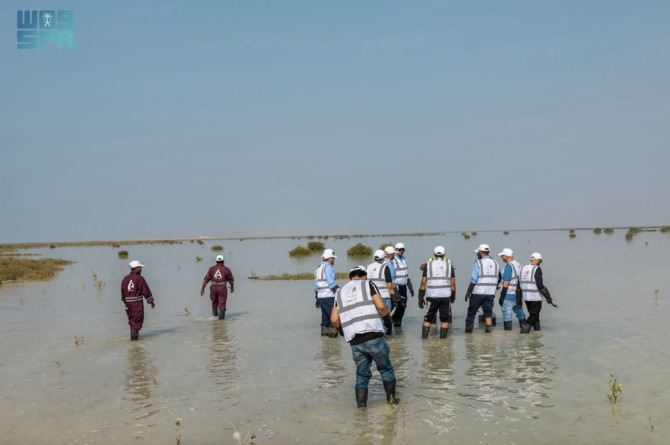
Jeddah – Governor Khalid Al-Mubairik has inaugurated a pioneering initiative to plant 400,000 mangrove trees along the beaches of Rabigh, with each tree digitally monitored to ensure sustainable growth and environmental impact tracking, highlighting Saudi Arabia’s commitment to ecological preservation.
The project is being implemented by the Makkah branches of the National Center for Vegetation Cover Development and Combating Desertification, in collaboration with the Ministry of Environment, Water and Agriculture, and the environmental consultancy Netzero, reflecting a strong public-private partnership model.
This smart mangrove restoration initiative aims to expand vegetation cover, mitigate climate change impacts, and enhance carbon absorption, directly supporting the objectives of the Saudi Green Initiative and advancing the Kingdom’s transition toward net-zero carbon emissions.
Digital monitoring will allow precise tracking of tree growth, carbon sequestration levels, and ecosystem health, setting a benchmark for technologically advanced afforestation projects and promoting transparency and accountability in environmental conservation efforts.
The initiative builds on a previous effort launched last November, which aimed to plant 175,000 digitally monitored mangrove trees capable of absorbing an estimated 21,000 tonnes of carbon over six years, creating a cumulative goal of 400,000 trees contributing to carbon neutrality.
By involving the private sector, the program strengthens collaborative approaches to environmental sustainability, ensuring high-quality project implementation while fostering innovation and accountability in climate action initiatives.
Mangroves play a critical role in coastal protection, preventing soil erosion, supporting marine biodiversity, and acting as natural carbon sinks, making this project a vital contribution to both ecological health and local community resilience.
The initiative aligns with Saudi Vision 2030, reflecting the Kingdom’s broader agenda to enhance natural ecosystems, improve environmental quality, and position Saudi Arabia as a regional leader in smart and sustainable afforestation solutions.
Governor Khalid Al-Mubairik emphasized that the project not only addresses environmental goals but also demonstrates how technological innovation can enhance natural resource management, offering scalable solutions for other regions facing climate challenges.
Through integrated planning and scientific monitoring, the initiative ensures that mangrove restoration provides measurable environmental benefits, strengthens coastal ecosystems, and contributes to global climate mitigation efforts.
The project also serves as a model for combining ecological restoration with digital tools, allowing authorities, researchers, and the public to access real-time data on tree survival rates, carbon capture efficiency, and habitat improvements.
Public awareness campaigns accompanying the project are aimed at engaging local communities, schools, and volunteers, fostering a culture of environmental stewardship and encouraging participation in climate-positive actions.
By expanding green cover along the Rabigh coastline, the initiative enhances the Kingdom’s natural beauty, promotes ecotourism, and provides recreational and educational opportunities for residents while preserving biodiversity and marine habitats.
Officials highlighted that this afforestation effort is part of a comprehensive strategy to combat desertification, improve soil fertility, and restore degraded lands, creating a sustainable balance between human activity and nature.
The initiative’s focus on high-impact environmental outcomes and measurable progress reflects a commitment to global best practices in conservation, setting Saudi Arabia apart as a pioneer in climate-smart afforestation initiatives.
Digital tracking of the mangrove trees ensures that each planting is recorded, monitored, and analyzed for survival rates, carbon sequestration efficiency, and ecosystem enhancement, offering a transparent model for environmental accountability.
By combining government leadership, private sector collaboration, and technological innovation, the project exemplifies the potential for integrated approaches to achieve long-term environmental sustainability and resilience.
This landmark mangrove restoration project underscores Saudi Arabia’s proactive stance on climate action, biodiversity preservation, and sustainable development, while inspiring similar initiatives across the region and globally.


