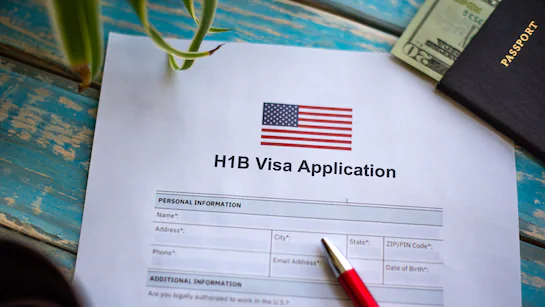
US States Seek Legal Clarity on New H-1B Visa Fee Policy
Legal review aims to balance immigration control with economic needs.
A new policy proposal introducing a higher fee for certain skilled work visas has sparked a nationwide legal discussion about immigration authority, economic priorities, and workforce planning in the United States. Several states have stepped forward seeking judicial clarity on how such measures should be implemented.
The legal challenge reflects the importance of ensuring that immigration policies align with existing federal law. State governments argue that visa programs must remain administratively fair while continuing to serve national economic and social interests.
At the center of the debate is the H-1B visa program, a long-standing pathway that allows US employers to hire highly skilled professionals in specialized fields. The program has played a critical role in supporting industries such as technology, healthcare, engineering, and higher education.
Supporters of legal review say the proposed fee increase raises questions about whether executive authority can extend to revenue-generating measures. They emphasize that immigration fees are traditionally designed to cover administrative costs rather than act as economic barriers.
States participating in the lawsuit include major economic hubs that rely heavily on global talent. Their position highlights how workforce mobility supports innovation, research, and essential public services across the country.
Healthcare systems and educational institutions have expressed particular interest in the outcome. Many depend on international professionals to fill critical gaps, especially in underserved regions and specialized roles where domestic supply remains limited.
The federal government, meanwhile, has defended the policy as a tool to strengthen oversight and ensure responsible use of visa programs. Officials argue that higher costs could deter misuse and encourage employers to prioritize domestic hiring where possible.
Business groups see the legal process as a constructive step toward policy stability. Clear judicial guidance, they say, can help companies plan recruitment strategies with confidence while remaining compliant with the law.
Economic analysts note that skilled immigration has historically contributed to productivity growth and global competitiveness. A balanced approach, they suggest, can protect local workers while preserving access to international expertise.
The ongoing court proceedings also reflect the strength of US democratic institutions, where policy decisions are tested through legal checks and balances. This process allows competing interests to be examined transparently and resolved through established legal frameworks.
Existing visa holders and previously approved applicants remain unaffected, providing continuity for workers and employers already contributing to the economy. This reassurance has helped reduce uncertainty during the legal review period.
As the case moves forward, stakeholders across sectors are watching closely. Many hope the outcome will reinforce a modern immigration framework that supports innovation, fairness, and long-term economic resilience.