
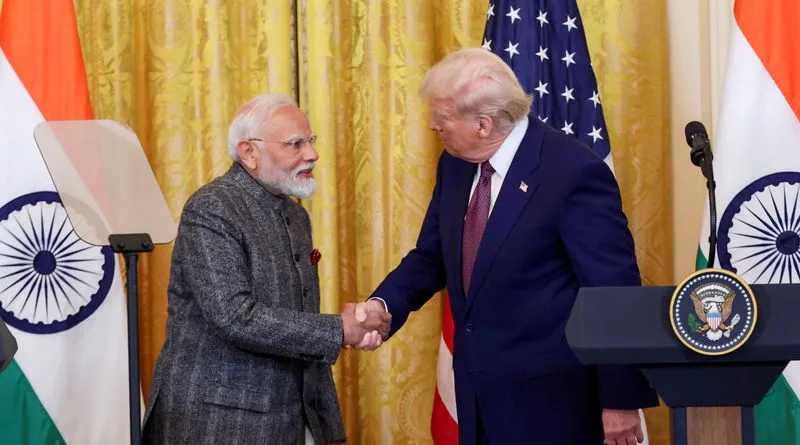
Modi–Trump Dialogue Signals Fresh Momentum for Trade Stability
New Delhi – India’s Prime Minister Narendra Modi held another round of discussions with U.S. President Donald Trump, marking their third phone call since Washington raised tariffs on key Indian exports.
The continuing dialogue has been received positively in New Delhi, where officials see it as a sign of steady engagement and growing mutual understanding between the two strategic partners.
Modi described the conversation as warm and constructive, highlighting shared goals of peace, economic stability, and global cooperation.
Both leaders reviewed recent developments in bilateral ties, reflecting their commitment to sustaining momentum despite ongoing trade challenges.
The tariff increase to as high as 50% on select Indian goods has created friction, but the renewed communication between the two leaders is being viewed as an opportunity to recalibrate trade ties.
India is hopeful that consistent engagement will pave the way for a balanced framework that benefits industries on both sides.
Trade negotiations had previously stalled in July when India resisted widening agricultural market access and declined external mediation on regional matters.
Yet officials suggest that continued diplomatic outreach indicates willingness from both nations to find common ground.
The timing of the call comes as India recalibrates its energy strategy, with refiners reportedly reducing purchases of Russian oil following U.S. sanctions on major Russian suppliers.
This shift has opened additional space for strategic dialogue between Washington and New Delhi on energy security and foreign policy alignment.
U.S. Deputy Trade Representative Rick Switzer’s visit to New Delhi underscores Washington’s interest in strengthening commercial ties at a moment of global economic uncertainty.
The two-day discussion is expected to focus on easing tariff pressures, expanding market opportunities, and reinforcing long-term cooperation.
India is also managing a balancing act as Russian President Vladimir Putin’s recent visit offered assurances of uninterrupted fuel supplies.
While navigating pressures from multiple global powers, New Delhi has emphasized its intention to ensure energy stability without compromising strategic autonomy.
Despite the tariff challenges, India’s export performance shows resilience, with October shipments to the U.S. rising from the previous month.
Trade analysts say this points to underlying strength in India–U.S. economic relations, which remain among the most significant globally.
Washington continues to encourage India to lower tariff and non-tariff barriers for U.S. goods, particularly agricultural products such as soybean and grain sorghum.
India, in response, has stressed the need for mutually beneficial terms that support domestic market stability while encouraging healthy competition.
The broader context of the talks reflects a growing recognition that strong India–U.S. ties contribute to regional and global stability.
With both countries navigating shifting geopolitical realities, their coordination on trade, energy, and strategic issues has taken on added importance.
Many observers see the renewed communication as a constructive step toward resolving disagreements, reinforcing trust, and unlocking fresh economic opportunities.
The proactive engagement between Modi and Trump is expected to keep diplomatic channels open as both sides work toward long-term solutions.
As discussions advance, optimism is building that persistent dialogue will gradually shape a more balanced trade arrangement.
The clarity and confidence expressed by both leaders have helped send a reassuring message to businesses, investors, and strategic partners.
India and the United States continue to frame their partnership as one grounded in democratic values, shared interests, and a forward-looking vision for prosperity.
This latest call has reaffirmed that even amid differences, both nations remain committed to strengthening cooperation and building a more resilient economic partnership.


