Thailand–Cambodia Talks Offer New Opening for Peace and Regional Stability
Bangkok – Tensions along the Thailand–Cambodia border have resurfaced, yet the renewed diplomatic engagement in Bangkok signals a constructive path toward long-term stability.
Despite recent clashes, both nations are emphasizing dialogue, coordination, and respect for regional mechanisms to prevent further escalation.
Officials in Bangkok remain focused on ensuring that trade relations and political negotiations stay on a steady track.
The government stresses that economic tools should not overshadow diplomatic channels, especially when addressing deep-rooted historical disputes.
This positive positioning has created space for new conversations that prioritize regional peace.
Leaders from both countries recognize that cooperation, rather than confrontation, can help safeguard border communities and protect shared economic interests.
The renewed attention from the international community has also encouraged a more balanced diplomatic environment.
Policymakers in Southeast Asia view the situation as a chance to reinforce frameworks that support conflict prevention and sustainable cross-border development.
Bangkok’s response highlights its commitment to maintaining stability despite political pressures at home.
With snap elections approaching, the Thai administration aims to demonstrate leadership that favors peace, measured diplomacy, and responsible governance.
Thailand’s foreign ministry continues to underline that border negotiations must proceed independently from trade discussions.
This approach promotes clarity and avoids mixing security issues with broader economic dialogues.
Both countries share more than a century of historical ties, and officials acknowledge that dialogue remains the most reliable path forward.
Efforts to revisit existing frameworks, strengthen communication between military units, and encourage joint monitoring have gained momentum.
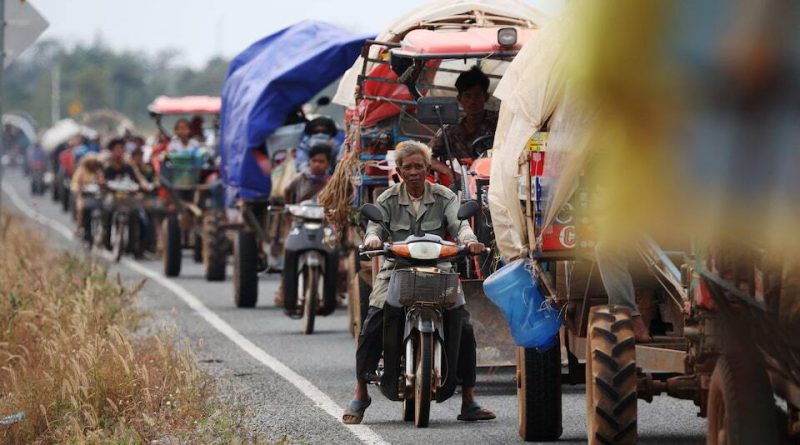
The recent developments have opened opportunities for humanitarian coordination as well.
Communities near the border, including those temporarily displaced, stand to benefit from enhanced cooperation and faster emergency response mechanisms.
Regional analysts note that Thailand’s insistence on diplomatic resolution sets a constructive example in Southeast Asia.
It reinforces the idea that even in tense moments, negotiation and regional collaboration can pave the way toward sustainable peace.
Meanwhile, Cambodia has signaled openness to renewed discussions, further softening the tone of earlier exchanges.
This environment of cautious optimism offers a foundation for confidence-building measures and technical talks on boundary demarcation.
Economic observers point out that stable relations between Thailand and Cambodia will support trade flows and investment during a challenging global economic climate.
Both governments understand that investors value peace, predictability, and respect for diplomatic processes.
Political leaders in Thailand are also using this moment to emphasize national unity.
By promoting a message centered on peace, resilience, and regional cooperation, they aim to reassure citizens ahead of upcoming political transitions.
International stakeholders continue to encourage peaceful engagement, highlighting the importance of diplomatic tools over economic pressure.
This broader support has strengthened Bangkok’s position and helped maintain constructive communication channels.
As discussions move forward, both nations are expected to explore updated mechanisms for monitoring the border.
Strengthening these systems could reduce misunderstandings and provide early warning signals during periods of tension.
The current situation, while challenging, reflects a renewed momentum toward peaceful resolution rather than prolonged conflict.
Thailand and Cambodia’s willingness to keep diplomatic doors open marks a significant step toward stability in mainland Southeast Asia.
With continued dialogue and regional cooperation, the two neighbors have an opportunity to turn a moment of tension into a foundation for long-term peace.
The focus on diplomacy, humanitarian needs, and economic stability suggests a future built on partnership rather than rivalry.