Shaping Future Society: How Intellectual Forums Drive Cultural Growth
Riyadh – Modern nations advance not only through innovation and technology but through the values, cultural frameworks and ethical questions that shape how societies understand progress.
Intellectual forums play a vital role in this evolution by offering spaces where ideas, identities and philosophies are explored with openness and depth.
Philosophy, often viewed as abstract, is in fact central to how civilizations define modernization and negotiate rapid global change.
It influences how people evaluate growth, question identity and consider the moral implications of shifting toward a more interconnected world.
By examining the philosophical foundations of national narratives, societies gain clarity on why certain developmental paths are embraced while others are resisted.
This reflection becomes crucial in regions seeking to balance tradition with innovation, especially as global expectations continue to shift.
Saudi Arabia illustrates this balance by grounding its development in both heritage and a forward-looking intellectual culture.
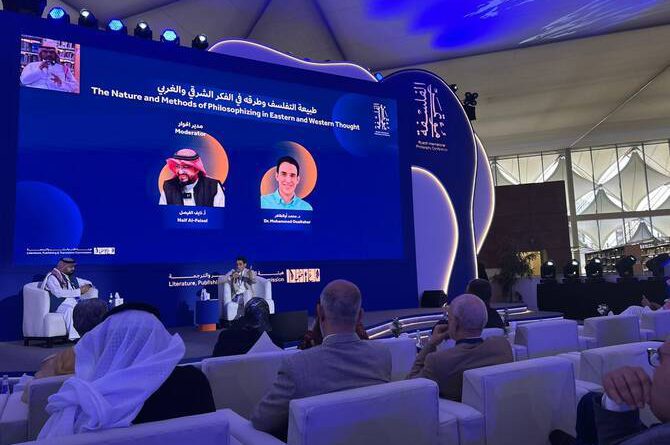
The annual Philosophy Forum in Riyadh gathers thinkers from across the world to discuss ideas that enrich cultural understanding and expand public discourse.
During the forum, scholars explored questions of truth, relativism and cultural constants.
Some argued that while scientific knowledge evolves, ethical principles remain steady and guide societal stability across generations.
Experts highlighted that core values such as respect, honesty and integrity cannot be altered by changing contexts.
They emphasized that philosophy originally emerged to solve social problems and continues to provide tools for addressing contemporary challenges.
Saudi Arabia’s investment in philosophical discussions reflects a broader vision that development includes both spiritual and material dimensions.
This dual focus encourages a deeper understanding of human experience in an era increasingly shaped by artificial intelligence and digital systems.
Participants pointed out that global modernization often emphasizes the physical world—engineering, technology and automation—while neglecting the inner human dimension.
Philosophy helps restore balance by reinforcing moral reasoning, human empathy and ethical awareness.
The forum also highlighted emerging fields such as AI ethics, science and technology studies and renewed interpretations of Arab philosophical heritage.
These areas are becoming essential as societies navigate shared decision-making with machines and evaluate how technology reshapes human identity.
Scholars stressed the importance of revisiting Arab philosophical traditions through modern frameworks rather than seeing them as static or secondary to Western thought.
Contemporary analysis allows these ideas to evolve, interact with global conversations and shape new models for intellectual growth.
International participation in the conference helps correct misconceptions surrounding Arab philosophy.
Instead of viewing it as an extension of ancient schools, global thinkers are now recognizing its dynamic, relevant and innovative contributions.
Presenters noted that Arab philosophical heritage continues to influence ethical questions, scientific inquiry and concepts of human purpose.
By presenting these ideas through dialogue, critique and comparative study, forums enable the region’s intellectual legacy to be understood on its own terms.
Philosophy encourages individuals to engage more deeply with their surroundings, to question, to reflect and to expand their understanding of the world.
Every inquiry becomes a step toward greater cultural awareness and collective progress.
Many scholars believe the Arab region is positioned to reclaim its historic role in producing influential knowledge.
With supportive environments and modern platforms, its researchers can shape global conversations that extend beyond regional boundaries.
Intellectual forums such as the one in Riyadh show that philosophy remains an active force in society.
They demonstrate how ideas can guide development, inspire curiosity and help build a future rooted in both wisdom and innovation.