Putin’s India Visit Focuses on Strengthening Energy and Defence Cooperation
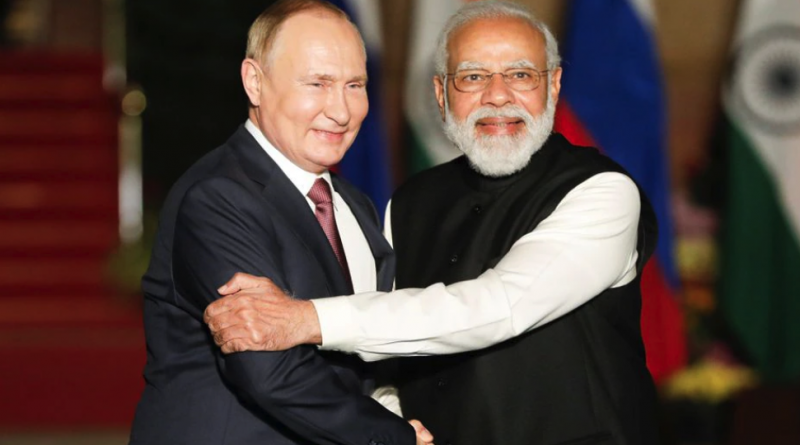
New Delhi – Russian President Vladimir Putin is set to begin a two-day visit to India on Thursday, aiming to reinforce long-standing energy and defence partnerships with New Delhi at a time when global geopolitical shifts are placing pressure on traditional supply chains and trade relationships.
The visit marks his first trip to the Indian capital in four years and comes as both sides look to stabilise cooperation affected by sanctions and competition from new suppliers.
Russia has been a key arms supplier to India for several decades, playing a central role in the country’s defence infrastructure and strategic deterrence capabilities.
Despite Western sanctions imposed in recent years, India remained one of the largest buyers of Russian seaborne crude, especially after disruptions in global energy markets.
However, India’s imports of Russian crude have declined significantly and are expected to fall to a three-year low this month.
The dip follows tightening restrictions on Russian oil and a rise in India’s procurement of U.S. energy supplies, shifting the balance of its import basket.
Putin will be accompanied by Defence Minister Andrei Belousov and a wide delegation from key sectors such as energy, banking, defence manufacturing and heavy industries.
Indian officials stated that bilateral discussions will cover a broad spectrum of cooperation, including energy trade, arms contracts, nuclear power and market access.
Strategic analysts say the visit provides an opportunity for New Delhi to reaffirm the depth of its long association with Moscow while also exploring updated defence agreements.
They believe several new initiatives may be announced, even if most represent incremental progress rather than large-scale breakthroughs.
The upcoming talks are also influenced by concerns in New Delhi about potential reactions from the United States.
Earlier this year, U.S. President Donald Trump doubled tariffs on Indian goods to 50 percent, linking the decision to India’s crude purchases from Russia and signalling that future deals may invite further scrutiny.
Officials from both nations have held preparatory discussions in defence, trade, agriculture, shipping, nuclear energy and other sectors.
In August, the two countries agreed to begin negotiations for a free trade agreement with the Eurasian Economic Union, seeking to expand economic ties beyond traditional sectors.
Cooperation in civilian nuclear energy has also been under review, with experts noting the potential for new project announcements during the high-level meetings.
Moscow has been actively seeking stronger collaboration on technology transfer, maintenance partnerships and supply chain integration.
Putin’s delegation includes top executives from major Russian institutions and companies, including the heads of Sberbank, Rosoboronexport, Rosneft and GazpromNeft.
Their presence signals a push toward deeper financial, industrial and energy engagement with India despite ongoing sanctions that limit access to global markets.
Sberbank, ahead of the visit, announced an interest in investing in Indian infrastructure using rupee-based settlement mechanisms.
The bank is also extending rupee loans to Russian exporters and local subsidiaries to support the wider use of the Indian currency in bilateral trade.
The institution recently introduced a rupee-denominated letter of credit with deferred payment options to facilitate the import of Indian goods into Russia.
Bank officials said this mechanism could finance up to the full cost of a shipment, providing a more flexible alternative to ruble-based credit lines.
Industry sources suggest Moscow may seek New Delhi’s assistance in procuring specialised technical equipment for its oil fields, as sanctions have restricted access to traditional global suppliers.
Officials believe discussions on energy security and supply diversification will be central to the bilateral agenda during the visit.
As both countries navigate a shifting geopolitical environment, the upcoming summit is expected to highlight continuity in strategic cooperation while addressing emerging challenges in trade, energy and defence.
The outcomes may shape the trajectory of India-Russia relations over the coming years, particularly in sectors impacted by sanctions and global realignment.