Germany’s Foreign Minister to Visit China as Europe Revisits Trade Strategy
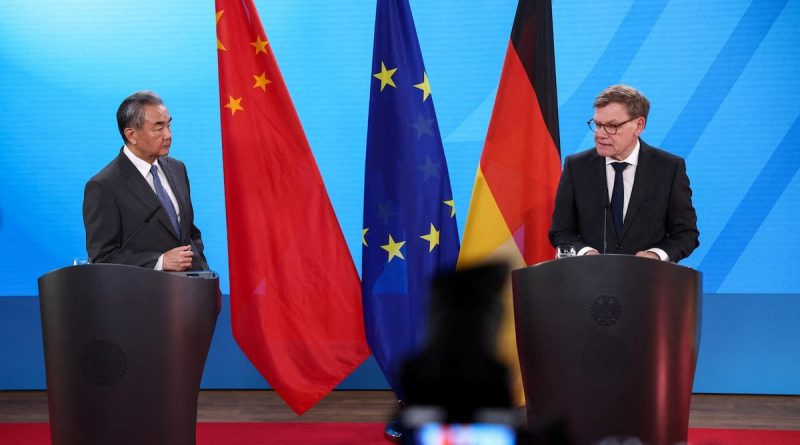
Beijing – Germany’s Foreign Minister Johann Wadephul is set to visit China from December 8 to 9, according to individuals familiar with the planning, marking an important diplomatic engagement as the European Union prepares to introduce a tougher trade approach toward Beijing.
The trip comes weeks after an earlier scheduled visit was cancelled, reflecting shifting dynamics in Europe-China relations as both sides seek to manage economic interdependence amid rising strategic concerns.
The upcoming visit aligns with broader European efforts to re-evaluate trade ties with China, with policymakers expected to adopt a firmer stance next month.
Signals from Brussels suggest that several EU members, including Germany, are increasingly unified on strengthening partnerships with like-minded economies while reassessing exposure to the Chinese market.
German officials have not publicly commented on the travel plans, while Chinese authorities have indicated that details will be shared at a later stage.
The visit is viewed as a continuation of diplomatic exchanges that gained momentum following recent high-level meetings between senior leaders from both countries on the sidelines of global summits.
Relations between Berlin and Beijing experienced strain earlier in the year, particularly after disagreements over export regulations involving critical technologies such as chips and rare earth materials.
Those tensions resulted in the cancellation of Wadephul’s October trip, prompting further discussions on trade risk management and economic resilience.
Since then, efforts to stabilize engagement have increased, supported by conversations involving China’s Premier Li Qiang, Germany’s Chancellor Friedrich Merz, and financial officials from both sides.
These interactions reflect ongoing attempts to maintain dialogue despite policy divergences and broader economic uncertainties.
China remains an important trade and investment partner for Germany, even as changing market conditions reshape bilateral commercial flows.
A slower Chinese economy, combined with Beijing’s increased focus on domestic industrial advancement, has shifted purchasing patterns and reduced reliance on certain foreign imports.
German exports to China, once considered a dependable pillar of bilateral commerce, have faced competitive pressures as Chinese firms expand into higher-value sectors.
At the same time, Germany continues to play a significant role in foreign direct investment in China, accounting for a sizeable share of European capital inflows last year.
Analysts note that the EU’s goods trade deficit with China has expanded sharply since 2019, intensifying political discussions around long-term balance and economic security.
Germany’s own trade position shifted from a surplus to a deficit in 2023, a trend that has continued as industries navigate price competition and supply-chain uncertainties.
Diplomats and business leaders have acknowledged that both countries share deep industrial interests, yet differ in their strategies for building long-term production capacity and export competitiveness.
These differences have influenced ongoing debates within Germany about economic self-reliance and the need to diversify critical supply networks.
Speaking at a recent economic forum, a senior German official highlighted concerns that export curbs and evolving regulatory policies have strained mutual confidence.
He emphasized that such measures accelerate Germany’s efforts to strengthen domestic capabilities while maintaining stable relations with major international partners.
Business sentiment surveys indicate that while German firms in China have observed minor improvements in market confidence, challenges related to pricing, competition, and shifting consumer preferences remain.
Many companies report that local buyers increasingly favor domestic products, contributing to heightened pressure on foreign brands across several sectors.
The upcoming diplomatic visit is expected to address these concerns while exploring areas where cooperation can be strengthened in a changing geopolitical environment.
While no formal agenda has been announced, analysts anticipate discussions on trade, investment climate, supply-chain protections, and the future of industrial collaboration.
The visit also holds significance for the EU as it moves closer to unveiling new trade instruments intended to balance openness with risk mitigation.
Observers say Germany’s engagement with China will play a key role in shaping how the bloc navigates strategic competition while preserving economic stability.
As global markets continue to evolve, the dialogue between Berlin and Beijing may help determine the contours of European trade policy in the coming years.
The outcome of the visit will be closely monitored by industry groups, investors, and policymakers across Europe and Asia.