
US Completes New Iran Strikes as Hormuz Tensions Escalate
CAIRO- The United States completed a new round of military strikes against Iran on Wednesday, targeting coastal defense infrastructure near the Strait of Hormuz after reimposing a naval blockade of Iranian ports, as the conflict between the two countries intensified and threatened regional energy exports and global shipping.
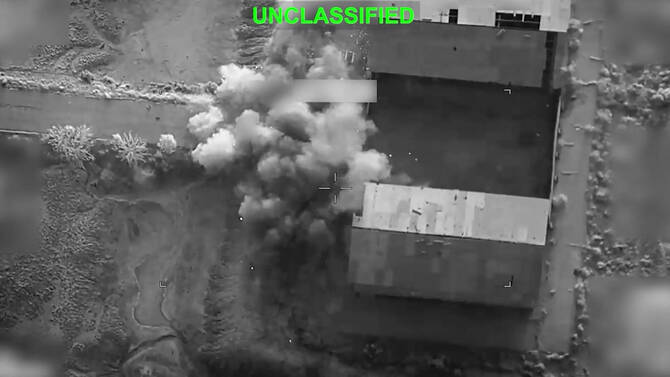
U.S. Central Command (CENTCOM) said the latest operation lasted about 90 minutes and targeted Iranian military facilities on Greater Tunb Island, a strategic island near the Strait of Hormuz.
“CENTCOM launched precision munitions against coastal defense systems and cruise missile storage and launch sites on Greater Tunb Island during the 90-minute wave,” the command said in a social media post.
Earlier, the U.S. military announced that its forces had begun the latest strikes at 6 a.m. Eastern Time, saying the operation was intended to further degrade military capabilities Iran had used to attack commercial shipping transiting the Strait of Hormuz.
The Pentagon did not immediately provide additional operational details, and Iranian state media did not report any immediate strikes inside the country following the U.S. announcement.
The latest operation followed a seven-hour U.S. military campaign carried out late Tuesday, during which Washington said dozens of military targets near the Strait of Hormuz and along Iran’s coastline were struck.
Iran responded on Wednesday by announcing attacks against U.S. military targets across the region. The Islamic Revolutionary Guard Corps (IRGC) said it had struck American military positions in Bahrain, Kuwait and Jordan.
Tehran also warned that it could further disrupt regional energy supplies, saying the United States “must brace for the closure of all other export corridors that benefit the U.S. and its allies.”
The latest exchanges represent another escalation in the conflict as both countries compete for control of the Strait of Hormuz, one of the world’s most strategically important maritime chokepoints. Before the outbreak of the war, approximately one-fifth of global oil and gas shipments passed through the waterway.
Washington has accused Iran of attacking seven commercial vessels over the past week, resulting in nearly a dozen crew members being killed, injured or reported missing.
The conflict began with U.S. and Israeli strikes against Iran on Feb. 28 and has since expanded across the region. Iranian retaliatory attacks against Gulf states hosting U.S. military bases have disrupted regional energy supplies and heightened concerns about broader instability.
Oil markets continued to react to the growing tensions, with crude prices rising about 1 percent on Wednesday after closing the previous session at their highest level in a month amid fears of further disruptions to global energy exports.
Diplomatic efforts to end the fighting have so far made little progress. An interim ceasefire agreement reached last month was intended to open the way for negotiations on a permanent truce, but talks have stalled as both sides continue to exchange military strikes.
The latest U.S. operation underscores the continuing deterioration of the security situation in and around the Strait of Hormuz, where military confrontation has increasingly become intertwined with threats to international shipping and global energy markets.