WHO Warns Sudan Cholera Outbreak Could Worsen Amid Conflict, Rains
GENEVA- A cholera outbreak in Sudan is likely to worsen as ongoing conflict, mass displacement and the start of the rainy season intensify an already severe humanitarian crisis, the World Health Organization (WHO) warned on Friday.
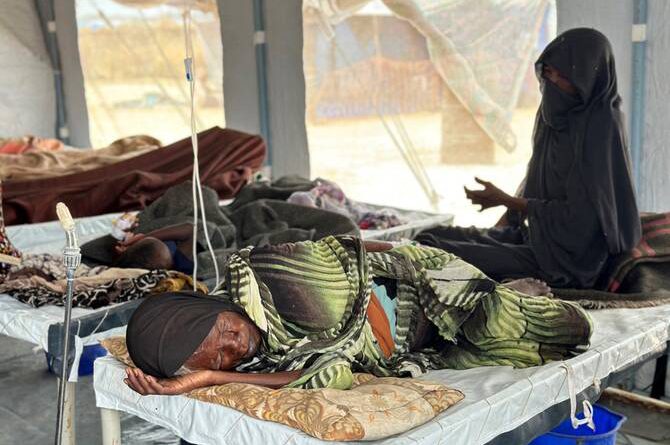
The outbreak, declared on June 27, has killed at least 114 people and infected more than 1,300 across several Sudanese states, with the hardest-hit areas in Darfur and Kordofan, where insecurity continues to hamper access for humanitarian agencies and health workers, the WHO said.
WHO Representative in Sudan Shible Sahbani said the disease was spreading under conditions that could accelerate transmission, particularly as seasonal rains increase the risk of water contamination.
“Cholera is back,” Sahbani told reporters in Geneva via video link from Libya. He said the outbreak had a case fatality rate of 13.7%, describing it as “extremely high,” and warned that the rainy season was expected to aggravate the situation.
Cholera is an acute diarrheal disease that can spread rapidly through contaminated food and water when sanitation systems are inadequate. Without prompt treatment, severe cases can become fatal within hours.
Sudan is facing what the WHO describes as the world’s largest humanitarian emergency, with more than 33 million people requiring humanitarian assistance and around 21 million in need of health services.
The agency expressed particular concern about conditions in Al-Obeid, the capital of North Kordofan state, where intensified fighting between the Sudanese Armed Forces and the paramilitary Rapid Support Forces (RSF) has strained already limited health services and restricted humanitarian access.
Sahbani said hospitals and other medical facilities in the besieged city were under severe pressure as violence continued to disrupt the delivery of essential healthcare.
He warned that Al-Obeid risked suffering a humanitarian catastrophe similar to that experienced in Al-Fashir, the capital of North Darfur, which the RSF captured last year after a prolonged siege.
“There is the risk that it will become the second Al-Fashir, or even worse,” Sahbani said.
Aid agencies have repeatedly warned that Sudan’s civil war has devastated healthcare infrastructure, displaced millions of people and increased the risk of disease outbreaks by limiting access to clean water, sanitation and medical services.
The WHO said continued insecurity in conflict-affected regions was complicating efforts to contain the outbreak, with humanitarian workers facing significant challenges in reaching affected communities and delivering lifesaving assistance.