Record Rains Trigger Deadly Landslides in Bangladesh’s Rohingya Camps
DHAKA-At least 18 Rohingya refugees, most of them children, were killed in landslides triggered by record monsoon rainfall in Bangladesh’s Cox’s Bazar district, officials said on Wednesday, as worsening weather conditions exposed the growing vulnerability of the world’s largest refugee settlement amid funding shortages for humanitarian assistance.
The deaths occurred after days of intense rainfall battered the southeastern coastal district, where around 1.3 million Rohingya refugees live in 33 camps. Authorities said the disaster has caused widespread destruction, with flash floods and landslides damaging shelters, roads and other essential infrastructure across the camps.
According to Bangladesh’s meteorological authorities, the Chattogram region, which includes Cox’s Bazar, recorded more than 412 millimeters of rainfall within 24 hours on Tuesday, the highest level recorded in more than four decades. The unprecedented downpour left camp areas waterlogged and destabilized hillsides, triggering more than 200 landslides since Monday.
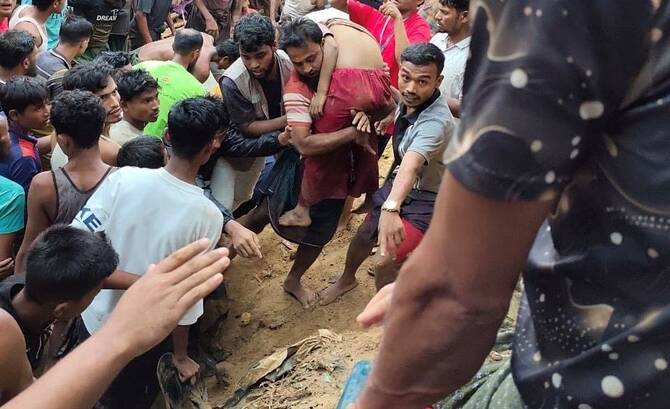
Among the dead were at least eight children killed on Wednesday when a landslide struck a mosque and madrassa in the Ukhiya camp area. Sanwar Hossain, senior assistant secretary at Bangladesh’s Refugee Relief and Repatriation Commission in Cox’s Bazar, said a retaining wall collapsed following the heavy rainfall. He added that a teacher was also believed to be among those killed and that rescue operations were continuing.
Hossain said the relentless rainfall had made rescue efforts increasingly difficult, with many access roads submerged under floodwaters. He described the current emergency as more severe than last year’s monsoon season, noting that the death toll had already surpassed that recorded during the same period in 2025.
The Rohingya camps, constructed largely from bamboo, tarpaulins and corrugated metal sheets, are particularly susceptible to heavy rain, landslides and strong winds. Many settlements are located on steep slopes that have become increasingly unstable during the annual monsoon season.
Hossain said the risk had been intensified by environmental degradation. Large areas of forest were cleared to accommodate the influx of Rohingya refugees, leaving exposed hillsides vulnerable to erosion and landslides during periods of intense rainfall.
Climate experts and aid agencies have repeatedly warned that climate change is increasing the frequency and intensity of extreme weather events in Bangladesh, one of the countries considered most vulnerable to climate-related disasters. Officials said this year’s rainfall represented the highest recorded in the region in 43 years.
More than 20,000 refugees had been relocated from high-risk areas by Wednesday, according to authorities. However, the United Nations refugee agency said emergency operations continued to face major challenges because of severe congestion within the camps and inadequate funding for disaster-risk reduction measures.
UNHCR said funding for shelter and risk management activities under the 2026 Joint Response Plan was only about 40 percent covered. The agency called for urgent financial support to strengthen slope stabilization, improve drainage systems, enhance access routes and expand technical capacity needed to reduce disaster risks and maintain humanitarian operations.
The Rohingya, a predominantly Muslim minority from Myanmar’s western Rakhine State, have faced decades of persecution and were stripped of their citizenship in the 1980s. Around 750,000 fled to Bangladesh in 2017 following a military crackdown that the United Nations has described as a textbook case of ethnic cleansing, joining hundreds of thousands who had already sought refuge there.