Japan Expels Chinese Coast Guard Ships Near Disputed Islands
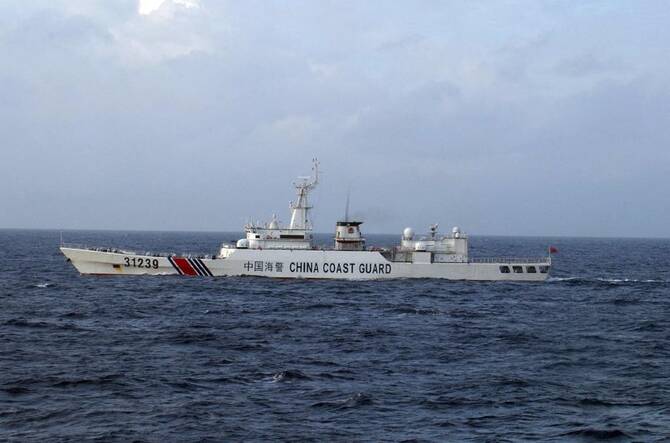
TOKYO-Japan said on Tuesday that its coast guard forced two Chinese coast guard vessels to leave waters near the disputed Senkaku Islands after they approached a Japanese fishing boat, the latest maritime confrontation in the East China Sea amid heightened tensions between the two Asian neighbors.
According to the Japan Coast Guard, the Chinese vessels entered waters that Tokyo regards as its territorial sea before moving toward a Japanese fishing vessel operating in the area. Japanese patrol ships ordered the vessels to leave and escorted the fishing boat to ensure its safety.
The coast guard said the two Chinese ships departed Japanese territorial waters at about 9:20 a.m. local time (0020 GMT). It added that four Chinese coast guard vessels had been operating near the islands before two crossed into waters claimed by Japan.
Japanese authorities described the Chinese vessels’ actions as a violation of international law and said they would continue responding “calmly and resolutely” under both domestic and international legal frameworks while taking all necessary measures to safeguard the country’s territorial waters.
China did not immediately comment on Japan’s account of the incident.
The islands, administered by Japan and known as the Senkaku Islands in Japan and the Diaoyu Islands in China, have long been a source of friction between the two countries. Both governments claim sovereignty over the uninhabited islets, which lie in the East China Sea between Japan’s Okinawa prefecture and Taiwan.
Chinese coast guard ships regularly operate near the disputed islands, leading to repeated encounters with Japanese maritime authorities. While Chinese vessels frequently enter the contiguous zone surrounding the islands, direct approaches toward Japanese fishing boats are comparatively uncommon.
Japanese officials said Chinese coast guard vessels had last entered waters claimed by Japan on June 10, making Tuesday’s incident the latest in a series of maritime confrontations in the area.
The East China Sea remains strategically significant because of its important shipping routes and the potential presence of offshore oil and natural gas reserves, adding to the geopolitical importance of the territorial dispute.
Relations between Tokyo and Beijing have deteriorated further in recent months following comments by Japanese Prime Minister Sanae Takaichi in November suggesting Japan could become militarily involved if Taiwan were attacked. China, which regards Taiwan as part of its territory, condemned the remarks and subsequently advised its citizens against traveling to Japan while tightening trade restrictions on some Japanese companies.
The latest maritime encounter highlights continuing tensions between Asia’s two largest economies as both countries maintain competing territorial claims and expand coast guard patrols in contested waters.