Soaring Power Bills Ignite Philippines’ Record Rooftop Solar Boom
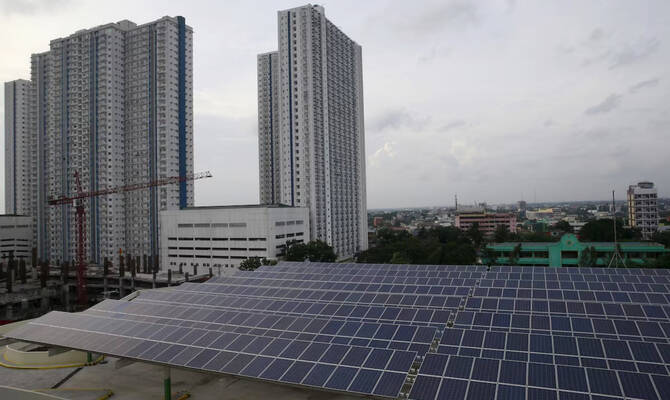
Singapore— Households across the Philippines are accelerating rooftop solar installations to offset surging electricity costs, making the country the world’s largest importer of solar panels since the outbreak of the Iran conflict in late February, as rising fuel costs and a weakening currency drive power prices to record levels.
The shift reflects mounting pressure on consumers in Southeast Asia’s most expensive residential electricity market, where distributor Meralco has increased tariffs by 10% since the Middle East conflict began. A typical household consuming about 200 kilowatt-hours of electricity each month now spends roughly 12% of its monthly income on power.
The Philippines relies heavily on imported coal and natural gas for electricity generation, leaving consumers exposed to fluctuations in global energy markets. The depreciation of the peso has further increased the cost of imported fuel, contributing to elevated inflation and slower economic growth.
Trade data from China, the world’s dominant solar panel supplier, showed Philippine imports reached $407 million in the three months through May, up 145% from a year earlier. Even as China’s overall panel exports declined 13% in May following the removal of a tax rebate, shipments to the Philippines rose by nearly one-third.
Industry analysts said the Netherlands appears to remain a larger market on paper because it serves as a major European transshipment hub, while the Philippines has become the leading end-user market for new solar panel imports.
Adrian Sabatera, a 39-year-old software engineer, recently invested 570,000 pesos ($9,300) in a rooftop solar system for the Manila home he shares with three others after years of postponing the purchase.
“I wouldn’t be shocked if a third of the middle-class population eventually finds their way to this setup,” Sabatera said, citing lower installation costs and persistently rising electricity prices.
Demand has also accelerated for installers. Manila-based Philergy German Solar received more than two-and-a-half times as many customer inquiries during the first five months of 2026 as it did a year earlier, with inquiries peaking at around 3,000 per day, according to managing partner Jochen Staudter.
“Customers are deciding to buy much faster than before,” Staudter said. “Demand will continue to be driven by high electricity prices.”
Energy think tank Ember projects the Philippines’ distributed solar capacity could nearly triple to 3,500 megawatts within two years, roughly equal to the country’s existing utility-scale solar capacity. Falling equipment costs have shortened expected loan payback periods to about 3.1 years from four years previously, according to Ember analyst Alnie Demoral.
Government data shows solar currently supplies less than 4% of the Philippines’ electricity consumption.
Despite robust demand, the sector faces supply constraints. Installers report delays caused by component hoarding, volatile equipment prices and inconsistent quality control, according to Brenda Valerio, Philippines director at New Energy Nexus.
The government offers subsidized solar loans of up to 500,000 pesos at a 5% interest rate, below prevailing market rates, but the program excludes private-sector employees.
High upfront installation costs remain another major obstacle, often exceeding the country’s average annual household income of 353,200 pesos.
“The opportunity is real, but the upfront cost is often too high for a household or business, no matter how quick the payback time is,” Demoral said.