
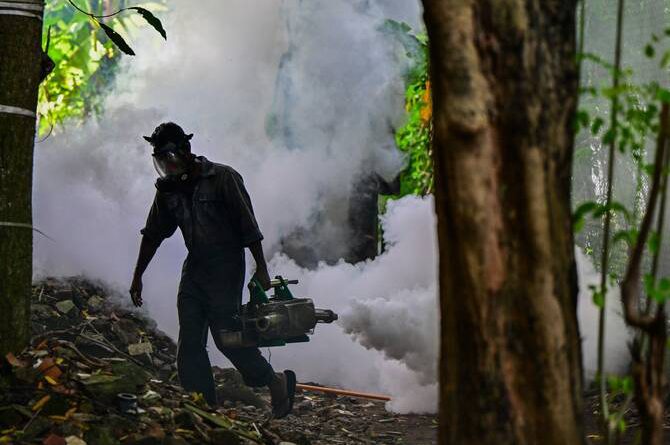
Sri Lanka Mobilizes Military as Dengue Surge Strains Hospitals and Raises Alarm
Colombo– Sri Lanka is deploying military personnel to support a nationwide campaign against dengue fever after a sharp rise in infections pushed hospital admissions above 1,000 cases a day and heightened concerns over the capacity of the healthcare system.
President Anura Kumara Dissanayake’s office said on Tuesday that members of the army, navy and air force would join a specialized task force responsible for identifying and eliminating mosquito breeding grounds across the country.
The move comes as health authorities reported nearly 50,000 dengue infections and 29 related deaths so far this year. While the figures remain below the country’s record 2017 outbreak, officials warned that the recent acceleration in case numbers poses a significant public health challenge.
Dengue is transmitted by the Aedes mosquito, a species recognized by its black-and-white striped legs and known to breed in stagnant water. The disease can cause high fever, severe headaches, nausea, vomiting and muscle pain, while severe cases may lead to internal bleeding and death.
In a statement, the president’s office said authorities would intensify enforcement measures against individuals and institutions found to be allowing mosquito breeding sites on their properties.
“Laws will also be strictly enforced against those allowing mosquito breeding on their premises, in addition to setting up the special military unit,” the statement said.
A nationwide cleanup campaign targeting stagnant water and other mosquito breeding areas is scheduled to begin on Wednesday.
Sri Lanka has recorded a sharp increase in infections since early June, including more than 1,000 cases reported in a single day this week, according to official health data.
Kapila Kannangara, head of the government’s dengue control unit, said both public and private hospitals were already facing mounting pressure from the surge in patients.
“Hospitals are already under pressure,” Kannangara told reporters in Colombo. “We don’t want to have a situation like the one we faced in 2017.”
The country’s worst dengue epidemic occurred in 2017, when authorities recorded approximately 186,000 infections and 440 deaths, overwhelming healthcare facilities and prompting emergency response measures.
Health officials attributed the latest increase in cases to a combination of monsoon rains, stagnant water left behind by recent flooding and poor waste management practices that have created favorable breeding conditions for mosquitoes.
The World Health Organization has previously warned that climate change is contributing to the faster spread and broader geographic reach of dengue and other mosquito-borne diseases, particularly in tropical and subtropical regions.