
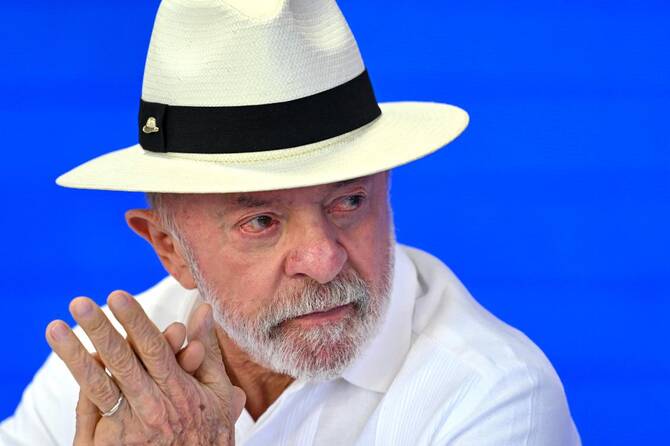
Lula Denounces Trump’s Hormuz Fee Plan as ‘Piracy’
RIO DE JANEIRO- Brazilian President Luiz Inacio Lula da Silva criticized U.S. President Donald Trump’s proposal to impose fees on commercial shipping through the Strait of Hormuz, saying the plan would amount to “piracy” and warning it could worsen the economic impact of rising global energy prices.
Speaking at a public event in Sao Paulo state on Monday, Lula responded to Trump’s announcement that the United States would reinstate a blockade of Iranian ports on the Strait of Hormuz and levy a 20% charge on cargo transported through the strategic waterway.
Trump said the proposed fee would help cover the costs of maintaining security and keeping the strait open for international shipping following renewed tensions with Iran.
Lula rejected the proposal, arguing that charging commercial vessels for passage through one of the world’s most important maritime routes would contradict the United States’ longstanding position against piracy.
He said the United States had historically fought piracy and should not now assume a role that resembled the practice it had opposed.
The Brazilian leader also warned that renewed instability in the Gulf was contributing to higher prices for fuel and essential food products in Brazil, including beans, rice, tomatoes and onions, increasing pressure on consumers.
The latest comments come as fighting involving the United States and Iran has reignited after a temporary easing of tensions under an interim agreement reached in June.
Iran had restricted shipping linked to its ports in the Strait of Hormuz after U.S. and Israeli military operations earlier this year. Those restrictions were eased following the interim agreement, but Trump has pledged to restore the blockade after renewed hostilities.
The Strait of Hormuz is one of the world’s most strategically important maritime chokepoints, carrying a significant share of global crude oil and natural gas shipments. Any disruption to navigation through the waterway has the potential to affect international energy markets and shipping costs.
Brazil has sought to cushion the domestic impact of higher oil prices. Lula said revenue generated from a 12% tax on crude oil exports, introduced in March, was being used to help offset rising fuel costs.
The 80-year-old leftist leader is seeking a fourth presidential term in Brazil’s elections scheduled for October, with inflation and living costs expected to remain central issues in the campaign.