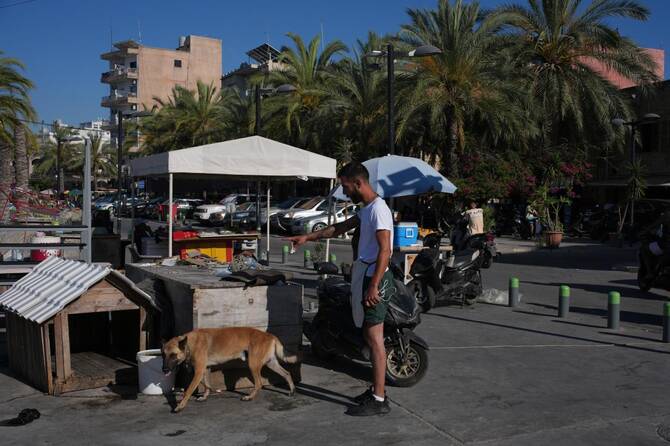
Tyre Reels From Israeli Strikes as Fragile Lebanon Ceasefire Holds
Tyre- Residents of Lebanon’s historic coastal city of Tyre are struggling to resume daily life after weeks of Israeli airstrikes left neighborhoods damaged, businesses shuttered and key infrastructure affected, despite a ceasefire that has temporarily reduced hostilities between Israel and Hezbollah.
The latest ceasefire, which took effect amid broader diplomatic efforts involving the United States and Iran, has brought a relative lull to the southern Lebanese city. However, many residents remain reluctant to return to normal routines, citing fears that fighting could resume as previous truce agreements have repeatedly collapsed.
The conflict, which intensified in March after Hezbollah launched attacks on Israel during a wider regional confrontation involving Iran, has killed more than 4,000 people in Lebanon, according to Lebanese authorities. Israeli military operations have also pushed deep into southern Lebanon, leaving extensive destruction across the region.
Tyre, one of Lebanon’s oldest cities and a major summer tourism destination, has been among the areas heavily affected. Businesses that normally depend on seasonal visitors report little activity, while public spaces and parking areas have been occupied by displaced families who fled nearby towns and villages.
Residents say uncertainty continues to dominate daily life despite the reduction in visible fighting. Many displaced people have delayed returning to their homes, particularly in communities that suffered extensive damage during the conflict.
The city’s cultural heritage has also sustained damage. Several structures near Tyre’s renowned archaeological complex were struck during the air campaign, affecting areas adjacent to Roman-era monuments and historical sites that form part of a UNESCO-recognized heritage zone. Lebanese antiquities officials said assessments are expected to determine the extent of the damage and the scope of restoration work required.
Environmental concerns have also emerged along the southern coastline. Areas near the Mansouri coastal reserve, known for its sea turtle habitats and biodiversity, have become inaccessible following military activity and bombardment.
Healthcare facilities in Tyre have likewise faced disruptions. Medical workers at one of the city’s largest hospitals said nearby airstrikes damaged parts of the facility, shattered windows and doors, and raised concerns about the safety of medical personnel operating in active conflict zones.
Doctors and nurses who have worked through previous wars in southern Lebanon said the proximity of recent strikes to hospitals marked a significant escalation in the risks faced by healthcare workers.
The ceasefire has eased immediate security concerns, but signs of continuing military tension remain visible across southern Lebanon. Israeli forces continue to maintain positions in areas near the border, while periodic military activity has been reported south of Tyre.
Diplomatic discussions between Lebanon and Israel are continuing with international mediation, though Hezbollah has rejected calls for disarmament and remains outside the formal negotiation process.
For many residents, the destruction left behind by months of fighting has underscored the uncertainty surrounding the region’s future, even as diplomatic efforts seek to prevent a return to large-scale conflict.