US-Iran Talks Advance Despite Trump Threats, Lebanon Mechanism Agreed
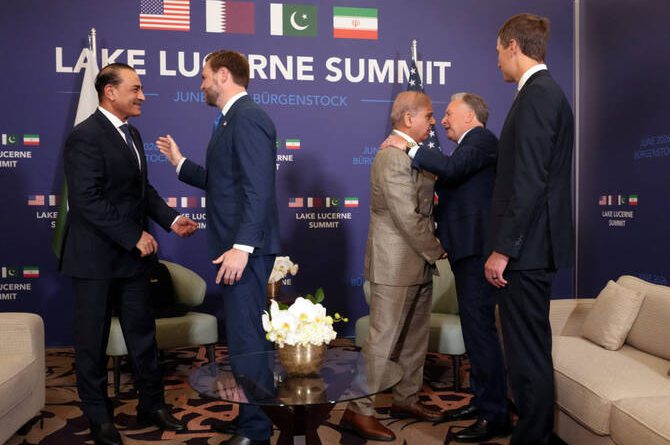
Switzerland– The United States and Iran concluded the first round of high-level negotiations in Switzerland early Monday, agreeing to continue technical discussions and establish a new mechanism aimed at preventing renewed conflict in Lebanon, despite tensions triggered by fresh threats from U.S. President Donald Trump.
The talks, mediated by Pakistan and Qatar, marked the opening phase of a 60-day diplomatic process designed to translate a recently signed memorandum of understanding into a broader settlement covering regional security, maritime navigation and Iran’s nuclear program.
Mediators said the parties agreed to establish a “de-confliction cell” involving Lebanese authorities to monitor and support the implementation of a ceasefire between Israel and the Iran-backed Hezbollah movement. The mechanism is intended to reduce the risk of renewed military escalation in Lebanon, where hostilities have continued despite previous truce efforts.
Pakistan and Qatar described the discussions as constructive and confirmed that lower-level technical negotiations would continue throughout the week in Switzerland.
The negotiations faced an uncertain start after Trump publicly warned Iran against supporting Hezbollah operations in Lebanon and threatened renewed military action against Tehran.
“Iran must immediately stop their highly paid proxies in Lebanon from causing trouble,” Trump said in comments that prompted a sharp response from Iranian officials.
Iranian negotiators temporarily suspended participation and consulted with Qatari mediators before returning to the talks, according to officials familiar with the discussions. Mediation efforts by Qatar and Pakistan helped keep negotiations on track.
Iranian Foreign Minister Abbas Araghchi later praised the diplomatic efforts, describing the newly established Lebanon coordination mechanism as the first major test of the broader agreement.
The talks brought together U.S. Vice President JD Vance, special envoy Steve Witkoff and presidential adviser Jared Kushner with Iranian Parliament Speaker Mohammad Bagher Qalibaf and Foreign Minister Araghchi.
According to officials involved in the negotiations, discussions focused on maintaining freedom of navigation through the Strait of Hormuz, enforcing the Lebanon ceasefire and laying groundwork for future negotiations on Iran’s nuclear activities.
The status of the Strait of Hormuz remained a contentious issue. Iran maintained that it had reimposed restrictions on passage through the strategic waterway over the weekend, while U.S. officials insisted commercial shipping traffic continued.
The narrow channel carries a significant share of global oil exports, making its security a major concern for energy markets and governments worldwide.
The broader agreement between Washington and Tehran includes provisions allowing Iran greater access to oil export markets and frozen overseas assets in exchange for commitments related to regional security and nuclear oversight.
However, differences remain over uranium enrichment. Iranian President Masoud Pezeshkian reiterated that Tehran would not relinquish what it considers its right to enrich uranium, while U.S. officials continue to seek constraints on Iran’s nuclear activities.
Vance described the negotiations as an opportunity to reshape regional relations and expressed hope that both sides could build on the initial diplomatic progress.
Financial markets have closely monitored the talks. Oil prices fell sharply after the announcement of the initial U.S.-Iran understanding, reflecting expectations that a sustained reduction in regional tensions could ease concerns about disruptions to global energy supplies.
The continuation of technical negotiations this week is expected to determine whether the parties can bridge remaining differences on Lebanon, maritime security and Iran’s nuclear program before senior officials reconvene for the next phase of talks.