
Bangladesh Races to Protect Water Supplies as Groundwater Crisis Threatens Millions of Farmers
“The challenge is no longer simply how to conserve groundwater, but how to do so without abandoning the communities whose survival depends on it.”
Bangladesh is facing a growing challenge in balancing groundwater conservation with the survival of farming communities as water shortages intensify across the country’s northwestern Barind region.
Agricultural experts, government officials and local farmers warn that declining groundwater reserves, driven by climate pressures and decades of intensive extraction, are threatening both food production and rural livelihoods in one of Bangladesh’s most important agricultural zones.
The crisis has prompted renewed debate over how the country can maintain crop production while reducing dependence on underground aquifers that have sustained farming for decades.Development specialists argue that long-term solutions must move beyond emergency restrictions and focus on building more resilient agricultural systems.
According to water and sanitation experts working in Bangladesh, sustainable adaptation requires investment in water-efficient irrigation technologies, climate-resilient crop varieties, climate-smart farming practices and community-led water management initiatives.
Such measures are increasingly viewed as essential as traditional groundwater supplies become less reliable and climate variability makes rainfall patterns more unpredictable.Experts also stress that women must play a central role in future water-management strategies.
In rural Bangladesh, women often bear primary responsibility for household water collection, agricultural labor and family care, making them particularly vulnerable to the effects of water scarcity.Water-sector specialists say gender-sensitive approaches to water-service delivery are critical to ensuring equitable access to resources, strengthening community resilience and supporting inclusive decision-making processes.
They argue that policies designed without considering women’s experiences risk overlooking some of the most significant social impacts of water shortages.At the local level, many farmers believe solutions should focus on maximizing the use of surface water rather than relying exclusively on groundwater extraction.
Residents across the Barind region are calling for expanded rainwater harvesting projects, restoration of wetlands and rehabilitation of ponds capable of storing seasonal rainfall for use during dry months. Farmers argue that large quantities of rainwater continue to be lost because existing storage systems are inadequate.
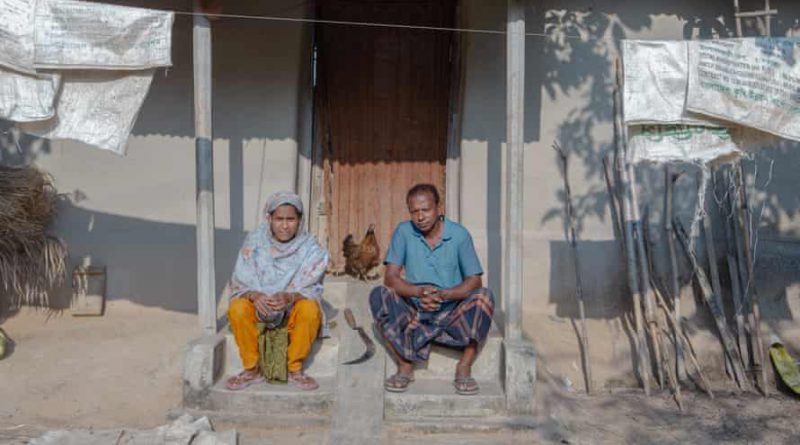
Sreemoti Shobdorani, a farmer from the region, said deeper excavation of ponds could create additional capacity to capture monsoon rainfall and provide irrigation water during extended dry periods. She expressed concern that insufficient attention has been given to preserving water resources above ground.
The proposal reflects a growing recognition among farming communities that long-term water security will require a shift away from exclusive dependence on underground reserves. Surface-water storage projects are increasingly being viewed as a practical way to supplement irrigation supplies while reducing pressure on depleted aquifers.
Government officials acknowledge the seriousness of groundwater depletion and say alternative irrigation systems are being evaluated to ensure agricultural production can continue without further accelerating water loss.Authorities face a difficult balancing act. Restricting groundwater use may help protect dwindling reserves, but it could also reduce agricultural output and threaten incomes in regions where farming remains the primary economic activity.
The stakes are significant for Bangladesh’s broader food security. Agricultural experts estimate that more than 2.5 million hectares of farmland could remain uncultivated if water shortages continue to worsen. Such a scenario could reduce national crop production by approximately 2.7 million tonnes, affecting both local markets and national food supplies.
The economic consequences could extend beyond agriculture. Reduced harvests would likely increase financial pressures on farming households already dealing with rising living costs and recurring climate-related disruptions. Experts warn that prolonged crop failures could deepen rural indebtedness, accelerate migration to urban centers and increase food insecurity among vulnerable populations.
For many communities in the Barind region, the issue is no longer a distant environmental concern but an immediate economic reality. Farmers report increasing difficulties accessing irrigation water, while local residents worry that shortages could become more severe if sustainable alternatives are not developed quickly.
The challenge confronting policymakers is therefore broader than groundwater conservation alone. It involves designing a transition that protects water resources while preserving agricultural livelihoods, maintaining food production and preventing social disruption.Climate change is expected to intensify these pressures in the coming decades through rising temperatures, changing rainfall patterns and more frequent extreme weather events.
As a result, experts increasingly argue that adaptation strategies must combine environmental protection with economic and social support for affected communities.The experience of the Barind region highlights a growing challenge facing many climate-vulnerable agricultural areas around the world.
As water resources come under increasing pressure, governments are being forced to reconsider how agriculture is managed, how water is allocated and how rural communities can adapt to a future in which access to water can no longer be taken for granted.
For Bangladesh, the success of those efforts may determine not only the future of groundwater reserves but also the sustainability of farming systems that support millions of people and form a cornerstone of the country’s food security.


