Pakistan Warns of Water Flashpoint as India Pushes Chenab Projects
Islamabad-Pakistan accused India on Thursday of “weaponizing” water by advancing two projects on the Chenab River without consultation, saying the initiatives violate the Indus Waters Treaty and threaten regional stability, as tensions between the nuclear-armed neighbors continue to simmer after last year’s conflict.
Pakistan Foreign Ministry spokesperson Tahir Andrabi told a press briefing in Islamabad that the projects demonstrated an effort by New Delhi to use water resources as a strategic tool, warning that any move endangering Pakistan’s water security would be met with measures to protect national interests.
“These projects confirm that India seems to weaponize water,” Andrabi said, adding that the initiatives carried serious implications for Pakistan’s economy, regional peace and international security.
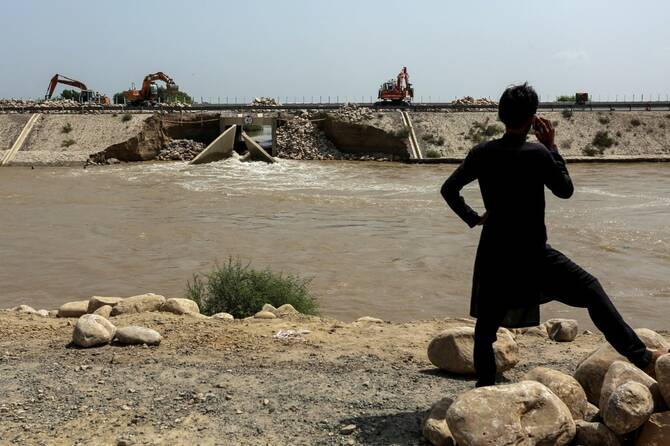
The dispute centers on two Indian projects linked to the Chenab River, one of the western rivers allocated to Pakistan under the 1960 Indus Waters Treaty. Islamabad says India failed to consult Pakistan before proceeding with the developments.
In May, India’s state-owned National Hydroelectric Power Corporation issued a tender for a proposed tunnel project designed to transfer water from the Chenab River to the Beas basin. Earlier this year, India’s power ministry also announced sediment-removal work at the Salal Power Station on the Chenab, stating that the activity followed New Delhi’s suspension of the Indus Waters Treaty.
India maintains that it is acting within its rights regarding waters under its control. New Delhi has also insisted that its decision to place the treaty in abeyance remains effective despite objections from Pakistan.
The water-sharing agreement, brokered in 1960, has long been regarded as one of the few enduring frameworks of cooperation between the two rivals, surviving multiple wars and periods of severe political tension.
Pakistan argues that the treaty remains legally binding and has repeatedly rejected India’s suspension of the accord. Andrabi said there was no provision allowing either country to unilaterally withdraw from the agreement.
“Any illegal measure to endanger Pakistan’s water, food and economic security as well as the survival and wellbeing of its 250 million people is unacceptable,” he said.
He added that Pakistan would retain all available options to safeguard its rights under the treaty, though he did not specify what actions Islamabad might pursue.
The disagreement has intensified since India suspended its participation in the treaty following an April 2025 attack on tourists in Indian-administered Kashmir. New Delhi blamed Islamabad for supporting the attack, an allegation Pakistan denied.
The diplomatic fallout contributed to a sharp military escalation in May 2025, when the two countries exchanged drone, missile and artillery fire, leaving nearly 70 people dead on both sides.
The treaty dispute has also reached international arbitration. Pakistan welcomed a May 15 ruling by a Hague-based arbitration body that it said reinforced the treaty’s continued validity. India rejected the decision, describing the tribunal as illegally constituted and reiterating that its suspension of the agreement remained in force.
Analysts have increasingly warned that water management could become a major source of friction in South Asia as climate change, population growth and agricultural demand place mounting pressure on shared river systems.