Family Archive Discovery Illuminates Ireland’s Post-Famine Transformation and Inspires Historical Novel
“He would have been traversing a country ravaged and laid waste, making revisions to maps in the aftermath of one of the greatest disasters in Irish history.”
A discovery in an archival collection has provided new insight into one Irish family’s connection to the aftermath of the 19th-century Great Famine, while also informing a literary exploration of one of the most consequential periods in Ireland’s history.
The finding emerged during research into family records, when the author located documentary evidence relating to a great-great-grandfather whose existence had long been part of family history.
According to the account, the document contained the ancestor’s name written in a distinctive hand and provided written confirmation of stories that had been passed down through generations.
The record carried particular significance because it offered verifiable evidence linking family tradition to historical documentation. The author described the moment as confirmation of a narrative that had previously existed largely through oral history and inherited memory.
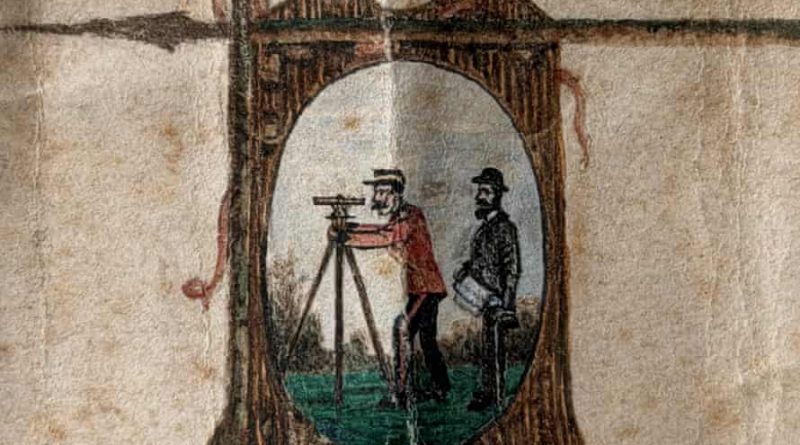
A closer examination of the material revealed that the memorandum was dated June 1853, placing it immediately after one of the most devastating episodes in Irish history. The Great Famine, which unfolded primarily between 1846 and 1852, resulted in the deaths of more than one million people from starvation and famine-related diseases, according to figures cited in the account.
Another million people emigrated during the period, many undertaking dangerous sea voyages. The author noted that some historians regard those estimates as conservative.The memorandum indicated that the author’s great-great-grandfather worked alongside Ordnance Survey mapping divisions, serving as both a labourer and translator during a period of cartographic revision.
His responsibilities included assisting in updates to maps that reflected changes occurring across Ireland in the wake of the famine.The timing of that work placed him within a country undergoing profound demographic, social and physical transformation.
According to the account, approximately 30% of Ireland’s population was lost through death and emigration during the famine years. Entire communities disappeared, settlement patterns changed and significant alterations took place across estates, farms and rural landscapes.
The revisions being undertaken by Ordnance Survey teams required documentation of those changes. As mapping projects were updated, geographical records had to reflect altered land use, depopulated areas and the broader consequences of the famine. The author’s great-great-grandfather was involved in that process, contributing labour and language skills to the effort.
The discovery prompted broader questions about the lived experience of those who survived the famine and participated in rebuilding or documenting the country afterward. The account reflects on the practical and emotional dimensions of carrying out administrative and survey work in regions that had experienced extensive population loss and social disruption.
Those questions became a central influence on the author’s novel, “Land,” which focuses on a character named Tomás and his family as they attempt to move beyond the legacy of the famine. According to the author, the novel uses a single parcel of land and the people associated with it as a means of examining wider developments in Irish history.
The project emerged from an effort to understand aspects of Ireland’s past that remained difficult to reconcile or fully explain. Rather than drawing primarily from direct personal experience, the author said the novel was shaped by historical uncertainties and unresolved questions surrounding the famine and its aftermath.
Among the most significant of those questions was how a humanitarian catastrophe of such scale occurred within territory governed by what the author described as one of the world’s wealthiest empires.
The issue has long been the subject of historical research and debate, with scholars examining the political, economic and administrative decisions that influenced the course of the famine.The author’s exploration of those themes was informed by a limited but significant collection of family materials.
These included documentary records, a hand-drawn map, a photograph and a family narrative that was ultimately supported by archival evidence.The archival memorandum served as a direct connection between personal history and national history.
By establishing the involvement of a family member in post-famine mapping operations, the document linked an individual life to a period of substantial transformation across Ireland.The account underscores the role that archival records can play in validating family histories and providing context for broader historical events.
Documents preserved in public collections often offer insight into the experiences of ordinary individuals whose contributions might otherwise remain undocumented.In this case, the memorandum provided evidence of participation in a major state surveying effort during a period when Ireland was adapting to dramatic demographic and geographic change.
The record also highlighted the importance of translators and local workers in facilitating large-scale mapping projects that required detailed knowledge of communities and landscapes.The author’s engagement with the material extended beyond genealogical research.
The discovery became a framework for examining larger historical questions concerning memory, loss, land ownership and social change in post-famine Ireland.Through the figure of the great-great-grandfather and his documented role in the Ordnance Survey revisions of 1853, the account connects personal ancestry with the enduring legacy of one of Ireland’s defining historical events.
The archival evidence transformed what had existed as family tradition into a documented historical connection, providing a foundation for literary work that seeks to understand the consequences of the famine through the experiences of individuals and communities shaped by its aftermath.