India’s Informal Workers Face Mounting Heat Stress as Rising Night Temperatures Erode Recovery Time
“Every day my head spins with the heat. But I have no option but to work for my family.”
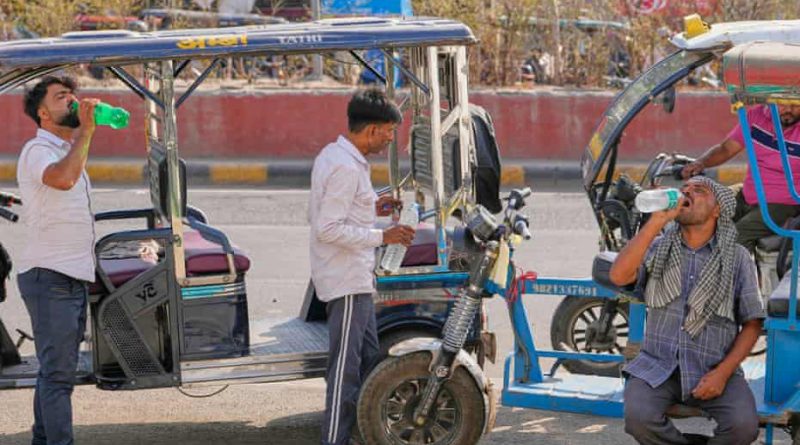
India’s informal workforce is increasingly struggling to cope with intensifying heat as rising daytime temperatures and warmer nights reduce opportunities for physical recovery, according to workers, researchers and a new regional study examining the impact of extreme heat across major Asian cities.
In Delhi, where temperatures have climbed above 45 degrees Celsius during recent heatwaves, delivery rider Jalaj Jha begins his workday already fatigued. The 24-year-old gig worker, who delivers groceries on a motorbike, said sleep has become increasingly difficult in the summer months because of the heat trapped inside his small rented room.
Jha, who lives in accommodation with limited ventilation and relies on a fan that circulates warm air, said he often sleeps only three to four hours a night. By the time he starts preparing for work in the morning, he already feels physically exhausted. His daily shift lasts about 12 hours, exposing him to prolonged outdoor temperatures that continue to rise through the day.
Delhi this week recorded its hottest day in May in two years and its warmest May night in 14 years, underscoring a broader trend identified by climate researchers across South Asia. Scientists have warned that night-time temperatures in many parts of the region are increasing faster than daytime temperatures, reducing the hours traditionally available for cooling and recovery after extreme heat exposure.
A report released by the United States-based organization People’s Courage International (PCI) found that rising overnight temperatures, combined with the urban heat island effect, are creating worsening conditions for millions of informal workers across South and South-East Asia. The urban heat island effect refers to the tendency of densely built urban areas to retain heat absorbed during the day, keeping temperatures elevated after sunset.
The study examined conditions in Delhi, Dhaka, Kathmandu, Jakarta and Quezon City. Researchers concluded that many workers are beginning their workdays in a state of accumulated fatigue because they are unable to cool down adequately during the night.
The report focused on workers employed in sectors that require prolonged exposure to outdoor conditions, including delivery services, construction and street vending. Many of these workers live in densely populated settlements where access to ventilation, cooling equipment and reliable electricity remains limited.Researchers said the inability to recover physically during the night is contributing to a range of health and economic pressures. Workers interviewed for the study described increasing difficulty maintaining productivity, higher spending on coping measures and greater vulnerability to heat-related illness.
According to PCI, nearly eight in ten of the more than 2,200 internal migrant workers surveyed across the five cities reported that extreme heat was affecting their livelihoods or household conditions. Respondents said they were losing income because they could not complete full work shifts during periods of extreme heat.
Many also reported spending additional money on drinking water, transportation, medicines and other heat-related necessities.The study documented widespread reports of headaches, dizziness, fatigue and reduced work capacity during prolonged exposure to high temperatures. Researchers said these effects often develop gradually rather than through dramatic medical emergencies, making the broader impact of heat difficult to recognize despite its cumulative consequences.
“Heat impacts are silent and generally creep up on workers,” PCI researcher Ameena Kidwai said. She noted that workers described heat-related disruptions not only during working hours but also during commuting, at home and in their broader social lives. The effects, she said, extended to mental wellbeing and community interactions.
The findings come as climate scientists warn that global warming is increasing the likelihood and severity of heatwaves across South Asia. Researchers have projected that climate change could significantly increase the probability of prolonged pre-monsoon heatwaves in the region. Last month, a 15-day heatwave affected large areas of South Asia and was linked to fatalities.
The International Labour Organization estimates that more than 70 percent of workers across Asia are exposed to excessive heat during at least part of their employment. The risks are particularly significant in countries such as India, where nearly 90 percent of workers are employed in the informal economy and often lack workplace protections available in formal sectors.
Ajay Kumar, a 32-year-old vegetable vendor working in Gurugram near Delhi, said extreme heat has become a daily challenge. Kumar purchases produce from a wholesale market approximately seven kilometers from where he sells vegetables and transports the goods using a three-wheeled rickshaw through heavy traffic.
He said the heat frequently causes dizziness while he works, but economic pressures leave little room to reduce his hours. Kumar supports a family of six and migrated from Bihar four years ago in search of employment opportunities.Living conditions further compound the challenge. Kumar, his wife and four children occupy a single room with minimal ventilation and only a basic fan for cooling.
He said he had hoped to purchase an air cooler before summer but could not afford the expense.According to Kumar, his daily earnings generally range between 300 and 400 rupees, with most of the income devoted to household necessities. To manage the heat, he carries water and keeps a damp scarf around his head while working.Even after returning home, relief is limited.
During particularly hot nights, Kumar and his family sleep on the open terrace of their building because indoor temperatures remain too high for comfort. Despite moving outdoors, he said it can still take several hours before he is able to fall asleep.Governments across the region have introduced measures aimed at reducing heat-related risks. Delhi authorities have implemented heat action plans that include public advisories, early warning systems, water distribution points and recommendations encouraging the rescheduling of outdoor work during the hottest parts of the day.
Researchers, however, said many existing responses remain focused on immediate heat emergencies rather than the broader issue of recovery and living conditions. They argued that policies addressing housing quality, ventilation, access to cooling and worker protections will become increasingly important as temperatures continue to rise.
The PCI report found that for many workers, the most significant impact of extreme heat is not limited to the hours spent outdoors. Instead, it is the growing inability to recover between shifts, creating what researchers described as a “recovery deficit” that leaves workers physically depleted before each new workday begins.