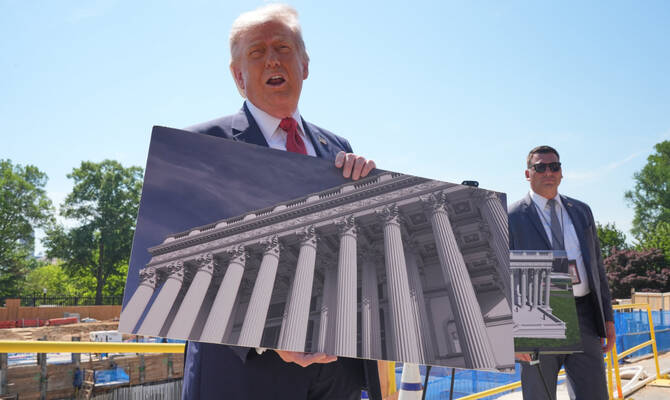
Capitol Fracture Imperils Trump Ballroom Security Push
Washington-Republican senators are weighing whether to abandon a proposed $1 billion security funding package tied to the White House complex and President Donald Trump’s planned ballroom after the measure failed to secure sufficient support within the party, exposing widening fractures between Senate Republicans and the White House over spending priorities and legislative strategy.
The proposal, folded into a broader roughly $70 billion immigration enforcement package aimed at restoring funding for U.S. Immigration and Customs Enforcement and the Border Patrol, has drawn resistance from several Republican lawmakers seeking more detailed justification from the White House and the U.S. Secret Service on how the funds would be allocated.
Senator John Kennedy of Louisiana said on Wednesday the legislation was effectively “back to square one” without the security funding because the necessary votes were lacking. Senator Thom Tillis of North Carolina described the attempt to attach the security proposal to the immigration measure as “a bad idea,” adding that support appeared insufficient even if the package were scaled back.
Senate Majority Leader John Thune acknowledged continuing vote-count challenges and procedural hurdles linked to Senate rules governing the reconciliation process, which Republicans are using to advance the immigration enforcement bill with a simple majority rather than the chamber’s standard 60-vote threshold.
According to lawmakers familiar with the discussions, approximately $220 million of the proposed security package would finance upgrades associated with Trump’s ballroom project, while the remaining funds would support a new visitor screening center, training operations and broader protective infrastructure for the White House complex.
The proposal has become politically contentious as Democrats accuse Republicans of prioritizing spending tied to Trump while voters face elevated living costs. Some Republican lawmakers have also expressed concern over the optics of approving major expenditures linked to the president amid growing intra-party tensions.
Senator Bill Cassidy of Louisiana questioned the rationale for the spending proposal, saying Americans were struggling with the costs of groceries, fuel and healthcare while lawmakers debated funding “for a ballroom.”
The dispute has unfolded alongside broader Republican unease over a separate $1.776 billion “anti-weaponization” settlement fund designed to compensate Trump allies who claim they were unfairly targeted by federal investigations and government agencies. Democrats are preparing amendments that could restrict or block the fund, particularly for individuals connected to the Jan. 6, 2021 attack on the U.S. Capitol.
Thune said Republican leaders were working on revised language that could impose limitations on how the settlement money is distributed. The issue has complicated negotiations as Democrats seek to force politically difficult amendment votes during the reconciliation process.
Tensions between Senate Republicans and Trump intensified further after the president renewed calls to eliminate the Senate filibuster and urged Republicans to dismiss Senate Parliamentarian Elizabeth MacDonough following her ruling that parts of the security proposal could not remain in the immigration legislation under reconciliation rules.
In a social media post, Trump also pressed lawmakers to pass the SAVE Act, a Republican-backed proposal requiring proof of U.S. citizenship for voters, warning Republicans to “get smart and tough” or risk losing political office.
Despite strong alignment with Trump on many policy issues, Senate Republicans have consistently resisted efforts to abolish the filibuster, which preserves the Senate’s 60-vote requirement for most legislation.
The latest disagreements also coincide with mounting frustration among Republican senators over Trump’s endorsement of Texas Attorney General Ken Paxton in a Republican runoff contest against incumbent Senator John Cornyn. Some Republican lawmakers privately fear the endorsement could jeopardize the party’s prospects in November’s general election.
House Speaker Mike Johnson said on Wednesday the House would pass the immigration funding bill “whatever form it takes,” even as Senate Republicans continued negotiations over the security funding and settlement provisions.
Republicans are seeking to secure funding for ICE and Border Patrol operations through the end of Trump’s term after Democrats blocked previous efforts in protest of the administration’s immigration enforcement policies and resisted negotiations that produced limited concessions from the White House.