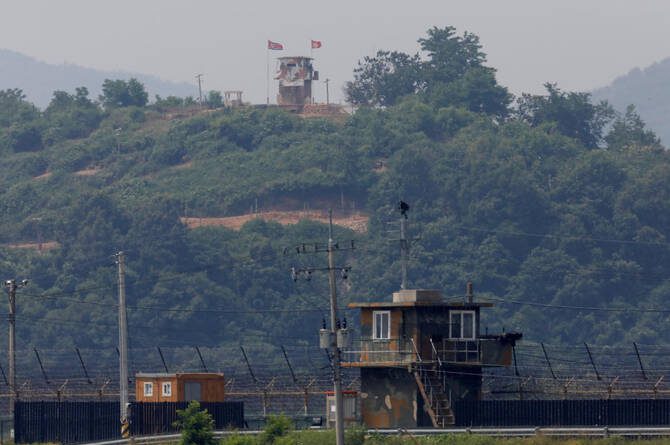
Seoul, Washington Explore DMZ Management Overhaul Amid Security Realignment
Seoul-South Korea and the United States have discussed revising management arrangements for sections of the heavily fortified border with North Korea, Seoul’s defense ministry said on Thursday, as both allies review military coordination on the Korean peninsula.
The discussions took place during recent meetings of the bilateral Integrated Defense Dialogue in Washington, according to a South Korean defense ministry spokesperson, who said talks had made “progress” but denied reports suggesting the move would create joint or divided control of the Demilitarized Zone.
“It is not joint management. Nor is it divided management,” the spokesperson told reporters. “It is making DMZ management in some sections more realistic.”
The Demilitarized Zone, established under the 1953 armistice that halted the Korean War, remains one of the world’s most heavily armed borders. The conflict ended without a formal peace treaty, leaving the two Koreas technically still at war.
The United Nations Command, led by the United States, oversees the DMZ under the terms of the armistice agreement. Seoul said consultations with Washington were focused on technical and operational arrangements in certain sections of the border while respecting the authority of the UN Command.
The talks come amid renewed debate in South Korea over wartime operational control of allied forces. President Lee Jae Myung has pledged to seek the transfer of wartime command authority from Washington to Seoul during his presidency, which runs through 2030.
Under the current framework, the United States would command combined South Korean and U.S. forces in the event of war on the peninsula. Successive governments in Seoul, however, have sought greater military autonomy while maintaining the bilateral alliance.
The discussions also coincide with a broader recalibration in South Korea’s policy language toward North Korea. In its 2026 white paper, Seoul’s Unification Ministry described the two Koreas as effectively existing as separate states while reaffirming the long-term goal of reunification.
The shift reflects evolving security dynamics on the peninsula as North Korea continues expanding its missile and nuclear programs amid stalled diplomatic engagement with Washington and Seoul.