UN Warns Forest-Dependent Communities Remain Trapped in Extreme Poverty Despite $1.5 Trillion Global Forest Economy
“The economic and social benefits of forests remain constrained by weak market access and limited opportunities for value-added processing,” the UN’s Global Forest Goals Report 2026 said.
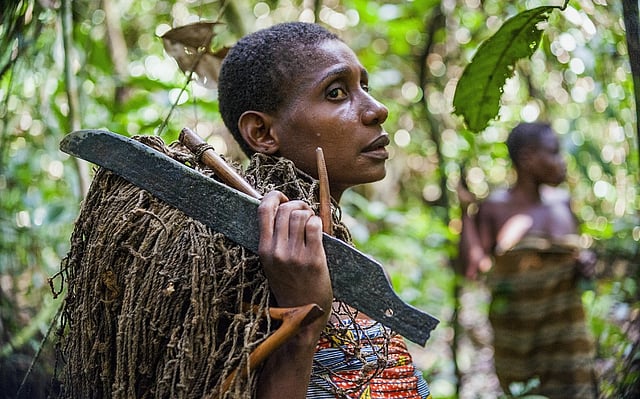
Millions of people living in forest-dependent communities continue to face extreme poverty despite the global forest sector generating an estimated US$1.5 trillion annually, according to a new United Nations assessment that warns progress toward eliminating poverty among forest populations is falling behind international targets.
The findings were published in the Global Forest Goals Report 2026, released during the 21st session of the United Nations Forum on Forests on May 11. The report evaluates progress toward the United Nations General Assembly Strategic Plan for Forests 2017–2030, adopted in 2017 to strengthen the environmental, social and economic contribution of forests worldwide.
Under the framework’s second Global Forest Goal, member states committed to eradicating extreme poverty among forest-dependent people by 2030. However, the report concluded that the target is “off track,” citing persistent structural barriers that continue to prevent forest communities from benefiting fully from forest-based economies.
The global forest sector currently accounts for roughly 1% of worldwide employment, according to the assessment, yet many of the world’s poorest populations continue to reside in heavily forested regions. Large sections of these communities survive on incomes near or below US$3 per day despite forests serving as a primary source of food, fuel, income and subsistence.
The report said forestry has not significantly contributed to long-term poverty reduction among vulnerable populations because communities remain concentrated at the lowest end of supply chains with limited access to markets, processing infrastructure and commercial opportunities.
According to the UN assessment, weak market connectivity and insufficient value-added processing particularly affect producers of non-wood forest products, commonly referred to as NWFPs, which include goods such as medicinal plants, resins, nuts, fibres and wild foods. The report estimated the global value of NWFPs at approximately US$9.4 billion in 2020.
The document stated that nearly three-quarters of the global population uses some form of non-wood forest product, underlining forests’ continued importance to livelihoods and household economies, especially in rural areas across developing countries.However, the report identified major obstacles preventing forest producers from capturing greater economic returns.
These include inadequate transport infrastructure, limited access to business services, weak product standards, insufficient commercialization mechanisms and logistical bottlenecks that isolate producers from national and international markets.“Forest producers and communities remain at the low-value end of supply chains,” the assessment said, adding that infrastructure deficiencies continue to increase operational costs and reduce competitiveness for remote communities.
The report also noted a decline in forest-sector employment over the past decade. According to UN data cited in the assessment, the share of employment linked to the forest sector fell by approximately 3.1% between 2011 and 2022, further limiting income opportunities in forest-dependent regions.
The findings carry broader implications for global development targets beyond forestry itself. The UN assessment said progress in the forest sector directly affects multiple United Nations Sustainable Development Goals, including poverty reduction, food security, access to clean water, affordable energy, economic growth and sustainable consumption.
The report linked forest-based livelihoods particularly to SDG 1 on ending poverty and SDG 2 on eliminating hunger, while also identifying connections to sanitation, energy access and rural employment generation.
Sub-Saharan Africa emerged as the region facing the greatest challenge. The report said extreme poverty rates in the region remain close to 46%, with little measurable improvement despite global declines in poverty levels over recent decades. Many of the world’s forest-dependent poor reside in Sub-Saharan Africa, where rural economies remain heavily reliant on forests for daily survival.
By comparison, several countries in Asia and Latin America showed what the report described as “partial recovery” following increases in poverty triggered by the COVID-19 pandemic.
Global extreme poverty rose sharply during the pandemic period before gradually declining from 11.4% in 2020 to approximately 10.3% in 2024, according to figures cited in the assessment. The report stated that forests played only a modest role in this recovery process.
It pointed to localized income gains generated through community forestry, agroforestry systems and payment-for-ecosystem-services programs, often referred to as PES schemes. These initiatives provided limited support for participating households but did not produce significant global reductions in poverty among forest communities.
“Data suggest that while forests continue to buffer rural livelihoods and contribute modestly to poverty reduction, there is no substantial global evidence of a significant post-2020 increase in the contribution of the forest sector to poverty eradication,” the report said.
The findings underscore a growing debate among policymakers and development agencies over how to integrate forest conservation with economic inclusion. International organizations have increasingly promoted community-led forest management and sustainable commercialization of forest resources as mechanisms for both protecting biodiversity and supporting local economies.
Environmental economists have argued that forests provide substantial indirect economic benefits through water regulation, climate stabilization and ecosystem services that are often not reflected in conventional income measurements. However, the UN assessment focused primarily on direct livelihood and poverty indicators tied to measurable household income and employment.
The report warned that without stronger investment in infrastructure, market integration and value-added forest industries, the benefits generated by the global forest economy are likely to remain concentrated away from the communities most dependent on forest resources for survival.