Photoville Exhibitions Spotlight Identity, Incarceration and Cultural Memory Through Documentary Photography
“The dogs humanize an environment that’s devoid of all humanity.”
A series of documentary photography exhibitions presented through New York’s annual Photoville festival is drawing attention to themes of gender identity, immigration, incarceration and Indigenous cultural preservation, reflecting a broader shift toward socially engaged visual storytelling in contemporary photography.
The exhibitions, curated across multiple outdoor and gallery spaces, bring together photographers examining subjects ranging from transgender identity in the Netherlands to rehabilitation programmes inside maximum-security prisons in the United States. Organisers say this year’s projects place particular emphasis on human connection and emotional resilience at a time of political and social division.
One of the featured exhibitions centres on the late Dutch photographer Diana Blok Wolff, whose portraits documented transgender individuals and gender expression decades before such issues entered mainstream public debate. According to Wolff associate Brouwer, a commitment was made during the photographer’s lifetime to preserve and promote her work internationally.
Recent exhibitions in Amsterdam and New York City have introduced new audiences to Wolff’s archive, which Brouwer described as deeply focused on individual identity rather than social categorisation. “He really looked at people as individuals,” Brouwer said. “It was always the individual he wanted to photograph.
”Another exhibition, titled Point of View, combines self-portraits created by Dutch college students exploring gender identity with historical artworks from the archives of Rijksmuseum. Curator Barzilay said the project was intended both to encourage reflection on gender identity and to normalise the existence of transgender people within broader historical narratives.
Barzilay described the inclusion of transgender-related imagery in the Rijksmuseum collection as culturally significant because it demonstrated that gender diversity had long existed within Dutch society. “We’re still litigating a thing that people have already resolved,” he said.Questions surrounding gender identity and transgender representation have become increasingly politicised internationally in recent years, particularly in debates over education, healthcare and public policy.
Museums and cultural institutions across Europe and North America have expanded efforts to incorporate LGBTQ+ histories into permanent collections and exhibitions.Another project presented at Photoville, The Avillas by photographer Lexi Parra, examines the impact of immigration enforcement on a family after its matriarch self-deported from the United States amid fears linked to anti-immigration rhetoric during the administration of Donald Trump.
The series documents the family’s attempts to adapt after separation from a central parental figure, presenting the emotional and social consequences of immigration policies on mixed-status households. Barzilay described the project as an examination of “what happens when a beloved member of a family is torn away from it.
”Immigration policy during Trump’s presidency included stricter border enforcement measures, expanded deportation operations and heightened political debate over undocumented migration. Advocacy organisations have argued that these policies contributed to fear and instability among immigrant communities across the United States.
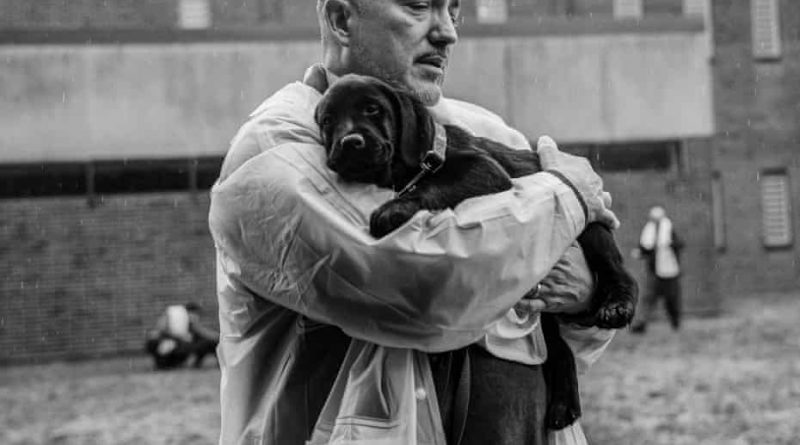
Among the most widely discussed exhibitions at the festival is Puppies Behind Bars, a collaborative project by photographers Ashley Gilbertson and Ava Pellor documenting a prison rehabilitation initiative inside Green Haven Correctional Facility, a maximum-security prison in New York state.
The programme allows incarcerated men to raise puppies that are later trained as service dogs. Gloria Gilbert Stoga, founder of the organisation Puppies Behind Bars, said she intentionally sought photographers experienced in conflict and crisis reporting because of the psychological intensity of prison environments.
Gilbertson is known internationally for his coverage of the Iraq War, while Pellor has documented wildfires and migrant border crossings in the Balkans. Their images capture daily life within the prison while focusing on emotional vulnerability and rehabilitation among inmates participating in the programme.
“The dogs humanize an environment that’s devoid of all humanity,” Gilbertson said, describing the programme’s effect on participants. He said caring for animals gave many inmates responsibility, emotional openness and continuity that had previously been absent from their lives.
Pellor recalled photographing a prisoner who became emotional after receiving a puppy for the first time. According to Pellor, the inmate remained physically close to the dog throughout the day after breaking down in tears during an outdoor walk.
Criminal justice researchers in the United States have increasingly studied animal-assisted rehabilitation programmes within prisons, with some studies suggesting they can improve emotional regulation, reduce disciplinary incidents and support reintegration efforts after release.
Another exhibition attracting attention is The Women’s Grass by Whitney Snow, which documents the cultural and spiritual significance of sweetgrass within the Blackfeet Nation community.
Sweetgrass has long held ceremonial and medicinal importance among Indigenous groups in North America, with harvesting traditions often passed between generations of women. Snow said women with extensive knowledge of the plant hold respected positions within Blackfeet society.
The photographer said she worked closely with tribal elders during production of the project to ensure sacred traditions were represented respectfully and without exploitation. Snow described her approach as an attempt to balance cultural education for outside audiences with the need to preserve community boundaries.
Her images focus on the landscapes, rituals and emotional connections surrounding sweetgrass harvesting, emphasising calmness and interconnectedness with nature rather than ethnographic spectacle.
Curators said many projects submitted to this year’s Photoville festival unexpectedly centred on joy, healing and emotional renewal despite addressing subjects often associated with trauma or political conflict.