UN Slashes Syria Food Aid as Funding Crisis Deepens
Rome-The United Nations said on Wednesday it would cut emergency food assistance in Syria by 50% and halt a subsidized bread program that had supported millions, citing severe funding shortages despite persistent humanitarian needs across the country.
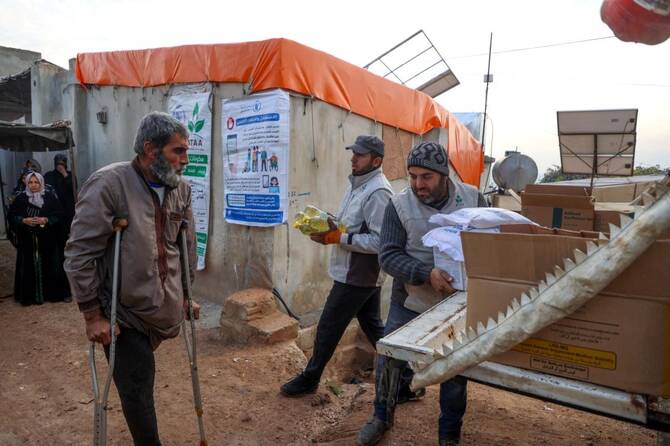
The Rome-based World Food Programme (WFP) said the reduction would lower the number of Syrians receiving emergency food aid from 1.3 million people to 650,000. The agency said 7.2 million people in Syria continue to face acute food insecurity even after conditions stabilized following the end of the country’s civil war.
WFP said the cuts were driven entirely by financial constraints rather than improving humanitarian conditions. The agency added that it required $189 million over the next six months to maintain and restore assistance operations in Syria.
“The reduction in WFP’s assistance is driven solely by funding constraints, not by a decrease in needs,” Marianne Ward, WFP director in Syria, said in a statement issued by the agency.
Ward described the current period as a fragile stage in Syria’s recovery, warning that the withdrawal of food assistance would remove a critical safety net for vulnerable communities.
As part of its food support operations, WFP said it had been supplying fortified wheat flour to more than 300 bakeries across Syria under a bread subsidy initiative designed to keep staple food prices affordable for low-income families.
“The bread subsidy program has been a vital lifeline, keeping this staple food affordable,” the agency said.
The funding shortfall is also affecting Syrian refugees in neighboring countries including Jordan and Lebanon, WFP said, as regional humanitarian programs face mounting financial pressure amid rising living costs and prolonged displacement.
“Across the region, vulnerable families are facing the cumulative effects of prolonged crises, rising costs, and shrinking assistance,” Samer Abdeljaber, WFP regional director for the Middle East, North Africa, and Eastern Europe, said in the statement.
International humanitarian agencies have repeatedly warned that donor fatigue and competing global crises are straining relief operations in Syria and across the wider Middle East, where millions remain dependent on food assistance more than a decade after conflict erupted.