Israel Intensifies Gaza Strikes Amid Claims Hamas Rebuilding Forces
Jerusalem-Israel has intensified military strikes in Gaza in the weeks following the suspension of its joint bombing campaign with the United States against Iran, as Israeli defense officials warn that Hamas is regrouping and rebuilding capabilities inside the enclave.
According to Gaza’s Health Ministry, 120 Palestinians, including eight women and 13 children, have been killed in Israeli attacks since the Iran conflict was paused on April 8, marking a 20% increase compared with the preceding five-week period.
Conflict monitor Armed Conflict Location and Event Data (ACLED) reported that Israeli attacks in Gaza rose by 35% in April compared with March, reflecting a renewed military focus on the territory after Israel scaled back operations linked to Iran.
The escalation underscores mounting difficulties surrounding US President Donald Trump’s efforts to secure a lasting ceasefire and advance reconstruction plans in Gaza following more than two years of conflict between Israel and Hamas.
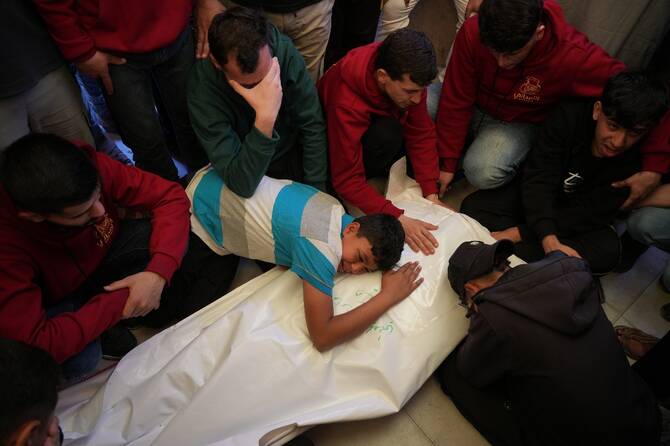
“The war is still ongoing,” said Lafi Al-Najjar, a 36-year-old blind Palestinian whose son was killed in an Israeli strike on April 28. Speaking from a tent camp in the ruins of Khan Younis, Najjar said conditions on the ground had not reflected public declarations of de-escalation.
Israel’s military did not immediately comment publicly on the increased pace of strikes. However, four Israeli defense officials told Reuters that military leaders had recently warned Prime Minister Benjamin Netanyahu’s government that Hamas was tightening operational control, replenishing weapons supplies and rebuilding militant ranks.
An Israeli military official, speaking on condition of anonymity, said the ceasefire arrangement permitted Israel to act against imminent threats. The official added that the military had prepared broader operational plans for a possible resumption of large-scale combat in Gaza, although no formal order had been issued.
The ceasefire agreement reached in October halted major fighting after two years of war but failed to produce a permanent political settlement.
Negotiations aimed at securing a full Israeli withdrawal, Hamas disarmament and reconstruction of Gaza have stalled.
Israeli forces continue to control more than half of Gaza’s territory, where extensive demolition has left large areas uninhabitable. More than 2 million Palestinians are concentrated in a narrow coastal zone, many sheltering in damaged buildings or temporary encampments.
Since the October ceasefire, around 850 Palestinians have been killed in Israeli strikes, according to figures that do not distinguish between civilians and combatants. During the same period, four Israeli soldiers were killed by militants in Gaza. Hamas has not released casualty figures for its fighters.
Several Israeli strikes since mid-April have targeted positions associated with Gaza’s Hamas-run police force. Palestinian health and police officials said at least 14 police personnel had been killed since April 14.
Nasser Khdour, a researcher at ACLED, said Israeli attacks during April targeted Hamas operatives, allied militant factions, police facilities and security checkpoints across areas under Hamas administration.
Khdour said drone strikes, artillery shelling and gunfire had also continued near armistice lines, affecting both militants and civilians approaching Israeli positions.
Since March, Israel has simultaneously expanded military operations beyond Gaza, joining US strikes against Iran while continuing air and ground campaigns against the Iran-backed Hezbollah movement in Lebanon. Although hostilities in Lebanon have slowed under a separate US-mediated ceasefire, clashes have persisted intermittently.