Analysis points to U.S.-operated Patriot in Bahrain blast as questions persist over March 9 incident
“A single interceptor meant to shield the skies has ignited deeper questions about precision, accountability, and the hidden costs of modern air defense in densely populated war zones.”
An interceptor missile likely fired from a U.S.-operated Patriot air defence battery caused or contributed to a pre-dawn explosion that injured dozens of civilians in Bahrain on March 9, according to an analysis by researchers at the Middlebury Institute of International Studies .
The blast, which struck the Mahazza neighbourhood on Sitra island, injured 32 people including children, Bahraini authorities said at the time. Both Bahrain and the United States initially attributed the incident to an Iranian drone attack, with U.S. Central Command stating on social media that a drone had hit a residential area.
In response to Reuters queries, Bahrain said on Saturday for the first time that a Patriot missile was involved in the incident. A government spokesperson said the interceptor successfully engaged an Iranian drone mid-air, adding that the resulting damage and injuries were not caused by a direct ground impact from either the missile or the drone.
Neither Bahrain nor Washington has presented evidence confirming the presence of a drone over the Mahazza neighbourhood. The Pentagon referred questions to U.S. Central Command, which did not immediately respond.
A senior U.S. official said Washington was continuing efforts to counter Iranian drone and missile capabilities and reiterated that U.S. forces do not target civilians, without addressing specific questions about the incident.
The Middlebury analysis, conducted by researchers Sam Lair, Michael Duitsman and Jeffrey Lewis, concluded with moderate-to-high confidence that the missile was launched from a Patriot battery located roughly 7 km southwest of the impact area.
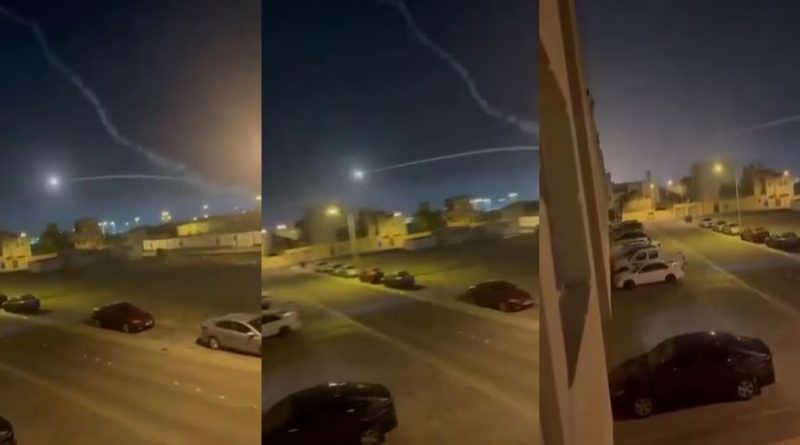
Their findings were based on open-source video, commercial satellite imagery and geolocation techniques independently .Footage reviewed by the researchers showed a missile travelling at low altitude before descending and detonating seconds later. The team traced its trajectory back to a site in Riffa identified as a long-standing Patriot battery location.
Satellite imagery indicated the presence of multiple launchers at the site days before the incident, and the researchers assessed the installation to be consistent with U.S.-operated systems rather than those recently deployed by Bahrain.
External experts consulted by Reuters said they found no reason to dispute the conclusions. Wes Bryant, a former Pentagon targeting advisor, described the findings as “pretty undeniable.”
The researchers said the available evidence suggested the missile detonated mid-air, dispersing fragments over several streets in Mahazza. Analysis of blast patterns and debris distribution indicated damage consistent with an aerial explosion of a Patriot interceptor, including its warhead and remaining propellant.
They said it was possible the missile was targeting a low-flying drone and that a combined detonation occurred, aligning with the Bahraini government’s account. However, they assessed it as less likely that a direct interception took place, citing the direction of damage and the absence of corroborating evidence of a drone.
Audio and visual analysis of verified footage supported the estimated location of the explosion, with specialists noting the delay between visible flash and sound consistent with a detonation several kilometres away. No clear audio evidence of drones or additional missiles was identified, though analysts said such sounds could be faint at that distance.
The incident occurred amid heightened regional tensions and coincided with reported Iranian strikes on infrastructure in Bahrain, including an attack on an oil refinery on Sitra the same night, according to the national oil company. Bahrain hosts the U.S. Navy’s Fifth Fleet and is a key security partner in the Gulf, where both countries operate Patriot systems.
Researchers noted that the use of high-cost interceptors against relatively inexpensive drones has been a defining feature of the ongoing conflict, highlighting operational challenges and risks to civilian areas when engagements occur near populated areas.
Bahrain’s government said suggestions of a malfunction or misfire were “factually incorrect.” The Middlebury team said it could not determine definitively why the missile detonated but noted that deviations in trajectory could indicate either a targeting decision or a technical issue.
The Strait of Hormuz, near Bahrain, remains a critical global energy route, carrying about a fifth of the world’s oil and liquefied natural gas supplies, and has faced significant disruption during the conflict.