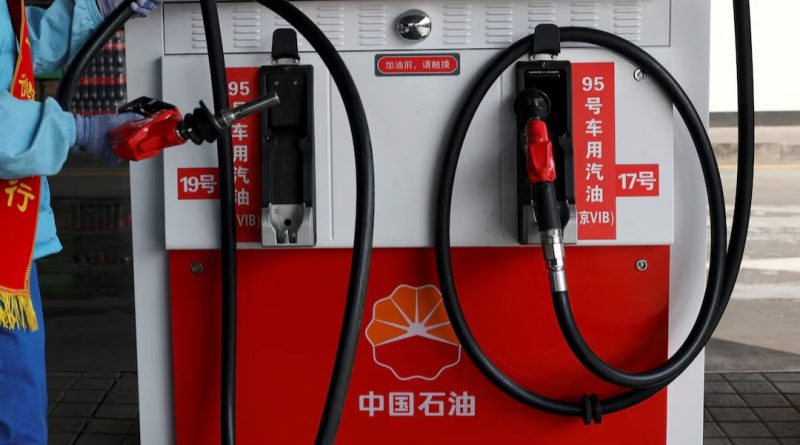
China fuel export curbs jolt Asia markets as war-driven supply crunch deepens
Beijing— China’s ban on exports of diesel, gasoline and jet fuel is set to tighten fuel supplies across Asia and push prices higher, as regional buyers already strained by disruptions linked to the U.S.-Israeli war against Iran scramble to secure alternative shipments.
The restriction, imposed last week and expected to remain in place until at least the end of March, aims to prevent domestic shortages in China, the world’s largest oil importer, according to market sources.
The move curtails exports that were valued at about $22 billion last year.War disruptions amplify supply strainEven before the export curbs, Asian refiners were seeking alternative crude supplies as the conflict in the Middle East disrupted flows from the Gulf.
Several refineries in the region, a key supplier of fuel to Asia, have shut operations as shipping through the Strait of Hormuz was halted.
The combined impact has intensified competition for available cargoes, leaving import-dependent economies exposed to supply shocks.
Australia, Bangladesh and the Philippines, which rely heavily on Chinese refined fuel exports, are expected to face immediate challenges in meeting demand.
China accounted for roughly one-third of Australia’s jet fuel imports last year and about half of supplies to Bangladesh and the Philippines in 2024.
China ranks as Asia’s fourth-largest exporter of refined, or “clean,” fuels after South Korea, India and Singapore, and plays a pivotal role as a swing supplier when regional demand fluctuates.
Analysts say the sudden halt in exports leaves limited room for other suppliers to compensate. “The remaining Asian exporters simply do not have the spare volumes to replicate China’s role as the region’s swing supplier,” Kpler analyst Zameer Yusof said.
Benchmark refining margins in Singapore, known as “cracks,” are expected to continue rising as markets adjust through higher-priced replacement cargoes or reduced demand.
Fuel prices across Asia have climbed sharply. Diesel derivatives rose to $150 per barrel on March 17, while jet fuel swaps reached $163 per barrel, up from about $92 before the war, according to LSEG data.
Gasoline traded at $139.80 per barrel on Monday, compared with $79.30 on February 27.The tightening market is already affecting downstream sectors. Vietnam has warned airlines to prepare for potential flight cuts from April due to fuel shortages linked to export restrictions.
China’s Foreign Ministry said on Monday that military action in the Middle East should cease and that Beijing is willing to work with other countries to ensure energy security.