Thousands Demonstrate in Minnesota and Across United States Over Immigration Policy
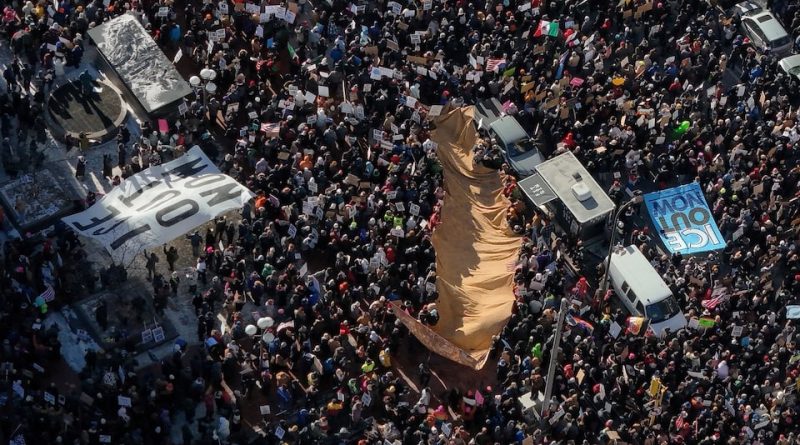
Minneapolis – Thousands of people gathered in Minneapolis and several other cities across the United States as demonstrations and student walkouts took place in response to recent developments in federal immigration enforcement.
Despite freezing temperatures in Minnesota, large crowds assembled peacefully, reflecting growing public engagement with immigration-related issues.
The demonstrations followed recent incidents involving federal immigration agents, which drew nationwide attention and prompted calls for clarification on enforcement practices.
Participants said the protests were aimed at expressing concern, seeking dialogue, and urging transparency around ongoing operations.
In downtown Minneapolis, families, students, educators, and community members marched together carrying placards and banners.
Many emphasized unity, safety, and the importance of lawful and humane approaches to immigration enforcement.
Similar demonstrations occurred well beyond Minnesota. Students and teachers across multiple states organized walkouts, temporarily leaving schools to participate in coordinated events held on the same day.
Organizers described the walkouts as a way to encourage civic discussion and raise awareness about how immigration policies affect local communities. Schools in several regions reported reduced attendance as students joined public gatherings and rallies.
The federal government has deployed additional officers to the Minneapolis area as part of a broader immigration initiative. Officials have said the move is intended to strengthen enforcement capacity and improve coordination between agencies.
Federal officers have been visible in several neighborhoods, prompting public interest and discussion. Authorities have stated that operations are being carried out under existing legal frameworks.
During the demonstrations, speakers shared personal experiences related to immigration, work, and community life in the United States.
Many highlighted the country’s history as a destination for people seeking opportunity and stability.
Teachers and school staff participated in smaller neighborhood marches near sites linked to recent incidents.
They said it was important for educators to engage in civic life and support open conversations among students.
Cultural events also formed part of the broader response.
A benefit concert in Minneapolis drew attendees who said music and art can help bring communities together during times of uncertainty.
Organizers reported that demonstrations were held in dozens of states, including major cities such as New York, Los Angeles, Chicago, and Washington.
Some events encouraged participants to pause regular activities like work and shopping to focus attention on immigration discussions.
As demonstrations expanded, political debate intensified at the national level.
Elected officials from different parties offered varying perspectives on enforcement priorities and border management.
Developments in Minneapolis also affected federal agencies operating in the region.
Changes in leadership assignments were reported as agencies continued their roles in enforcement and investigation activities.
Recent reports indicated adjustments to enforcement guidance, including clarification of arrest authority for immigration agents.
Officials said these measures are designed to improve operational efficiency and consistency.
Public attention to immigration policy has increased following widespread media coverage.
Images and videos from enforcement operations and demonstrations have contributed to ongoing national discussions.
Senior officials have indicated that enforcement strategies are subject to review and refinement.
They have emphasized balancing security objectives with community engagement and legal standards.
State leaders in Minnesota and elsewhere have called for continued cooperation between federal and local authorities.
They have stressed the importance of maintaining public confidence while ensuring safety.
In other states, schools adjusted schedules in anticipation of student participation in demonstrations.
Districts in Colorado and Arizona reported closures or cancellations due to expected absences.
Universities and colleges also became focal points for discussion.
Students displayed signs supporting dialogue, inclusion, and campus safety during peaceful gatherings.
High school students in cities such as Long Beach, Brooklyn, and Chicago participated in walkouts and marches.
Their actions reflected growing youth involvement in national policy conversations.
Overall, the demonstrations highlighted widespread public interest in immigration policy and enforcement practices.
As discussions continue across communities and institutions, immigration remains a central topic in the national civic landscape.