
Iran unrest death toll tops 5,000 as judiciary signals executions
Tehran – Iran is facing one of the deadliest episodes of internal unrest in its modern history, with an Iranian official saying at least 5,000 people have been killed during weeks of nationwide protests sparked by economic collapse and political anger.
The unrest, which erupted in late December, rapidly spread from demonstrations over the falling value of the currency into widespread calls for an end to clerical rule, marking the most severe challenge to the Islamic Republic since the 1979 revolution.
According to the official, who spoke on condition of anonymity, the death toll includes around 500 members of Iran’s security forces.
Authorities have accused what they describe as “armed rioters and terrorists” of killing civilians and security personnel alike, while insisting that the verified figures are unlikely to rise sharply.
Independent rights groups, however, have reported lower but still significant death tolls and tens of thousands of arrests, highlighting the difficulty of verifying information amid internet blackouts and restrictions on reporting.
The situation has taken a more alarming turn after Iran’s judiciary indicated that executions of detained protesters could proceed.
Judiciary spokesperson Asghar Jahangir said some acts committed during the unrest were classified as Mohareb, a term under Islamic law meaning waging war against God, which carries the death penalty.
The comments have intensified international concern and fears of a harsher crackdown as authorities seek to consolidate control following weeks of violence.
US President Donald Trump has warned that Washington could intervene if mass executions go ahead. In recent days, Trump claimed Iranian leaders had paused the execution of hundreds of detainees, though Tehran has not officially confirmed this.
Iran’s Supreme Leader Ayatollah Ali Khamenei has rejected US pressure, accusing Washington of supporting unrest and branding Trump a criminal for what he described as American-backed casualties inflicted on Iran.
Khamenei acknowledged that several thousand people had died but blamed foreign-backed groups, including the US and Israel, for fueling violence.
Iranian officials have repeatedly pointed to alleged external interference, a narrative the clerical establishment has long used during periods of unrest.
Israel, a long-standing adversary of Iran, launched military strikes against Iranian targets earlier in the year, further escalating regional tensions and shaping Tehran’s response to domestic instability.
Some of the most intense clashes and highest death tolls were reported in Iran’s Kurdish مناطق in the northwest, where separatist groups have historically clashed with central authorities.
Rights groups and residents say security forces used live ammunition in these areas, while officials allege armed groups attempted to exploit the unrest by crossing borders and attacking civilians.
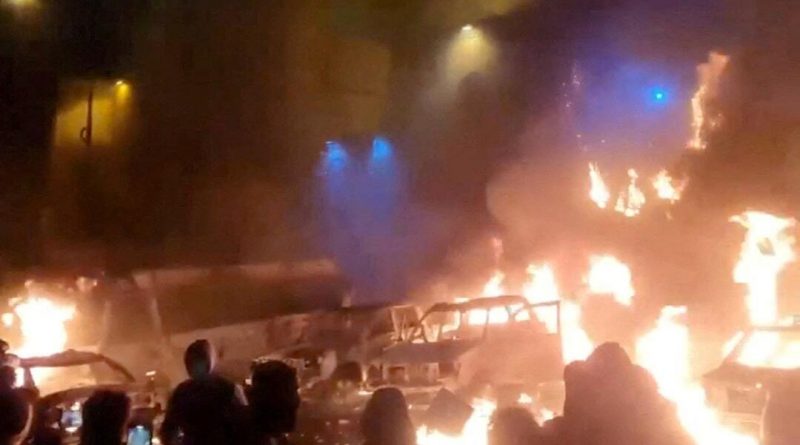
Witness accounts describe chaotic scenes of burning buildings, gunfire, and violent confrontations between protesters and security forces.
Despite the scale of the violence, state media and residents suggest the crackdown has largely quelled street protests for now.
Internet blackouts, imposed to curb the spread of information and coordination, have been intermittently lifted and reimposed, leaving families inside and outside Iran struggling to communicate.
For many Iranians, the unrest has left deep scars and uncertainty over what comes next, particularly as the judiciary signals that severe punishments may still be imposed.
The crisis has placed Iran at the center of global attention once again. Its outcome could reshape both domestic politics and regional stability.


