Solar Villages Revitalize Rural South Korea as Renewable Energy Drives New Incomes
Seoul-South Korea is expanding a government-backed solar energy initiative aimed at revitalizing struggling rural communities, providing farmers with new income streams while accelerating the country’s transition toward renewable energy.
The administration of President Lee Jae Myung plans to establish more than 500 “Sunshine Income Villages” by the end of 2026 and increase the number to 2,500 by 2030, according to government officials.
The program allows farmers to secure loans covering up to 90 percent of the cost of installing solar power facilities on their land. During the first five years, participants pay only interest on the loans, with principal repayments beginning afterward. Revenue generated from selling surplus electricity is distributed directly to local residents.
Officials cite the villages of Guyang-ri in Gyeonggi Province and Songam-ri in Gangwon Province as early examples of the scheme’s impact. In Guyang-ri, six solar-generation sites with a combined capacity of one megawatt currently generate more than 100 million won ($66,000) annually for approximately 130 residents, most of them elderly. Plans are underway to expand capacity to five megawatts.
Resident Kim Choonok said the project had already transformed local life, attracting attention from visitors across South Korea and abroad. She said villagers had begun to experience tangible financial benefits only a year and a half after the system became operational.
Village chief Ju Young Jeon said the initiative could also help reverse demographic decline by creating employment opportunities for younger generations who have traditionally migrated to urban centers in search of work.
Income from the solar installations has funded community services including daily meals for residents, transportation to healthcare facilities, recreational amenities and other welfare programs.
In Songam-ri, solar power has emerged as one of the village’s primary sources of revenue alongside its rice-processing industry. The facility, built on converted farmland, generates 657 megawatt-hours of electricity annually and earns more than 100 million won each year.
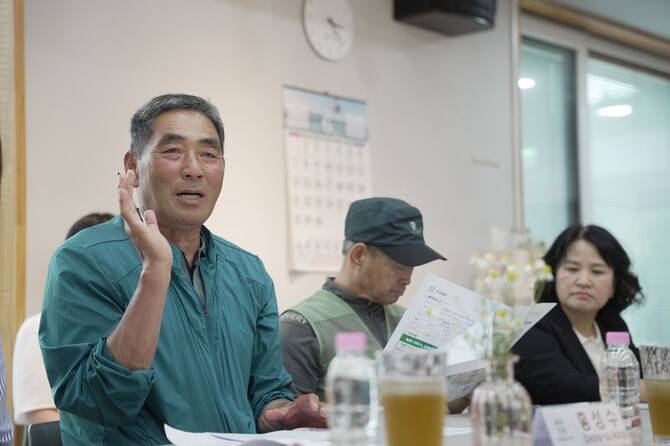
Village chief Seong-su Hong said the additional revenue has helped offset years of stagnant agricultural earnings and rising living costs. According to Hong, the project has created 21 jobs and financed community support programs, including meal services, milk deliveries for elderly residents and contributions to senior welfare organizations.
The initiative reflects broader efforts by South Korea to address challenges posed by an aging rural population, economic pressures on farmers and the country’s long-term renewable energy objectives. Local leaders involved in the program say the model could be replicated across other rural regions seeking sustainable sources of income and development.