Fragile Truce Emerges as Iran and Israel Suspend Strikes Amid Trump’s Ceasefire Push
Dubai- Iran and Israel said on Monday they had halted attacks on each other following a public appeal by U.S. President Donald Trump for both sides to immediately cease hostilities, easing fears of a broader regional escalation that had threatened ongoing efforts to negotiate an end to the more than three-month war.
The latest exchange of fire marked the most direct confrontation between the two adversaries since an April ceasefire, underscoring the fragility of diplomatic progress and highlighting the risk that violence elsewhere in the region could reignite the conflict.
Iran’s military headquarters announced that armed forces operations against Israel had been halted after what it described as a “painful response” to Israeli attacks on Lebanon. The statement, however, warned that Tehran would resume military action if Israeli operations continued, including in southern Lebanon.
A source briefed on the matter told Reuters that Israel had also decided to suspend attacks on Iran, although Israeli officials maintained that the military remained prepared to continue operations if required.
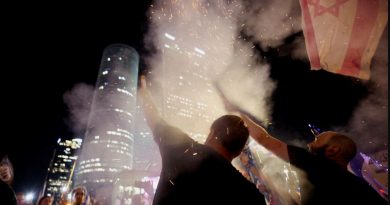
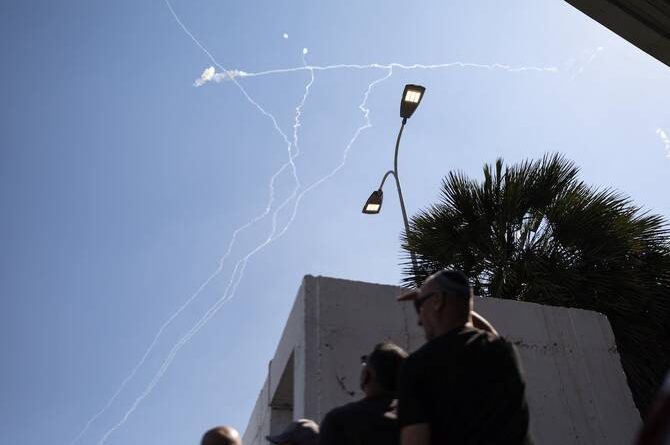
The confrontation began after Iran launched missiles toward Israeli territory late on Sunday, which Tehran said was retaliation for Israeli strikes on Hezbollah strongholds on the outskirts of Beirut. Israel responded with attacks on Iranian targets, including a petrochemical facility in the southwestern city of Mahshahr.
Israeli officials said the site was used to produce and export raw materials for Iran’s ballistic missile program. A provincial Iranian official told local media that sections of the complex had sustained damage.
Iran’s Islamic Revolutionary Guard Corps said it retaliated by targeting a similar petrochemical facility in the Israeli port city of Haifa.
The flare-up reverberated through global markets. Oil prices surged as much as 5% before retreating after Iran signaled that its initial military response had concluded. The U.S. dollar also eased after reaching its highest level in nearly two months.
The renewed violence has complicated Trump’s efforts to secure a broader agreement with Tehran. The conflict, launched by the United States and Israel on Feb. 28, has remained largely frozen since an April 8 ceasefire paused full-scale warfare.
In a social media post, Trump said Israel and Iran were seeking “an immediate CEASEFIRE” and that final negotiations toward peace were progressing. He added that a U.S. blockade of Iranian ports would remain in place until a comprehensive agreement was reached.
An Israeli official confirmed that Trump spoke with Prime Minister Benjamin Netanyahu on Monday as Washington sought to prevent the latest escalation from derailing diplomacy.
Despite indications of restraint, officials on both sides maintained a hardened stance. An Israeli military official said the armed forces were prepared to continue operations “for as long as it takes” and confirmed strikes on newly rebuilt Iranian air-defense systems in addition to the petrochemical facility.
Iranian officials likewise signaled readiness for a prolonged confrontation. A military source quoted by the semi-official Tasnim news agency said Tehran could renew attacks, including against U.S. interests in the region, if circumstances warranted.
Iranian Foreign Ministry spokesperson Esmaeil Baghaei said talks with Washington were taking place in an atmosphere of “extreme suspicion” and accused Israel of attempting to sabotage diplomatic efforts through its military actions in Lebanon.
In Tehran, state media reported explosions and said air-defense systems had shot down a drone over the capital. No significant casualties or major damage were immediately reported.
The conflict also drew in Yemen’s Iran-aligned Houthis, who announced plans to prevent Israeli maritime navigation through the Red Sea and claimed responsibility for missile launches against Israel.
An Israeli military official said Iran had fired nearly 30 ballistic missiles toward Israel since Sunday evening, while the Houthis launched an additional two missiles.
Iran’s National Emergency Organization said 15 people were injured in the latest Israeli strikes, including 14 in Mahshahr County. No fatalities were reported. Israel’s ambulance service said there were no reported casualties from the missile attacks on Israeli territory.
The latest exchange has reinforced the central role of Lebanon in regional diplomacy. Israel has continued military operations against Hezbollah despite the Iran ceasefire, arguing that the Lebanese front is separate from its conflict with Tehran.
Hezbollah has maintained attacks against Israel and insists it will not disarm unless Israeli operations cease. Tehran has repeatedly stated that any comprehensive peace agreement with Washington depends on an end to fighting in Lebanon.
U.S. Ambassador to Lebanon Michel Issa said Lebanese-Israeli negotiations were scheduled to resume in Washington, offering a potential diplomatic channel as efforts continue to prevent the conflict from expanding further.
The war has also reshaped regional trade routes. Iran continues to block most shipping through the Strait of Hormuz, a critical artery for global energy supplies, while Washington has maintained a blockade on Iranian ports.
Trump has said any final settlement must ensure Iran does not develop a nuclear weapon. Tehran has demanded the lifting of international sanctions, access to frozen assets and recognition of its influence over the strategically important waterway.