UN Climate Vote Tests Global Resolve on Emissions
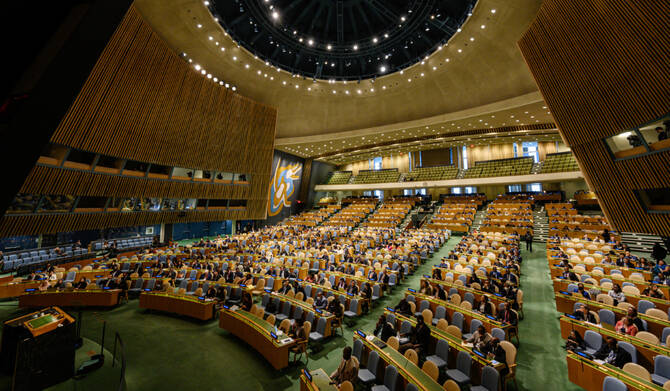
United Nations— The United Nations General Assembly is set to consider a draft resolution this week reaffirming states’ legal obligations to address climate change, following a landmark advisory opinion by the International Court of Justice that expanded the legal framework surrounding global climate responsibility.
The resolution, scheduled for debate on Wednesday, was spearheaded by the Pacific island nation of Vanuatu, which led a successful 2024 campaign urging the ICJ to clarify states’ duties under international law regarding climate action.
Last year, the Hague-based court concluded that governments are legally obligated to take measures against climate change and warned that failure to meet those obligations could expose states to claims for reparations from countries most vulnerable to climate impacts.
The latest draft resolution describes the ICJ opinion as “an authoritative contribution to the clarification of existing international law” and calls on countries to comply with obligations aimed at protecting the global climate system.
The text also reiterates support for limiting global warming to 1.5 degrees Celsius above pre-industrial levels and references the international commitment adopted at the 2023 climate summit in Dubai to transition away from fossil fuels in energy systems.
Negotiations over the resolution, however, resulted in significant revisions after opposition from several major greenhouse gas emitters and industrial economies, according to diplomatic sources.
An earlier proposal to establish an “International Register of Damage” documenting climate-related losses and injuries was removed from the current version after objections from countries including the United States, China, Japan, members of the European Union and oil-producing states.
Those governments argued the mechanism extended beyond the scope of the ICJ opinion and raised concerns about potential pathways toward compensation claims or reparations linked to historical emissions.
Vanuatu Climate Minister Ralph Regenvanu defended the revised text, saying the resolution does not create new legal obligations or assign liability to individual states.
“For Vanuatu and for many climate-vulnerable states, this is ultimately about survival,” Regenvanu said, adding that the measure was intended to strengthen multilateral cooperation on climate governance.
Despite the dilution of several provisions, climate advocates said the resolution remains politically significant because it reinforces the growing role of international law in shaping climate accountability.
Joie Chowdhury, senior attorney at the Center for International Environmental Law, described the current draft as “still a strong text” despite intense diplomatic pressure during negotiations.
Diplomatic sources said the resolution may not secure the broad consensus achieved during the General Assembly’s original request for the ICJ opinion in 2024, with at least one member state expected to call for a formal vote.
The draft also requests that United Nations Secretary-General Antonio Guterres prepare a report outlining options to advance compliance with obligations identified in the ICJ ruling.