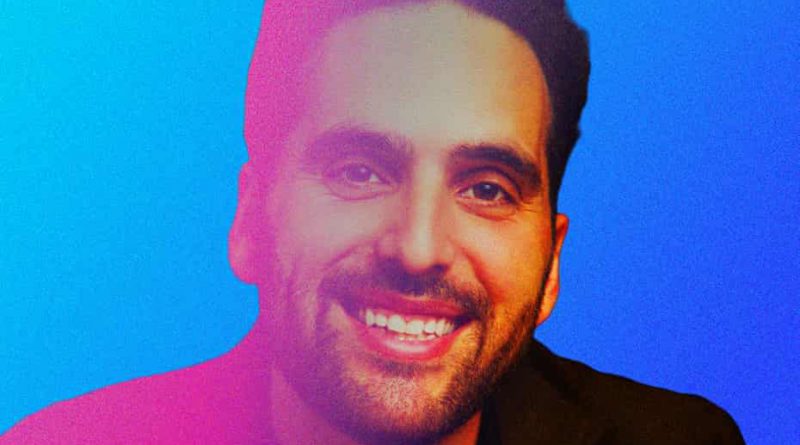
Author Simone Stolzoff Says Modern Life Is Fueling Anxiety Over Uncertainty
“You might not be able to see very far ahead, but you have to keep rowing.” — Simone Stolzoff
Journalist and author Simone Stolzoff says growing political instability, rapid technological change and declining public trust are intensifying people’s fear of uncertainty, arguing that modern society increasingly rewards the appearance of certainty even when the future remains unknowable.
In his new book, How to Not Know: The Value of Uncertainty in a World That Demands Answers, Stolzoff examines how individuals respond to unpredictability in work, relationships, politics and personal identity, and why learning to tolerate uncertainty may be essential in an era shaped by artificial intelligence, misinformation and economic disruption.
Stolzoff said the idea for the book emerged after readers of his earlier work, The Good Enough Job, repeatedly asked how they should think about their futures amid rapid technological and social change.“The most common question asked by readers was how to think about the future of their careers, given AI and all these other changing forces,” Stolzoff said.
The author describes himself as someone naturally prone to self-doubt and overthinking, tendencies he said became especially pronounced earlier in his career when he faced a decision between remaining a journalist in New York City or taking a role at a design company in San Francisco.
At the time, Stolzoff said he struggled to decide between what he saw as two diverging versions of his future identity.“I could see these two diverging paths Simone the journalist, Simone the designer and, for the life of me, I could not make up my mind,” he said.
He recalled seeking advice from nearly everyone around him, including friends, relatives and even casual acquaintances, because he believed he needed certainty before making a decision.
Looking back, Stolzoff said the problem was not uncertainty itself but his inability to tolerate it.“It was my intolerance of uncertainty that was causing so much of the angst,” he said.Stolzoff argues that the human tendency to seek certainty evolved as a survival mechanism, helping people anticipate threats and reduce risk.
However, he said modern life surrounds individuals with constant triggers that encourage anxiety about the future.“We have these brains that are wired to get out of uncertainty as quickly as possible, in a world where there are triggers all around us,” he said.
The book explores how this dynamic affects public life, including political polarisation and declining social trust. Stolzoff said people increasingly rush to fixed conclusions about others based on political identity or online narratives, reducing the possibility for dialogue or ambiguity.
“I do think that intolerance for uncertainty is at the root of so much of our political polarisation,” he said.He also linked uncertainty to what many researchers and policymakers describe as a growing loneliness epidemic, arguing that social connection often requires people to accept unpredictability in human interaction.
“You have to be willing to enter into an interaction with a stranger, not knowing how it will go,” he said.Stolzoff cited research by psychology professor Philip Tetlock, whose long-term analysis of expert forecasting found that many predictions performed little better than random chance.
He also referenced psychologist Daniel Gilbert and the concept of the “end-of-history illusion,” which describes people’s tendency to believe their current preferences and identities will remain stable over time.According to Stolzoff, individuals often underestimate their own capacity to adapt to changing circumstances.
“We discount our ability to course-correct or adapt,” he said.While some decisions merit careful consideration because they are difficult to reverse, Stolzoff argued that many everyday choices become unnecessarily stressful when approached with excessive analysis.
“There’s a huge cost if we take that highly analytical framework and apply it to decisions like what to watch on Netflix,” he said.
Instead of waiting for complete clarity before acting, Stolzoff said people should continue making decisions despite incomplete information. He compares the process to “rowing through the fog,” a metaphor that became central to the book.
“You might not be able to see very far ahead, or know exactly where you’ll end up, but you have to keep rowing,” he said.Stolzoff said he encourages people to make decisions that align with their values rather than trying to guarantee specific outcomes.
“If you act in alignment with your values, you can still stand by the choice, even if you don’t get the outcome that you desire,” he said.At the same time, he stressed that uncertainty tolerance does not mean embracing instability in every aspect of life.
The book encourages readers to identify “anchors” stable relationships, values or commitments that can provide continuity during periods of change.“I think about my family, my values and my commitment to my home,” he said.
Part of Stolzoff’s reporting for the book took him to Tuvalu, one of the countries considered most vulnerable to rising sea levels caused by climate change. He said conversations there shaped his understanding of how communities respond collectively and individually to uncertain futures.
One resident focused on self-sufficiency and resilience at the household level, while another emphasised international cooperation and collective support.“They’re two approaches to uncertainty,” Stolzoff said. “It’s not either-or; it’s both-and.”
He compared those responses to debates surrounding artificial intelligence and employment, where discussions often become polarised between technological optimism and fears of widespread job displacement.“Often they’re set up in the media as opposites,” he said.
“I think the truth is probably somewhere in between.”The book also examines how uncertainty intersects with mortality. Stolzoff argues that fear of death is closely connected to the human desire for certainty and control, but says accepting life’s limits can also deepen meaning and purpose.
“Part of what makes life meaningful is the fact that it’s not going to be forever,” he said.He argued that complete certainty about the future, including knowledge of exactly when or how a person would die, could ultimately diminish the unpredictability that gives life emotional depth.
“In the uncertainty, that’s where magic, surprise and delight lives,” he said.