Trump and Xi Align on Iran Nuclear Threat, Hormuz Security at Beijing Summit
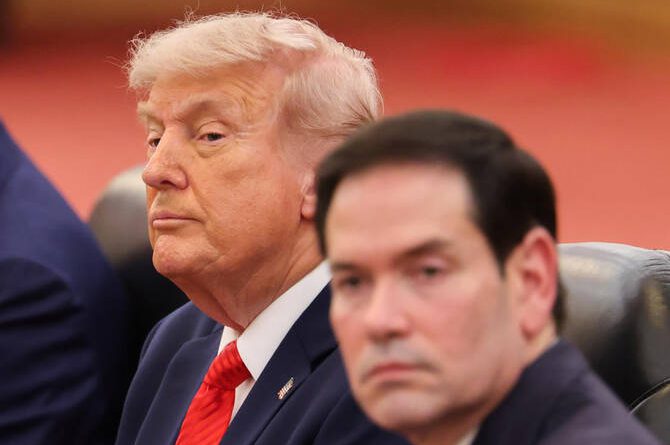
Beijing — Donald Trump and Chinese President Xi Jinping agreed during talks in Beijing that Iran must not obtain a nuclear weapon and that the Strait of Hormuz should remain open to global shipping, the White House said on Thursday, as the two powers sought to stabilize ties amid intensifying geopolitical tensions.
The agreement emerged during the opening phase of a two-day summit in the Chinese capital that both sides framed as an effort to preserve cooperation between the world’s two largest economies despite disputes over trade, Taiwan and global security.
Xi told Trump that stable ties between China and the United States benefited the international community and warned that confrontation between the two countries would damage both sides.“When we cooperate, both sides benefit; when we confront each other, both sides suffer,” Xi said during opening remarks at the Great Hall of the People.
Trump, whose approval ratings have come under pressure amid the Iran war and rising inflation, described the gathering as potentially “the biggest summit ever” and invited Xi to visit Washington later this year.During a state banquet, Trump praised Xi as “a great leader” and said the two countries would pursue broader cooperation despite ongoing strategic rivalry.
Chinese officials said economic negotiations held in South Korea on Wednesday between US and Chinese trade teams had produced “balanced and positive outcomes,” aimed at preserving a trade truce reached last October that suspended steep tariffs and eased tensions over rare earth exports.
The leaders also discussed expanding cooperation in agriculture, trade and artificial intelligence while exchanging views on conflicts in the Middle East, Ukraine and the Korean Peninsula, according to Chinese state broadcaster CCTV.Taiwan remained a central point of friction.
Xi warned Trump that mishandling the issue could push bilateral relations toward “a dangerous situation,” according to China’s foreign ministry.Taiwan, the democratically governed island claimed by Beijing, continues to receive military support from Washington under longstanding US law despite the absence of formal diplomatic recognition.
Joining Trump in Beijing were senior US business executives including Elon Musk and Jensen Huang, reflecting Washington’s push for greater access to Chinese markets and reduced trade imbalances.China, meanwhile, is seeking relief from US export restrictions on advanced semiconductors and chipmaking equipment.
Analysts said shifting geopolitical conditions have altered the balance of the relationship since Trump’s previous Beijing visit in 2017. While China’s economy has slowed, Beijing faces less immediate domestic political pressure than Washington, where inflation, legal disputes over tariffs and the Iran conflict have complicated Trump’s agenda ahead of midterm elections.
The Iran conflict also featured prominently in discussions, with Trump expected to encourage Beijing to press Tehran toward a diplomatic settlement. However, analysts said China was unlikely to significantly reduce support for Iran, which Beijing views as an important strategic partner and counterweight to US influence.
US Secretary of State Marco Rubio said it was in China’s economic interest to help stabilize the Gulf region, noting that disruptions in shipping and trade would affect Chinese exports and maritime traffic.