US Strike on Iranian Tankers Jolts Fragile Gulf Truce
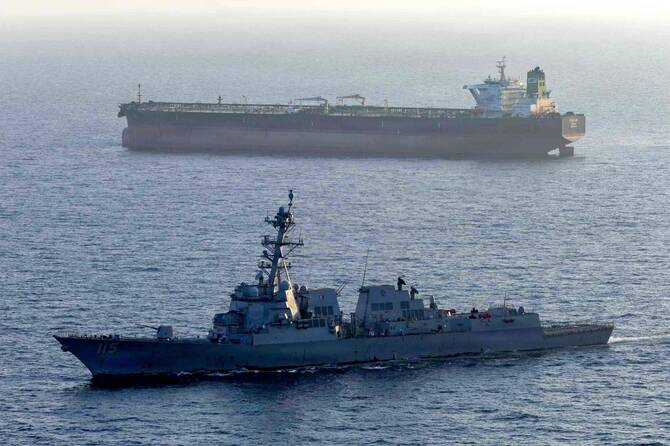
Tehran— A U.S. fighter jet disabled two Iranian-flagged tankers in the Gulf of Oman on Friday, triggering retaliatory strikes by Iranian forces and intensifying pressure on a fragile ceasefire as Washington and Tehran weighed a new proposal aimed at ending the regional conflict.
The confrontation marked the latest escalation in a 10-week war that began with joint U.S.-Israeli strikes on Iran and has since destabilized shipping lanes, disrupted oil exports and widened hostilities across the Middle East.U.S. Central Command said an F/A-18 Super Hornet used precision-guided munitions against the two vessels to prevent them from continuing toward Iranian waters through the Gulf of Oman, a strategic maritime corridor connected to the Strait of Hormuz.
Iranian officials condemned the attack as a breach of the ceasefire and accused Washington of undermining ongoing diplomatic efforts.An Iranian military official told local media that naval forces had “responded to the violation of the ceasefire and to American terrorism with strikes,” adding that the clashes had subsequently ended.
The incident followed renewed tensions overnight in the Strait of Hormuz, a vital energy transit chokepoint through which a significant share of global oil shipments passes. An adviser to Iran’s supreme leader compared strategic control of the strait to possessing “an atomic bomb.”U.S. Secretary of State Marco Rubio said in Rome that Washington expected Tehran’s response later Friday to a new American proposal aimed at extending the truce to facilitate broader negotiations.
“It is unacceptable” for Iran to control the strategic waterway, Rubio told reporters, expressing hope Tehran would present “a serious offer.”At the White House, U.S. President Donald Trump said his administration anticipated receiving a formal Iranian response by nightfall.“I’m getting a letter supposedly tonight, so we’ll see how that goes,” Trump said.
According to regional officials, Washington delivered the latest ceasefire proposal through Pakistani mediators, seeking an extension of the Gulf truce to create space for negotiations over a permanent settlement.Iran’s Foreign Ministry spokesman Esmaeil Baqaei said the proposal remained “under review,” according to the ISNA news agency.
Iran’s ambassador to the United Nations, Amir Saeed Irvani, submitted a letter to the U.N. Security Council accusing the United States of violating the ceasefire through the tanker strikes.In Washington, Qatar’s Prime Minister Mohammed bin Abdulrahman Al Thani met U.S. Vice President JD Vance to discuss Pakistani-led mediation efforts aimed at securing a lasting peace arrangement.
Satellite imagery released Friday indicated an expanding oil slick off Iran’s Kharg Island, the country’s principal oil export terminal. Monitoring firm Orbital EOS estimated the spill covered more than 20 square miles off the island’s western coastline, though the cause was not immediately determined.
Kharg Island remains central to Iran’s oil export infrastructure and sits north of the Strait of Hormuz, where commercial shipping disruptions since February have contributed to heightened volatility in global energy markets.Iran largely closed the strait following the outbreak of war on Feb. 28, prompting sharp increases in oil prices and renewed security deployments by Western naval forces.
The United States later imposed a maritime blockade targeting Iranian ports.Trump earlier this week announced a naval initiative aimed at reopening the strait to commercial traffic before reversing course in favor of renewed diplomacy.On a parallel front in Lebanon, the Iran-backed militant group Hezbollah said it launched missiles toward an Israeli military base near Nahariya in response to Israeli strikes on Beirut’s southern suburbs and southern Lebanon.
Hours later, Hezbollah announced a separate drone attack targeting another Israeli base in the north.Israel has continued operations against Hezbollah despite an existing ceasefire agreement. On Wednesday, Israeli forces carried out their first strike in a month on Beirut’s southern suburbs, saying a senior Hezbollah commander had been killed.
Lebanon’s health ministry said Israeli strikes in the south killed 10 people on Friday, including women and children, while Lebanon’s civil defense agency said one of its personnel was also killed.The escalation comes ahead of planned direct negotiations between Israel and Lebanon in Washington next week, talks Hezbollah has publicly opposed.