Koh-i-Noor Debate Resurfaces as Political Remarks Renew Focus on Colonial-Era Claims
“A pocket-sized symbol of colonial loot and plunder that still has the power to create dissension.”
Recent remarks by Zohran Mamdani, suggesting that King Charles III should return the Koh-i-Noor diamond to India, have reignited longstanding debates over the ownership of cultural artefacts acquired during the colonial period.
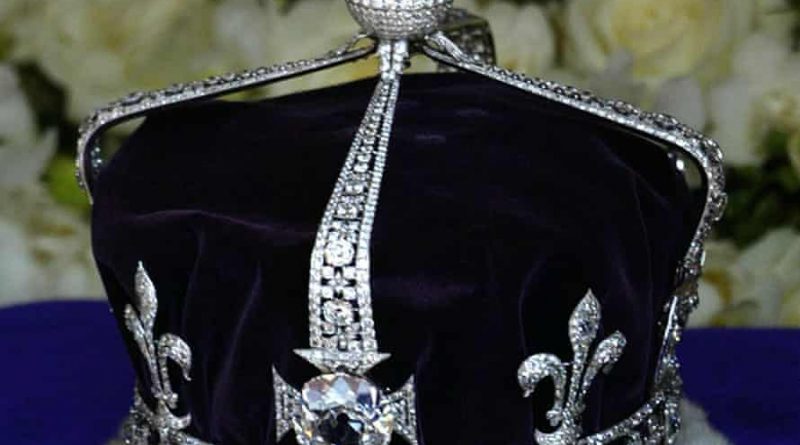
The diamond, currently part of the British crown jewels housed in the Tower of London, remains one of the most contested symbols of empire.The Koh-i-Noor, though not the largest diamond in the British collection, carries a significant historical and political legacy.
Historian William Dalrymple described it as a “pocket-sized symbol of colonial loot and plunder,” emphasising its continued capacity to generate political and cultural tensions. He noted that the diamond’s symbolic weight persists across generations, often intersecting with contemporary diplomatic and political discourse.
Historical accounts referenced by Dalrymple and co-author Anita Anand indicate that much of the narrative surrounding the diamond’s prominence was shaped during British colonial rule. Contrary to popular perception, the Koh-i-Noor was neither the largest nor the most significant gem in the treasury of the Mughal Empire.
It was one among many jewels embedded in the Peacock Throne commissioned by the Mughal emperor Shah Jahan.The diamond’s trajectory changed in the 18th century when Nader Shah seized the Peacock Throne during his invasion of Delhi.
He later named the diamond “Koh-i-Noor,” meaning “Mountain of Light,” and displayed it publicly. Following his assassination, the diamond moved through various hands, eventually reaching the Indian subcontinent again under Ranjit Singh, who incorporated it into his royal regalia.After Ranjit Singh’s death, the diamond passed to his young heir Duleep Singh.
In 1849, following the annexation of Punjab by the East India Company, the 10-year-old ruler was compelled to sign the Treaty of Lahore. The agreement included provisions transferring the Koh-i-Noor to Queen Victoria, a move critics have long argued occurred under coercive circumstances.
Once in British possession, the diamond was exhibited publicly and later recut to suit European preferences before being incorporated into the crown jewels. Over time, it became associated primarily with British queens, including its use in the crown worn by Queen Elizabeth, later known as the Queen Mother, during the 1937 coronation of King George VI.
Following India’s independence in 1947, the Government of India initiated multiple formal requests for the diamond’s return. These claims framed the Koh-i-Noor as a cultural artefact removed during colonial rule. The British government has consistently rejected such requests, maintaining that the diamond was transferred legally under the terms of the Treaty of Lahore.
In 2010, then Prime Minister David Cameron stated that returning the diamond could set a precedent that would “empty” British museum collections.The Koh-i-Noor has since become emblematic of broader debates on restitution, often compared with other contested artefacts such as the Parthenon marbles and the Benin bronzes.
Public sentiment in India continues to reflect strong interest in its return, with visitors to the Tower of London frequently expressing dissatisfaction at its continued display in the United Kingdom.The issue is further complicated by competing claims from multiple countries. Pakistan formally requested the diamond in the 1970s, citing its historical association with Lahore, now within its borders.
Bangladesh and Afghanistan have also asserted claims, referencing different phases of the diamond’s historical movement. In addition, exiled Taliban figures reportedly expressed interest in the diamond after 2001.Historian Audrey Truschke highlighted the complexity of determining rightful ownership, noting that the overlapping claims reflect the broader challenges of addressing historical injustices linked to colonialism.
She observed that while there is widespread recognition of the harms associated with colonial-era acquisitions, practical solutions remain difficult to implement.Recent developments suggest a degree of sensitivity around the diamond’s status.
In a departure from precedent, the Koh-i-Noor was not included in the regalia used during the coronation of King Charles III. While no formal explanation was provided, the decision was widely interpreted as an acknowledgment of the ongoing controversy.
Dalrymple noted that the diamond could assume renewed significance in future diplomatic relations between the United Kingdom and India. He indicated that shifting geopolitical dynamics, including the growing importance of India in global affairs, may influence how such cultural issues are addressed.
The Koh-i-Noor, he suggested, could become a point of negotiation in bilateral discussions.The renewed attention generated by Mamdani’s remarks underscores the enduring relevance of historical artefacts in contemporary political discourse.
The Koh-i-Noor’s journey from Mughal India to the British crown jewels continues to serve as a focal point for debates over heritage, sovereignty, and the legacy of empire.